





 Subscribe


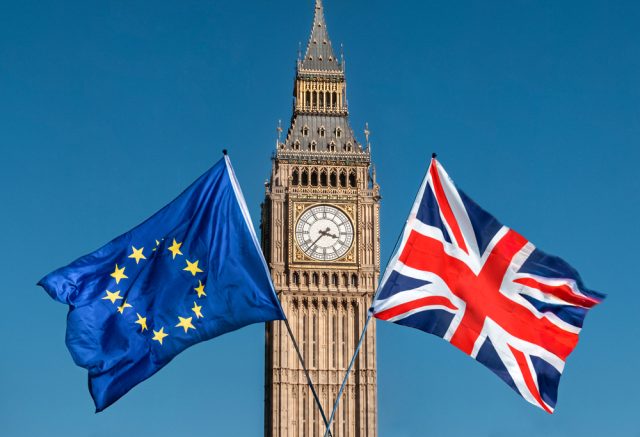
Brexit, the British exit from the European Union, has been one of our political generation’s most contentious issues. It set the example to emulate, according to nationalists across Europe, and the example of what not to do, according to liberals.
It took the world by storm when it was voted through in the referendum of 2016, and signified a sudden breach with the liberal establishment which had been governing most of the West undisturbed for decades. Suddenly, the globalist dream was shattered by the will of the people.
Ever since, both the United Kingdom and the European Union have diverged their paths significantly. The initial predicted trajectory of Britain as well as Europe was cast off its course by a number of complex events, such as the pandemic, and the escalation of the conflict between Russia and Ukraine.
Nowadays, with the ten year anniversary of the fateful referendum just behind us, and Britain being paralysed by unrest and political instability, there are calls to re-evaluate and even undo the withdrawal from the Union. It’s the usual suspects, the social liberals and progressives, running the campaign. But might there be a case for a British nationalist EU enthusiasm?
The EU has set its course right, the UK has failed
The European Union is a different organisation today than it was in 2016. The Union proved, in contrast to what many would have believed ten years ago, to be adaptable in the face of the challenge to its integrity that Brexit posed. The predicted wave of exit movements across Europe never came to fruition – instead, a sense of common understanding and reconciliation seems to have taken root in European politics, as unbelievable as that sounds.
In many ways, the Brussels bureaucracy and the centralists ramped up their ambitions against the nation-states, but at the same time, the right wing of Europe ramped up their efforts to combat the excesses and decadence of the Union leadership. Today, the EU is the framework for a more comprehensive programme for the return of illegal migrants and the restoration of European borders than any nationalist party could have demanded in 2016. The centre-right block of the European parliament, the European People’s Party, is actively working together with the Eurosceptic groups on the right to accomplish genuinely great things for Europe.
The Union has grown ever closer and tightened its leash, which is a worrying development. But this increasingly integrated political infrastructure has also made urgently necessary migration reforms possible. On immigration, the most important issue to Brexiteers in 2016, the EU is probably in a better place than the United Kingdom today.
Across the North Sea, the post-Brexit situation has grown disappointingly dire.
That the United Kingdom intensified its political, social, and economic decline has by ‘Remainers’ been attributed to Brexit, while Brexiteers defend their rejection of the EU by pointing to the incompetence of British politicians, and a number of external factors. There is probably truth in both perspectives.
Of course being cut off from the European single market was going to damage the economy, no matter if it was a “soft” or a “hard” Brexit. The British economy would have been better off currently had it not been disturbed as it was by the withdrawal.
But the argument for Brexit was never that Britain was going to become immediately wealthier. It was about returning political decision-making to London, to nationally elected representatives, and most importantly, to retake control over the borders. These are utmost idealistic pursuits, and they defeated the materialistic concerns of the ‘Bremain’ camp.
What about the case for the European Union preventing the United Kingdom from controlling its own borders? The free movement across the Union definitely facilitated unpredictable migration patterns that negatively affected the British labour market and social trust. This is true for every European Union member state, and a driving factor in Eurosceptic sentiments.
But what happened when this control was relinquished back to London, was that the levers of immigration to Britain merely changed hands from globalists in Brussels to globalists in Westminster. The EU is a reflection of the political culture of Europe, and British voters may have been shock-reminded that their own politicians always contributed to it. The Tory leadership under Boris Johnson gravely abused the mandate that the British public gave them in the 2020 election, and caused an unprecedented migrant wave to the island which will have long-lasting political and social consequences.
It is against this backdrop many British conservatives who otherwise supported Brexit may ask, would it have been a better idea to remain in the Union?
Britain could have helped Europe
The United Kingdom could have been part of the European Union’s major immigration reforms if they had remained. Without the regulations of the EU, British politicians would not have easily been able to open their borders to unprecedented waves of migrants as they did during the Boris Johnson and Rishi Sunak years. The British natural Euroscepticism could even have facilitated these reforms quicker, had they been represented in the European Parliament.
Much of the British, primarily the English, antipathy towards the political Europe may stem from standard perceptions of the EU as a corrupt institution with no regard to the will of the common people. While this may ring true in most Eurosceptics’ ears, Brexiteers may have forgotten that their own politicians manifested the very same shortcomings. The dislike of the arrogant Continent may have blinded the British to the faults of their own establishment.
Not only would there have been tangible benefits for the United Kingdom had it remained a EU member state, but it would likely have benefitted the rest of the member states as a whole to have a counter-balance to the other great powers that are competing for influence in Brussels.
Already in the lead-up to the Brexit referendum, there were concerns in Sweden that with the loss of Britain, there would be fewer voices for austerity and restraint in EU budgeting. Sweden is one of a handful of countries, including Germany, which are most commonly in opposition to an expanded EU budget and other excessive financial programs. It can be argued that with the United Kingdom gone, the balance of power in the European councils has instead shifted towards greater risk-taking, frequently spearheaded by French interests.
A Swedish newspaper analysis on the day of the anniversary opined that the greater influence of France has pushed the EU in the direction of more industrial protectionism and military ambitions. Britain prioritised its trans-Atlantic links and NATO, and was averse to a common European military complex. Britain being a nation with a stronger tradition of free trade may have also have halted the economically unsound investments that the EU prioritised as part of its green transition. One pertinent example for Sweden is the European Investment Bank’s subsidised loans to the green battery manufacturer Northvolt in Sweden, which turned out to be a massive industrial failure.
Does this mean that Brexit was a definite mistake? Probably not – but it may indicate that there are nuances to the issue that were not immediately obvious in 2016 or 2020, that have since become clearer. Britain could use the help of the European Parliament’s nationalist members to salvage its terrible migration situation, if Westminster is going to keep spinning its wheels in the mud.