





 Subscribe


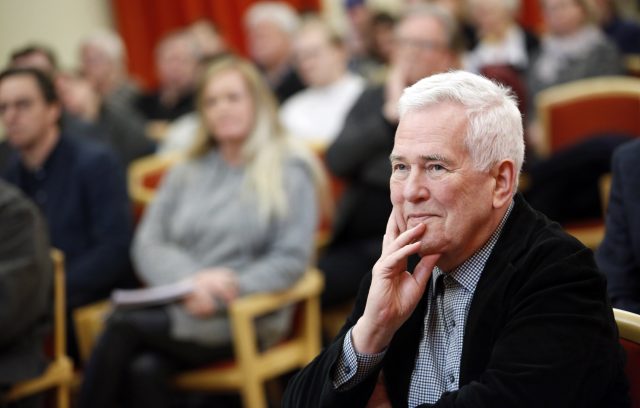
Despite her tiny population, Iceland can take pride in three internationally renowned economists, all good friends of mine. Two of them, unsurprisingly in a nation of fishermen, are pioneers in the economics of fisheries: Professors Rögnvaldur Hannesson of the Norwegian School of Commerce in Bergen and Ragnar Árnason of the University of Iceland. One has specialised in institutional economics, Professor Thráinn Eggertsson of the University of Iceland, who sadly passed away on 18 June 2026 at the age of 85. He was a Renaissance man, at home in literature and history no less than in economic theory, always cheerful and with a keen eye for the comical aspects of life. We enjoyed many a time over glasses of wine. He published two widely-read economic treatises, Economic Behavior and Institutions (1991), and Imperfect Institutions: Possibilities and Limits of Reform (2005). A third book is forthcoming, Digital Revolution and Institutional Change. He also published many research papers. Thráinn had a profound understanding of what economics should be: a searchlight illuminating reality, rather than a bucket into which to collect facts.
A Quota System for Mountain Pastures
One illuminating paper by Thráinn examined how the Icelanders escaped what has been called ‘the tragedy of the commons’. The original settlers, arriving between 874 and 930, found a subarctic island with green valleys reaching the coast, surrounded by mountain pastures. The interior of the country, however, was barren and uninhabitable. The land was mainly suitable for sheep farming. It was relatively easy to establish private property rights over the farms in the valleys, but during the summer, the farmers of each valley jointly utilised the mountain pastures for their sheep. This created a temptation for each farmer to graze more sheep than was optimal, since he alone enjoyed the profit of any additional sheep, whereas the commune bore the loss. The solution was to assign each farm a set number of sheep to graze in the mountain pastures, a quota. The total number of sheep was set so that, when they returned in the autumn, they were as fat as possible, which was the economically correct target.
Starving in the Midst of Plenty
The quota system in the mountain pastures was relatively efficient. But in another illuminating paper, Thráinn described a disaster: how the Icelanders starved for centuries despite living next to the most fertile fishing grounds in Europe. The reason was that Iceland was long under the Danish crown, which formed an alliance with the landowners (while most farmers were tenants) to stifle the growth of the fisheries: 1) by prohibiting foreigners from staying for the winter, 2) obliging everybody to work and register at a farm (bondage), and 3) issuing royal decrees that priced fish far below its market value. The crown did this to maintain its hold on the country, and the landowners to keep their access to cheap labour. The consequence was a series of famines that only ended in the nineteenth century with free trade, the abolition of bondage, and the growth of the fisheries.
Controversial Topics
Thráinn was a scholar, not a preacher, but he gave talks on controversial contemporary topics at two international conferences I organised in Reykjavík. One was in 2012, when a left-wing government was trying to dismantle the sustainable and profitable system of individual transferable quotas we had developed in fisheries (in some ways similar to the quota system in mountain pastures). Thráinn gave his full support to the system and sought to explain why some people were bent on reducing wealth. The other talk was at my retirement conference in 2023, when he spoke about the ‘dictator’s dilemma’ that China’s leader, Xi Jinping, faces. The dilemma is that an authoritarian ruler must choose between the free flow of information, which may weaken his hold on power, and its suppression, which may stifle economic growth. Xi is trying to overcome the problem by leveraging advanced technology and artificial intelligence, hoping to stimulate economic growth without accepting freedom. If he fails (which is likely), Thráinn predicted he would resort to warmongering.
(Photo by Eggert Jóhannesson.)