





 Subscribe


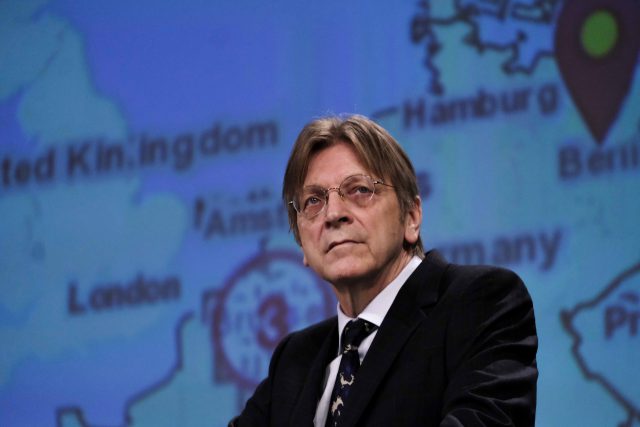
In Birmingham on 12 May 1904, the British imperialist Joseph Chamberlain exclaimed: ·‘The day of small nations has long passed by. The day of Empires has come.’ However, the empires of the Habsburgs, Hohenzollerns, Romanovs, Ottomans, and Manchus all crumbled within twenty years. The United Nations had 51 founding members in 1945. Now, the full member states are 193. One reason for this proliferation is increased free trade which enables small states to benefit from the international division of labour. Chamberlain has however recently gained some disciples in Brussels. One of them, Guy Verhofstadt, spoke in Iceland on 25 September 2025. He is no small fry. He was Belgian prime minister for nine years, member of the European Parliament for 15 years, and is now the Leader of the European Movement International. His speech (on Youtube) was revealing. It inadvertently confirmed many of the warnings Icelandic critics of the European Union have uttered in the campaign leading up to the 29 August referendum on EU membership.
A European ‘Empire of the Good’
Verhofstadt advised Icelandic EU supporters to embrace the European project, the values and ideals of the EU, not halfheartedly like the British had done. The European project was, he said, to create a new superpower which could not only compete with the world’s other superpowers, the United States, Russia, China, and India, but also defend itself against any potential threats. We live in a brutal world, he added, where autocrats wield much power. It is less a world of almost 200 nation states than of a few dominant empires. China and India are empires, not nation states, he asserted. It was unfortunate that India, a functioning democracy, was aligning herself with autocratic states in the BRICS group (Brazil, Russia, India, China, and South Africa), whereas the present US government seemed not to share the liberal values of its predecessors and of the EU. All this meant that Europe had to unite. It had to become an ‘Empire of the Good’, upholding European values.
An Integrated European Military Force
Verhofstadt said that The North Atlantic Treaty Organisation had been founded on two pillars, American military presence in Europe and a common European defence community. But the latter pillar had never been erected, and now American military presence in Europe was becoming tenuous. Verhofstadt observed that Europe was already spending almost 400 billion euros on defence, which was roughly 40 per cent of what the United States was spending. Nevertheless, the military capabilities of Europe were estimated to be only about 10 per cent of those of the US. One reason was that the military forces in Europe were not integrated. The US had one military force, and EU 27. Europe needed more efficient decision-making at the top which meant fewer requirements for unanimous decisions, Verhofstadt stated.
Warnings Confirmed by Verhofstadt
The opponents of Iceland’s membership in the EU have long warned against the very development Verhofstadt was effusively praising: the transformation of the EU into a heavily armed superpower with little regard for small member states. Iceland has a bilateral defence treaty with the US. What she needs from the EU is not security, but access to the single market and this she gets through the treatises on the European Economic Area, EEA. Europe should definitely acquire the ability to defend itself, as Verhofstadt recommends. He is right that military vulnerability is the curse of small nations. But he is wrong is that NATO is breaking up. North America and Europe have a common interest in a strong West, and European leaders should try to strengthen the ties across the North Atlantic, not weaken them. Verhofstadt is also right that economic integration is desirable: the division of labour depends on the extent of the market. But he is wrong that political integration is desirable. It is simply a euphemism for centralisation. The continental project he is describing is at least not an Icelandic one. The Icelanders should be friends with Brussels, not its subjects. Despite Chamberlain’s exclamation in 1904, the day of small nations has not passed by.