





 Subscribe


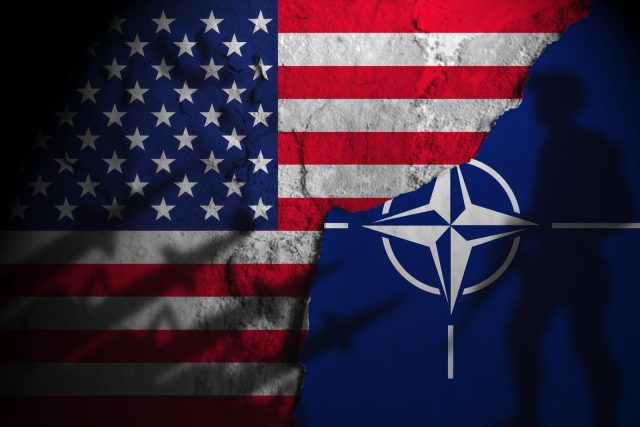
The 2026 NATO Summit in Ankara was never expected to produce a historic breakthrough. Instead, it served a different purpose: confirming that the transatlantic alliance is entering a new phase. NATO remains the cornerstone of Western security, but Europe is now under growing pressure to assume far greater responsibility for its own defence.
Over two days of meetings in the Turkish capital, Allied leaders reaffirmed their commitment to collective security while confronting a changing strategic landscape shaped by Russia’s war against Ukraine, instability in the Middle East, and an increasingly assertive American approach to burden-sharing. The summit concluded with the Ankara Summit Declaration, which reaffirmed NATO’s “ironclad commitment” to Article 5, pledged continued support for Ukraine, and highlighted the significant increase in defence investment made by European allies and Canada over the past year.
The central political message was unmistakable: Europe must become stronger not to replace the United States, but to remain a credible partner within the Alliance.
That message has been driven forcefully by U.S. President Donald Trump. Arriving in Ankara, Trump again insisted that European allies should carry a much larger share of NATO’s financial and military burden. He also questioned the willingness of several European governments to support broader American strategic priorities, particularly following recent tensions surrounding the Middle East.
Although Trump’s rhetoric remained confrontational, European leaders largely avoided public disputes. Instead, they focused on demonstrating that Europe is already increasing defence spending and expanding industrial capacity. One of the summit’s main themes was the implementation of NATO’s long-term objective of reaching defence investments equivalent to 5% of GDP by 2035, accompanied by stronger cooperation among Allied defence industries.
The Defence Industry Forum, held alongside the summit, reflected this new emphasis. Rather than concentrating solely on military strategy, governments and industry leaders discussed how increased defence budgets should translate into greater production capacity, technological innovation and joint procurement across the Alliance.
For Italy, the summit carried additional political significance.
Prime Minister Giorgia Meloni arrived in Ankara after weeks of public disagreements with President Trump over broader political issues. Nevertheless, she maintained the pragmatic approach that has characterised much of her foreign policy since taking office: preserving Italy’s privileged relationship with Washington while defending Rome’s national interests within Europe.
Meloni reaffirmed Italy’s commitment to NATO and to strengthening European defence capabilities, while insisting that defence investment should not be viewed simply as an expenditure but as an opportunity to reinforce national industrial competitiveness. During the summit she also met Ukrainian President Volodymyr Zelenskyy, reiterating Italy’s continued support for Ukraine as the country seeks additional military assistance to defend itself against ongoing Russian attacks.
In many respects, Ankara can be considered a successful summit.
Despite significant political differences among Allies, NATO demonstrated institutional cohesion. The Alliance reaffirmed its collective defence commitments, confirmed sustained military support for Ukraine, and showed that European governments are moving—albeit at different speeds—towards assuming greater responsibility for continental security.
Yet the summit also exposed unresolved questions.
Increasing defence budgets is only part of the challenge. Europe still lacks a comprehensive strategic vision capable of matching its growing military ambitions. Financial commitments alone will not create strategic autonomy if they are not accompanied by coherent industrial policies, secure energy supplies and stronger political coordination.
For conservatives, this broader debate should not end with military spending.
A stronger Europe requires the ability to protect its citizens across multiple dimensions. That means rebuilding a competitive defence industry, but it also means ensuring energy independence and controlling the Union’s external borders. Energy security remains inseparable from national security, making nuclear power an increasingly important component of Europe’s long-term resilience. Likewise, no political community can remain stable without effective control over who enters its territory.
These priorities should not be seen as alternatives to NATO, but as essential complements to it.
The Ankara summit ultimately confirmed an uncomfortable reality: the United States is unlikely to resume the role of Europe’s unquestioned security guarantor. Washington increasingly expects its allies to become capable security providers rather than permanent security consumers.
For Europe, the challenge is therefore not to distance itself from America, but to mature alongside it. A stronger European pillar within NATO would reinforce—not weaken—the transatlantic alliance.
That may prove to be the summit’s most enduring legacy.