





 Subscribe


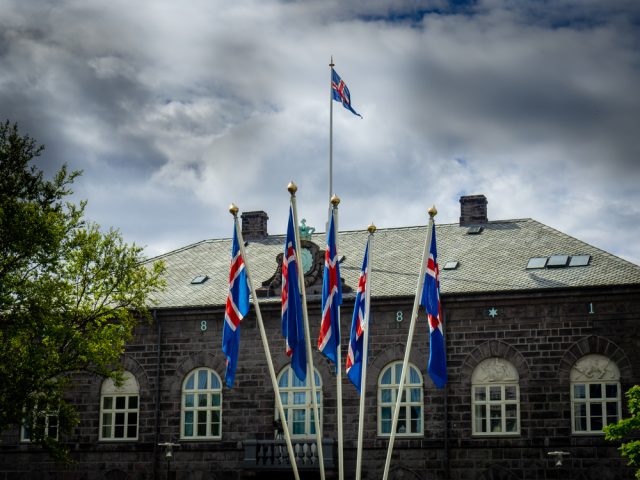
In the end, the result leaves little room for doubt, even if the margin remains narrow: Iceland does not want to reopen negotiations to join the European Union. The referendum concluded with 52.8% of votes against and 47.2% in favor, with a turnout of 82.5%. The vote did not directly ask Icelanders whether they wanted to become EU members. The question, in fact, concerned the possibility of reopening negotiations with Brussels, but the political significance of the result is broader: at least for the foreseeable future, the path to membership remains stalled. The referendum was formally consultative in nature, but the government led by Social Democrat Kristrún Frostadóttir, who favors resuming talks, announced its intention to respect the outcome. Consequently, the issue is unlikely to be brought up again at least until the end of the current legislative session, scheduled for 2028. Relations between Reykjavik and Brussels are longstanding. Accession negotiations began in 2010, in the wake of the severe financial crisis that had hit the country. Dialogue was subsequently suspended in 2013, and the process was shelved by the conservative government in 2015.
A VERY CLOSE RELATIONSHIP WITH EUROPE
This is precisely what makes Iceland unique: the country is not a member of the EU, but it maintains very close relations with the bloc. As a member of EFTA and the European Economic Area, Iceland enjoys broad access to the single market alongside Norway and Liechtenstein. However, sectors that are particularly sensitive to the Icelandic economy, such as fishing and agriculture, remain outside this agreement. Iceland also belongs to the Schengen Area, participates in the European Emissions Trading Scheme, and participates in programs such as Erasmus and Horizon. Integration has reached the point where the country has adopted nearly 9,000 EU legislative acts, despite not having voting rights in the Brussels decision-making process. Internationally, Iceland is a member of NATO and the Council of Europe and is part of the Coalition of the Willing for Ukraine. For many voters, in short, the current model already seems to offer a sufficiently attractive combination of access to Europe and national autonomy. This is a position Prime Minister Frostadóttir observed during the campaign, noting widespread appreciation for the agreement on the European Economic Area and for current relations with the EU.
THE IMPACT OF FISHERIES
While geopolitical issues provided the backdrop to the campaign, the issue that had the greatest impact on the vote was fishing, which provides a significant share of employment, contributes approximately 8% of Iceland’s GDP, and accounts for nearly 40% of exports. It’s therefore easy to understand why the possibility of entrusting part of this control to European institutions has raised so many concerns. EU membership would entail the application of the Common Fisheries Policy, which establishes criteria for fishing zones, seasons, and quantities. Quotas are largely determined annually after specific negotiations, and member states are then required to ensure compliance.
REYKJAVÍK’S REASSURANCES ARE NOT ENOUGH
The fear of losing autonomy over marine resource management was particularly widespread among those in the sector. The government had attempted to allay these concerns by arguing that it would ask Brussels to grant Iceland full authority over its fishing system. The European Commission had also expressed its willingness to explore innovative solutions to address the issue. However, these reassurances were not enough. The “no” supporters focused precisely on this element, while the campaign for the resumption of negotiations failed to convincingly demonstrate that the benefits of full integration would compensate for the loss of autonomy.
THE GEOGRAPHY OF THE VOTE REFLECTS A DIVISION
The national result masks a rather clear territorial divide. Of Iceland’s six constituencies, only two, belonging to the capital, Reykjavik, expressed a majority in favor of reopening negotiations. The capital thus represented the main source of support for the European perspective. In rural areas, voters rejected the reopening of negotiations by percentages exceeding 60%. In these areas, fishing has a much greater impact on employment than in the capital, where the sector plays a marginal role. The electoral geography thus reveals a fairly clear divide between the urban center and the communities most closely tied to rural and maritime activities.
TRUMP, THE ARCTIC AND GEOPOLITICS REMAIN IN THE BACKGROUND
The referendum took place at a time when Iceland’s position in the North Atlantic and the Arctic has assumed growing importance. Russia’s war against Ukraine, competition with China, and the policies of Donald Trump’s administration have fueled a geopolitical interpretation of the vote. In particular, the US president’s statements on Greenland and his interest in the Danish island have refocused international attention on the Arctic. Iceland’s strategic position in the North Atlantic has thus become even more relevant in the context of the new international balance of power. For supporters of European membership, Washington’s stance should have reinforced the idea that greater integration with the EU could offer additional security. The result, however, suggests that these considerations were not sufficient to overcome concerns about sovereignty and control of national resources.
A MISSED OPPORTUNITY FOR BRUSSELS
The Icelandic vote comes at a delicate moment for the European Union. Brussels is seeking to relaunch the enlargement process as a strategic tool, especially after Russia’s large-scale invasion of Ukraine. The path of Kiev and Moldova has been accelerated, while in the Western Balkans, the EU continues to focus on investments and partnerships to keep candidate countries close. Iceland would have been a particularly interesting case. However, Brussels was also aware of a potential political problem: Iceland’s rapid accession would have risked depriving the Western Balkan countries, some of which have been waiting more than a decade, of priority. Among the options discussed was even the possibility of linking Iceland’s accession process to that of Montenegro, thus avoiding a perception of disparity in the region. The referendum rendered these options superfluous. The status of the accession candidates remains unchanged, and the Union has missed the opportunity to demonstrate that the European project can continue to attract rich economies and consolidated democracies.
COMPARISON WITH NORWAY, SWITZERLAND, AND BREXIT
The Icelandic case, however, is not an isolated one. Norway rejected EU membership twice, in 1972 and 1994. Even then, the issue of sovereignty and management of natural resources, especially those related to fisheries, played a key role. Another significant comparison is with Switzerland, which has repeatedly rejected deeper forms of European integration while maintaining very close economic ties with the single market through specific agreements. And then there is the United Kingdom, a G7 economy that chose to leave the Union in 2016. The Brexit result, with 51.89% in favor of leaving and 48.11% in favor of remaining, bears a striking resemblance to the Icelandic vote: in that case too, the gap between the two positions was narrow.
A NO TO MEMBERSHIP, NOT NECESSARILY TO EUROPE
The referendum’s significance does not necessarily translate into a rejection of Europe. Rather, the vote seems to indicate that, for a majority of Icelanders, the advantages afforded by the current model do not justify, at least for now, a move to full membership. The issue of sovereignty and the ability to maintain control over national resources outweighed the prospect of greater political integration. A country deeply integrated with the European market and institutions chose to stop just short of membership, believing the balance it had built over the years was sufficient. For Brussels, this is a significant setback precisely because it comes from a stable, economically prosperous democracy already very close to the Union. For the other candidates, however, the situation is different: for Albania, Bosnia and Herzegovina, Georgia, Moldova, Montenegro, North Macedonia, Serbia, Turkey, and Ukraine, European integration can offer the prospect of growth, prosperity, and greater equality, as well as carrying significant geopolitical weight. The path taken by the Central and Eastern European countries that joined the EU in 2004 is held up as an example of the opportunities offered by integration. Furthermore, for the states most exposed to Russian pressure, accession takes on a strategic dimension that in the case of Iceland appears much less urgent. The Icelandic result thus raises a broader question about the future of enlargement: how attractive can the European project still be for countries that already have solid economies and considerable autonomy? The answer from the Icelandic polls, at least for now, is rather cautious. In an increasingly uncertain international context, a significant portion of the electorate has preferred to maintain a known balance rather than face the costs and uncertainties of deeper integration.