


 Subscribe


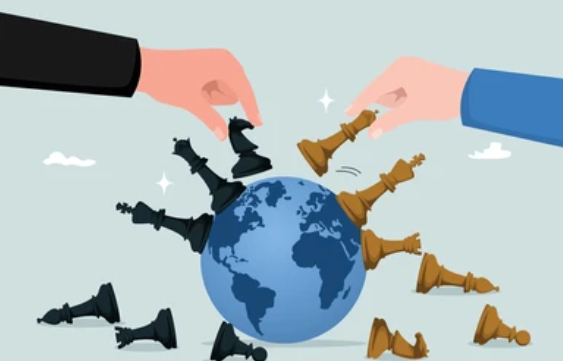
The 21st century is proving to be an unrelenting testing ground for the geopolitical, economic, and identity destiny of the Old Continent. Caught between two titanic giants—the technological and financial hyper-capitalism of the United States and the highly planned, aggressive state capitalism of the People’s Republic of China—Europe risks slipping into a geopolitical shadow.
In this scenario of global polarization, public and intellectual debate often focuses on a resource that has historically represented Europe’s trademark: its cultural centrality and originality. The crucial question we must ask ourselves, however, is merciless in its urgency: can culture alone save Europe?
-
The Global Pincer: The United States and China as Systemic Superpowers
To understand the scope of the challenge, it is necessary to analyze the playing field. The United States and China do not simply compete on a commercial level; they exercise systemic dominance based on pillars that Europe, in its current fragmented configuration, struggles to replicate.
-
The US Model: Based on radical innovation driven by venture capital, the monopoly of global digital infrastructure (Silicon Valley giants), and an unparalleled projection of military and cultural power (soft power and hard power fused together). America defines the planet’s technological and consumer standards.
-
The Chinese Model: Founded on a long-term vision, an almost irreplaceable manufacturing and technological supply chain (from rare earths to applied artificial intelligence), and centralized state control capable of mobilizing colossal resources in record time (as seen in the Belt and Road Initiative).
In this duopoly, Europe risks being reduced to a regulated consumer market that is irrelevant in terms of frontier innovation—an open-air museum protected by rigorous rules but devoid of the driving engine of economic and technological power.
-
The Myth of the “Cultural Fortress”: A Beacon Extinguished Without Material Power
European culture is an invaluable heritage: the cradle of democracy, human rights, the Enlightenment, art, philosophy, and scientific research. This cultural originality constitutes the greatest exercise of soft power in human history.
However, relying exclusively on culture to guarantee Europe’s geopolitical survival is equivalent to committing a fundamental strategic error: mistaking historical prestige for effective sovereignty.
“Culture nourries the soul of a continent, but technology, energy, and defense protect its body and freedom.”
If Europe limits itself to being the custodian of the past, it will end up enduring rules written elsewhere. Without an advanced industrial ecosystem, an effective common defense, and a leading role in the digital and cybernetic transition, cultural centrality will turn into a nostalgic veneer of irrelevance.
-
The Missing Pillars: Economy, Technology, and Strategic Sovereignty
For Europe to matter in tomorrow’s world, its cultural heritage must transform into a catalyst for political and economic action. This requires immediate structural interventions:
-
Technological and Digital Sovereignty: Europe cannot continue to depend on foreign platforms and artificial intelligences. It is essential to invest massively in endogenous research and development, overcoming national fragmentations that hold back European champions.
-
Energy and Fiscal Union: Geopolitical vulnerability is fought by reducing dependence on external sources and completing economic integration, so that the European single market becomes a cohesive bloc rather than a sum of particularistic interests.
-
Common Defense: In an increasingly unstable world, security cannot be indefinitely delegated to external partners. An Europe deprived of a deterrent force and a unitary foreign policy will always remain an economic giant (though fragile) and a political dwarf.
-
Conclusion: The European Renaissance as a Synthesis of Past and Future
The answer to our question is therefore clear: no, cultural centrality alone cannot save Europe.
Culture is not an alternative to material power, but must become its ethical compass. The originality of the European model—founded on the dignity of the person, the balance between freedom and welfare, the protection of common goods, and plurality—makes sense only if it is defended with the strength of innovation, economic competitiveness, and political cohesion.
The future of the Old Continent does not lie in the defensive preservation of its roots, but in the capacity to combine its historical humanism with the courage of modernity. Only in this way can Europe stop being a battlefield for the ambitions of others and return to being the conscious author of its own destiny.