


 Subscribe


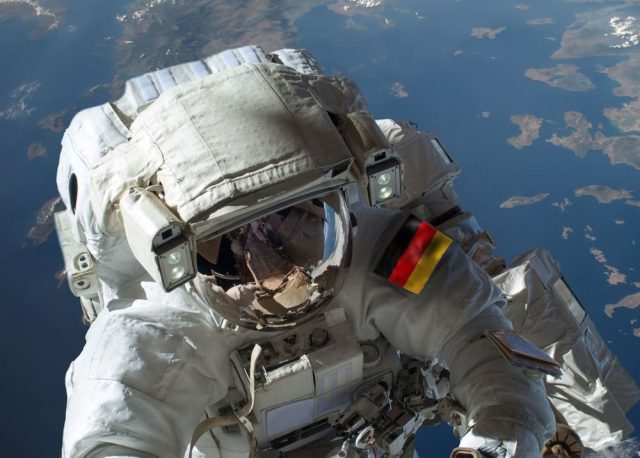
Space cooperation today represents an important dimension in international politics and European integration, taking on a growing role in the security, economic competitiveness and technological autonomy strategies of the Union. Outer space no longer constitutes just a field of scientific research and technological innovation, but is configured as an indispensable strategic infrastructure for the functioning of contemporary societies, for the protection of national and European interests and for the consolidation of Europe’s geopolitical position on the international scene. In this context, the ability of Member States to develop coordinated policies, share expertise and integrate their respective infrastructures takes on crucial importance. It is precisely in this perspective that the bilateral dialogue between Italy and Germany on space policies and space economics took place on 30 October 2026 at the Fucino Space Center, in the province of L’Aquila. The initiative falls within the framework of the Protocol relating to the Italian-German Action Plan for strategic bilateral cooperation and the EU, signed in Rome on 23 January 2026. Through this political and institutional reference, Rome and Berlin have reaffirmed their convergence on the need for a strong, autonomous and strategically coherent European space policy, fully compatible with the Union Treaties. The partnership between the two countries demonstrates how intergovernmental coordination can concretely contribute to the construction of a shared European vision, enhancing national capabilities without giving up the common dimension.
THE COORDINATION OF EUROPEAN SPACE POLICIES AND PROGRAMS
One of the central aspects of the discussion concerned the evolution of the EU’s space policies and programs. Italy and Germany shared assessments of the main initiatives currently under discussion at community level, recognizing the importance of maintaining constant coordination during their respective decision-making processes. This convergence is particularly significant in a phase in which European regulatory and financial choices are destined to have a profound impact on the continent’s industrial, technological and operational capabilities. Among the topics addressed is the legislative procedure relating to the EU Space Act, intended to define a common regulatory framework for European space activities. In parallel, delegations examined the future financial structure of the Union, with particular attention to the role of space within the European Competitiveness Fund and the Multiannual Financial Framework 2028-2034. The future evolution of the regulatory and governance framework of the EU Agency for the Space Program (EUSPA) was also considered, taking into account the different national institutional configurations. A further area of study concerned IRIS² and the development of secure European satellite connectivity. The aim is to strengthen European independence in strategic communications, reducing vulnerabilities resulting from dependence on external infrastructures.
SECURITY, RESILIENCE, AND INTEROPERABILITY OF SPACE INFRASTRUCTURES
The security dimension represents another fundamental element of Italian-German cooperation. Italy and Germany have recognized the growing strategic value of space for European security and the resilience of critical infrastructure, engaging in discussions regarding their respective approaches to the security and protection of space activities. In an international context characterized by intensifying technological competition and an increasing reliance of terrestrial systems on orbital infrastructure, the ability to ensure operational continuity and interoperability takes on ever-greater geopolitical significance. The delegations have therefore identified potential areas for collaboration aimed at promoting common technical approaches, fostering the integration of national and European capabilities, and enhancing the compatibility of future space systems. Within this framework, the German proposal concerning the Protocol Stack for Space (PSSP) and the European Architecture for Space Interoperability (EASY) was examined. The project seeks to facilitate the federation of European space resources through shared standards and protocols, enabling interoperability between sovereign space systems and ground-based infrastructure. The PSSP is intended to contribute concretely to the development of EASY, supporting the creation of a more integrated, autonomous, and resilient European space ecosystem—one in which national technological sovereignty can be reconciled with greater collective operational capacity.
SPACE ECONOMY, INDUSTRY, AND REGULATORY COOPERATION
Space cooperation cannot be separated from its economic and industrial dimensions. The expansion of the space economy offers significant opportunities for growth, innovation, and European competitiveness; however, it requires a regulatory framework capable of ensuring a level playing field for all operators. In this regard, Italy and Germany compared their respective legislative experiences, with particular reference to the Italian national regulatory framework and ongoing regulatory developments in Germany. Both sides underscored the importance of a European regulatory framework that ensures the safety, security, and sustainability of space activities, without compromising the competitiveness of companies, their capacity for innovation, or the ability of European operators to establish themselves in international markets. A concrete example of the strength of this bilateral partnership is the long-standing collaboration on the Galileo program, the European satellite navigation system. In particular, the control centers located at Fucino and Oberpfaffenhofen serve as fundamental infrastructure for this cooperation. In line with the Italian-German Action Plan, discussions also addressed the development of the industrial initiative known as “Bromo.” Italy and Germany reaffirmed their interest in fostering closer ties between their respective space industries, including the involvement of start-ups as well as small and medium-sized enterprises. The participation of these entities is essential for broadening the European industrial base, supporting the spread of innovation, and strengthening the continent’s ability to compete with major global players.
AUTONOMOUS ACCESS TO SPACE AND PROSPECTS FOR HUMAN SPACEFLIGHT
Another significant topic is European access to space, which both Italy and Germany view as a strategic priority. The two delegations reaffirmed the need to ensure that Europe possesses autonomous, reliable, and competitive capabilities in the field of launch vehicles and space transportation systems. The discussion addressed the development of these capabilities through models based on cooperation and fair competition among operators. In this context, the changes defined in Seville in 2023 and Bremen in 2025—along with the long-term vision for European space transportation—serve as shared reference points for addressing current challenges and guiding future strategic priorities. Autonomous access to orbit is, in fact, a fundamental prerequisite for European technological sovereignty and for the continuity of scientific, industrial, and institutional activities. The dialogue also covered the evolution of human spaceflight and the shifting landscape in Low Earth Orbit (LEO) as the era of the International Space Station (ISS) draws to a close. Specifically, the discussion highlighted the growing importance of commercial space stations and the opportunities they may offer for new industrial activities and the participation of European astronauts in future missions. This changing orbital environment opens up new avenues for collaboration between public institutions, research organizations, and private enterprises, necessitating ongoing bilateral engagement.
SPACE DIPLOMACY AND INTERNATIONAL COOPERATION
The diplomatic dimension completes the framework for collaboration between Rome and Berlin. Both nations reaffirmed their commitment to the safe, secure, and sustainable use of outer space, in full compliance with international law. In this context, particular attention was devoted to the respective priorities within the United Nations Committee on the Peaceful Uses of Outer Space (COPUOS)—a key multilateral forum for promoting shared principles and rules. The delegations also examined possibilities for strengthening coordination with strategic international partners outside the institutional frameworks of the European Union and ESA, where such collaboration could help advance common European interests and complement existing bilateral partnerships. Space diplomacy thus becomes a tool for consolidating Europe’s international presence and promoting space governance rooted in cooperation and respect for international norms.
ITALY’S ROLE IN DEVELOPING A EUROPEAN SPACE STRATEGY
The dialogue held at the Fucino Space Centre carries significance that extends beyond mere bilateral relations. It serves as a concrete implementation of the space-related chapter of the Italian-German Action Plan, laying the groundwork to transform the ongoing exchange between the two nations into a structured mechanism for intergovernmental coordination on space policy and the space economy. Italy and Germany have agreed to maintain active technical and administrative-level exchanges on the topics discussed, identifying—where appropriate—specific bilateral initiatives and follow-up operational actions, with the involvement of their respective national space agencies and relevant government authorities. Italy’s commitment plays a particularly important role in this process. By strengthening bilateral agreements, coordinating with other member states, and actively participating in key European programmes, Italy contributes to shaping a common space policy that leverages national expertise within a broader continental strategy. The cooperation with Germany demonstrates how an understanding between major European nations can foster policy alignment, industrial integration, and the development of shared technological capabilities—offering a collaborative model that could be replicated with other partners within the European Union. In conclusion, the joint declaration of 30 October 2026 confirms that Europe’s future in space will increasingly depend on the ability of member states to act in a coordinated manner, overcoming institutional and industrial fragmentation. Strengthening Europe’s technological sovereignty, competitiveness, security, and resilience requires a joint commitment within the frameworks of the EU, the European Space Agency (ESA), and other relevant international organizations. In this sense, the complementarity between Italian and German capabilities represents a strategic asset for the entire continent. Space thus becomes not merely a sector for innovation, but a pillar of Europe’s international projection—and one of the arenas where the Union’s ability to establish itself as an autonomous and credible actor in the international system will be tangibly tested.