


 Subscribe


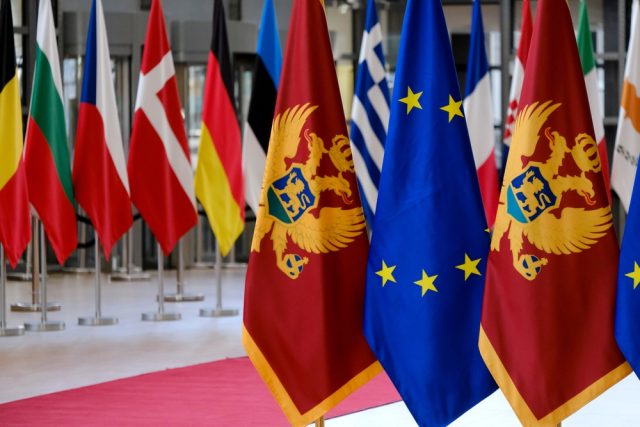
Montenegro’s possible accession to the European Union in 2028 raises a question that extends far beyond the Western Balkans: how should enlargement, European security and national sovereignty fit together?
For thirteen years, the European Union has not admitted a new member state. Croatia was the last country to join, in 2013. Since then, enlargement has remained a recurring promise at European summits, reaffirmed in official declarations but repeatedly delayed by political disagreements and institutional obstacles. Now, on the shores of the Adriatic, that long period of inactivity may finally be drawing to a close.
On 6 November 2026, the Council of the European Union announced the provisional closure of two further negotiating chapters with Montenegro, covering the free movement of goods and food safety, veterinary and phytosanitary policy. The country has now provisionally closed 23 of the 33 chapters opened during its accession negotiations.
Two days earlier, the European Commission had presented its annual enlargement package, identifying the conclusion of negotiations with Montenegro by the end of 2026 as a realistic prospect, provided that the remaining reforms are completed and the necessary agreement among member states is secured. The envisaged timetable would allow an accession treaty to be signed in 2027, potentially enabling Montenegro to join the Union in 2028.
Nothing has yet been formally guaranteed. Ten chapters remain to be closed, provisional agreements are subject to the successful conclusion of the negotiations as a whole, and any accession treaty must undergo the required approval and ratification procedures.
Nevertheless, for the first time in many years, the prospect of a twenty-eighth EU member is becoming something more tangible than another distant political commitment.
And that makes it necessary to ask what kind of Union Montenegro may eventually join.
From Institutional Stagnation to Strategic Necessity
As recently as October 2023, at the Granada summit, European governments reiterated their support for enlargement without agreeing on a binding timetable. Their differences reflected a longstanding debate over the future of European integration.
Some governments regarded enlargement as essential to consolidating stability across the continent. Others questioned whether an increasingly diverse Union could continue to function effectively without substantial changes to its institutions and decision-making procedures.
The difficulties were never purely administrative. Enlargement affects economic interests, budgetary resources, agricultural policy, freedom of movement and the ability of national governments to influence decisions taken at European level.
Russia’s full-scale invasion of Ukraine in February 2022 progressively changed the terms of that debate.
The war brought territorial security and the stability of Europe’s neighbourhood back to the centre of European politics. Countries that had spent years in an intermediate position, connected to the EU through cooperation agreements but excluded from its institutions, acquired renewed strategic importance.
Competition with Russia, China’s growing economic presence and the vulnerabilities of countries along Europe’s eastern and southeastern periphery contributed to a reassessment of enlargement as an instrument of continental security.
The change is visible even in the language used by European institutions. In the Council’s announcement of 6 November, Thomas Byrne, Ireland’s Minister of State for European Affairs and Defence, described enlargement as a geopolitical necessity.
That is a significant development. For years, Brussels tended to present enlargement primarily as a process of regulatory alignment, administrative reform and economic convergence. Today, its implications for Europe’s strategic position are being stated much more openly.
Yet recognising the geopolitical importance of enlargement does not resolve its most difficult questions. Which countries should join? Under what conditions? And, perhaps most importantly, what institutional structure should an enlarged Union adopt?
Montenegro, the Adriatic and European Security
Montenegro occupies a particular position in this debate.
It is a relatively small country on the Adriatic coast, situated in a region where European interests intersect with historical Russian influence, investment by external powers and disputes inherited from the dissolution of Yugoslavia.
Its strategic relevance cannot be measured simply by population, economic output or territory.
Montenegro became a member of NATO on 5 June 2017. Its eventual accession to the European Union would therefore complement an existing Euro-Atlantic security commitment with deeper political and economic integration.
For Italy in particular, developments in Montenegro are directly connected to the stability of the Adriatic and the wider Western Balkans.
Maritime security, transport infrastructure, energy cooperation and the fight against organised crime are issues that extend well beyond Montenegro’s national borders. They affect neighbouring countries and, more broadly, the European Union’s ability to safeguard its southeastern neighbourhood.
From this perspective, enlargement can be understood as an opportunity to strengthen cooperation with countries whose domestic stability has direct consequences for existing member states.
It would be a mistake, however, to assume that EU membership automatically eliminates the vulnerabilities of a historically complex region.
Institutional integration does not erase bilateral disputes, replace effective national administrations or independently guarantee the rule of law. European security ultimately depends on the capacity of individual states to exercise their responsibilities, enforce their laws and maintain functioning democratic institutions.
An enlargement policy that overlooks these realities would risk confusing formal integration with genuine stability.
Merit-Based Accession, Not Automatic Enlargement
One of the most revealing aspects of Montenegro’s accession process is the length and substance of its negotiations.
Podgorica applied for EU membership in December 2008, obtained candidate status in 2010 and formally began negotiations in 2012. The process has involved reforms across numerous policy areas, from competition and public administration to judicial independence and the fight against corruption.
The European Commission’s 2026 Enlargement Package emphasises the principle of merit-based accession. Progress towards membership must reflect the implementation of reforms, respect for the rule of law and the capacity to apply European legislation effectively.
This principle becomes even more important as enlargement acquires greater geopolitical urgency.
Two legitimate objectives must be reconciled.
The first is to provide candidate countries with a credible European perspective, preserving incentives for institutional reform, economic development and political stability.
The second is to ensure that strategic urgency does not result in premature accession or the weakening of standards that existing member states are themselves expected to respect.
Montenegro provides an opportunity to demonstrate that these objectives need not be contradictory.
Progress can be recognised without overlooking unfinished reforms. Political support for membership can coexist with demanding verification of institutional performance.
The Commission continues to identify challenges relating to the functioning of democratic institutions, judicial independence, corruption and organised crime.
Bilateral disputes also remain relevant. Relations between Montenegro and Croatia are affected by unresolved questions inherited from the Yugoslav period, including territorial disagreements and issues concerning the legacy of the wars of the 1990s.
Although Zagreb supports Western Balkan enlargement in principle, these matters demonstrate how bilateral relations can influence the wider accession process.
A credible merit-based approach must therefore assess not only whether new legislation has been adopted, but whether it is effectively implemented.
Membership should represent the outcome of demonstrated progress rather than a political reward granted in advance.
Ukraine and Moldova: Must Their Accession Paths Remain Linked?
Montenegro’s progress also belongs to a broader enlargement landscape in which differences between candidate countries are becoming increasingly apparent.
In the enlargement package presented on 4 November, the Commission outlined distinct negotiating objectives. Albania aims to complete negotiations in 2027, Moldova in early 2028 and Ukraine by the end of 2028.
These are conditional objectives for concluding negotiations, not agreed dates for membership.
The distinction is particularly important for Moldova and Ukraine.
Following their respective applications in 2022, both countries have frequently advanced in parallel within the European integration process. Yet their geopolitical circumstances and institutional challenges are far from identical.
Ukraine continues to face a large-scale war, with profound implications for security, public finances and eventual economic integration into the Union.
Moldova faces a different set of vulnerabilities, including the unresolved status of Transnistria and continuing external pressures.
The possibility that their accession processes could move at different speeds should not necessarily be interpreted as a reduction in European support for either country.
It could instead reflect the consistent application of a fundamental principle: each candidate should be evaluated according to its own reforms, institutional readiness and the implications of its accession.
Political solidarity and the technical assessment of membership serve different purposes. Confusing them could weaken the credibility of both.
The European Union can continue supporting Ukraine’s sovereignty and security while recognising that the conditions governing its eventual accession require a separate and rigorous evaluation.
The same principle applies to Moldova, Albania and every other candidate.
A credible enlargement policy cannot depend exclusively on geographical groupings, political symbolism or common deadlines. It must retain the capacity to distinguish between different national circumstances.
Enlarging Europe Also Means Deciding How It Should Be Governed
There is, however, a further question that cannot be postponed indefinitely: the institutional structure of an enlarged European Union.
The accession of additional countries inevitably reopens debates over decision-making rules, the common budget, the distribution of resources and the balance of authority between European institutions and national governments.
For years, parts of the European debate have linked enlargement to changes in voting procedures, particularly in policy areas where unanimity remains necessary.
Supporters of such reforms argue that a larger Union will require faster and more efficient mechanisms to prevent institutional paralysis.
Their concerns deserve examination. Decision-making can become more complicated as the number of member states increases, especially when national interests diverge.
But efficiency cannot be considered independently of democratic legitimacy.
The ability of national governments to participate meaningfully in decisions affecting essential national interests is not merely an administrative complication. It forms part of the constitutional and political balance upon which European cooperation rests.
This is particularly relevant from the perspective of European conservatism.
The European Conservatives and Reformists Party’s Reykjavík Declaration describes a Europe of independent nations cooperating for mutual benefit while retaining their identity and integrity.
It recognises the democratic legitimacy of the nation-state and supports the principle that political authority should be exercised at the lowest practicable level.
Such an approach does not necessarily imply opposition to enlargement.
Rather, it provides a framework for assessing its institutional consequences.
European cooperation can be strengthened without assuming that every new challenge requires the transfer of additional powers to supranational institutions.
Indeed, an enlarged Union may have an even greater need for mechanisms that respect national differences and preserve meaningful democratic participation.
This question is especially important for smaller member states. Their limited demographic weight makes effective representation within common institutions particularly valuable.
A Europe of twenty-eight or more countries would inevitably encompass a wider range of historical experiences, economic priorities and political traditions.
Whether that diversity is regarded as a source of strength or as an obstacle to be overcome will influence the direction of future institutional reforms.
There is a fundamental difference between improving cooperation among sovereign democracies and treating their continued political autonomy as a problem to be solved.
The Twenty-Eighth Member and Europe’s Unfinished Choice
Montenegro could become the first country to join the European Union since Croatia.
The prospect of accession in 2028 is now part of a concrete institutional timetable, although its achievement remains dependent on the completion of negotiations, the necessary reforms and subsequent decisions by member states.
The significance of this development nevertheless extends beyond Podgorica.
After years in which enlargement appeared trapped between political promises and procedural obstacles, the European Union is once again treating the integration of neighbouring countries as an important element of continental security.
That shift reflects a changed geopolitical environment, but it also brings longstanding questions back into focus.
How should the readiness of candidate countries be measured? What financial and institutional responsibilities will enlargement create? How can democratic accountability be preserved as the Union grows? And how should the legitimate interests of member states be reconciled with the need for effective common action?
Montenegro’s possible accession will provide an early test of this renewed approach.
The debate should not be reduced to a choice between unlimited enlargement and permanent exclusion. It concerns the conditions under which European cooperation can become more effective while preserving the democratic foundations of its member states.
The real issue is therefore not simply when the European Union will return to twenty-eight members.
It is whether enlargement will help build a more secure and effective partnership among sovereign European nations, or become another occasion to revisit the centralisation of political authority under the pressure of geopolitical urgency.
The question is not only when Montenegro will join the European Union. It is what kind of Union will be waiting when it does.