


 Subscribe


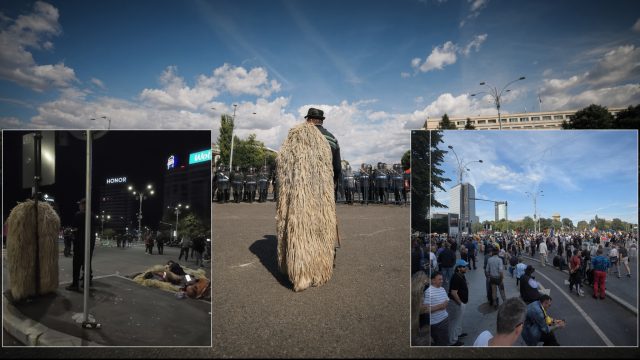
The security of European citizens and their property appears to be hanging in the balance following the continuous demonstrations taking place in several European countries. These demonstrations are anything but peaceful. In a remarkably short period of time, protests are transforming European cities into battlegrounds, leaving behind destruction, damaged property and looting.
How prepared has Europe proved to be? How ready were European states to deal with the violence accompanying these demonstrations? How much longer can national economies withstand the financial burden of all this destruction? Is the security of citizens themselves being put at risk?
The Risk of escalation and tolerance
With France at the epicentre of the wave of violent demonstrations that have taken place — and to a lesser extent continue to take place — in other European countries, there has been an apparent attempt to spread this phenomenon across the continent, causing numerous problems and unrest that are certainly not aimed at bringing about change.
In several cases, European states found themselves unprepared to deal with the volatile situation that emerged within an extremely short period of time, struggling to protect both their citizens and their property.
The objective of safeguarding public order and condemning violent incidents must remain unchanged. On the contrary, it should serve as a cornerstone of the domestic policies pursued by individual states.
Certain political forces, such as the Radical Left, seek to create an atmosphere of instability by inciting unrest and fostering a climate of fear within society.
The example of France, with the widespread looting of shops and businesses, clearly demonstrates that extremist social elements have attempted — and may attempt again — to exploit the situation for their own benefit, seeking to create an atmosphere of tension that affects not only individual European states but the European Union itself.
European states must uphold the principles of law and order in the face of lawlessness, looting, theft and violence, all of which undermine the very foundations of Europe.
Student and social demonstrations in countries such as France, Italy and Belgium were anything but exclusively student-led, as hundreds of individuals, including both undocumented and legally resident migrants, allegedly infiltrated these protests and seized the opportunity to loot citizens’ property.
This development once again brings to the forefront the issue of the difficulties involved in integrating all these migrant communities, some of whom find support within specific social and political groups.
The images of these so-called “student” demonstrations broadcast on our screens demonstrate that certain groups of individuals attempted — and succeeded — in causing enormous economic damage. Violent demonstrations constitute a major blow to local communities and undermine the traditional and moral foundations of European civilisation.
To address this situation, emergency discussions must be initiated without delay, with the aim of explicitly and practically condemning vandalism and clashes with the police.
The role of Left-Wing Movements
As we have already mentioned, and will reiterate, street violence stems from the political activities of left-wing parties, which act as the “moral instigators” and organisers of incidents in French and other European cities, turning legitimate social demands into a breeding ground for indiscriminate violence.
It is clear that left-wing parties, as well as movements operating under the guise of social activism, are responsible for provoking these volatile situations.
The Role of migration
Another factor contributing to the unrest in major European cities is migration. It is now evident that migrants of second and third generations have participated in many of these violent demonstrations.
Once again, this highlights what the text describes as the complete failure of the integration policies pursued by the European Union over the past several years. It also makes stricter border controls and the immediate regulation of migration an urgent and necessary priority.
Conclusion
Ultimately, the problem posed by all these supposedly spontaneous demonstrations, which are anything but peaceful, is becoming increasingly apparent.
Looting, theft, destruction and acts of plunder carried out by specific groups are clearly sounding the alarm for all European Union member states, which must act immediately to restore law, order and security.