





 Subscribe


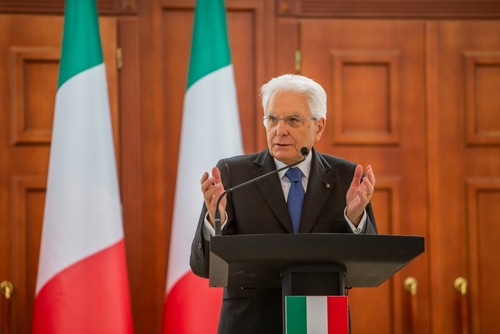
The President of the Italian Republic highlights the value of dignity in the workplace and warns against the risks of technological innovation without human oversight. A reflection that intersects with Ursula von der Leyen’s European vision: competing in the artificial intelligence revolution without abandoning our values.
Work cannot be reduced to an economic variable, nor can the dignity of those who work be sacrificed on the altar of competitiveness. This is one of the most significant messages delivered by President of the Italian Republic Sergio Mattarella on 22 October, during the ceremony at the Quirinal Palace awarding the Stars of Merit for Labour for 2026.
In his address, the Head of State examined the profound transformations affecting the world of employment, focusing in particular on the impact of artificial intelligence, the changing relationship between capital and labour, and the risks of a society increasingly divided between a privileged few and a majority exposed to economic uncertainty.
Mattarella recalled that work is a fundamental expression of personal dignity, allowing individuals to develop their talents and professional abilities while contributing to the well-being of their families and communities. Hence his warning against treating wages merely as a cost to be reduced in order to improve business competitiveness. Fair remuneration also represents recognition of an individual’s value and contribution to society. This principle does not rule out the need to increase productivity and encourage innovation, but it calls for a balance between economic growth and social responsibility.
The most topical part of the speech concerned the relationship between artificial intelligence and the future of work. Mattarella observed how new technologies are profoundly reshaping society, affecting everyday life, its rhythms and its spaces. The growing introduction of humanoid robots in the coming years raises questions that, until recently, belonged largely to the realm of science fiction. With a remark that drew applause from the audience, the President expressed the hope that the traditional ceremony awarding the Stars of Merit for Labour would never have to be replaced by a competition to identify the «most diligent humanoid».
Behind the irony lies a question that is far from marginal: what place will remain for human beings in a society where machines will increasingly be capable of performing ever more complex tasks? Mattarella’s answer is not a rejection of modernity. The President ruled out the need to fear new technologies or view them with hostility, warning against a return to forms of neo-Luddism. Artificial intelligence can indeed represent an extraordinary opportunity to increase efficiency, reduce physical strain, improve safety and enhance human capabilities. The condition, however, is that it remains a tool serving people. «Machines must serve people, not the other way around»: this is the most effective summary of his argument.
The risk concerns not only the possible replacement of certain professions, but also the emergence of new forms of dependence on algorithms and increasingly concentrated technological and economic powers. For this reason, Mattarella insisted that the governance of these transformations and responsibility for strategic decisions must remain in human hands, within our communities.
The President’s reflections are part of a broader debate that directly involves European institutions. A significant convergence can be found in the positions expressed by European Commission President Ursula von der Leyen, who has identified artificial intelligence as one of the main strategic challenges facing the future of the European Union. In her State of the Union address on 16 September, von der Leyen advocated developing artificial intelligence capable of enhancing human skills rather than replacing them. Her example was medicine: AI can help doctors make more accurate diagnoses and improve treatments, but it must not render doctors themselves redundant. Artificial intelligence must strengthen professionals’ capabilities, not replace them. This approach closely echoes the principle expressed by Mattarella.
The Commission President added another essential consideration: Europe must become a leading player in the technological revolution, avoiding excessive dependence on infrastructure, platforms and models developed elsewhere. The issue returned to the centre of European discussions on 13 November in Dublin, where EU leaders discussed artificial intelligence. Von der Leyen highlighted the need to mobilise at least 500 billion euros in private capital to strengthen European investment in semiconductors and advanced technologies.
The issue, therefore, is not merely technological, but also economic and geopolitical. Without its own industrial and scientific capabilities, Europe risks becoming dependent on external powers in a sector destined to shape the future of economies and international relations. Employment also remains a central concern. Von der Leyen highlighted the inequalities that may arise from the spread of artificial intelligence, particularly across generations and regions, announcing a European Quality Jobs Act to accompany labour market transformations and promote high-quality employment.
A vision is therefore emerging in which competitiveness, technological autonomy and the protection of human dignity should go hand in hand. This is far from an easy balance: Europe must ensure that the need to regulate innovation does not turn into excessive bureaucracy capable of holding back businesses and research. At the same time, it must prevent the pursuit of profit and efficiency from becoming the sole criteria by which progress is measured.
Mattarella’s message carries significance well beyond the strictly economic and technological sphere. The centrality of the individual, the value of work, personal responsibility and the cohesion of communities are fundamental elements of a society that wishes to face the future without losing its identity.
From a conservative perspective, progress should not necessarily entail abandoning the principles and values upon which our civilisation has been built. Modernisation is essential, but it cannot become an automatic process indifferent to its consequences for individuals, families and communities.
In this respect, the President’s intervention reaffirms the value of one of the essential functions of institutions: seeking a balance between different interests without ideologically setting the business world against workers, innovation against tradition, or economic growth against human dignity.
It is precisely this capacity for mediation that makes the role of the Head of State so significant. Mattarella advocates neither a nostalgic defence of the past nor an uncritical acceptance of every transformation. Rather, he calls for change to be governed while preserving what makes a society free, cohesive and aware of its history.
True modernity, ultimately, does not consist in replacing human beings with machines, but in placing new technological possibilities at the service of a better human condition. It is a principle of common sense, but also an important political and cultural statement: progress is genuine only when it does not forget the human person.