





 Subscribe


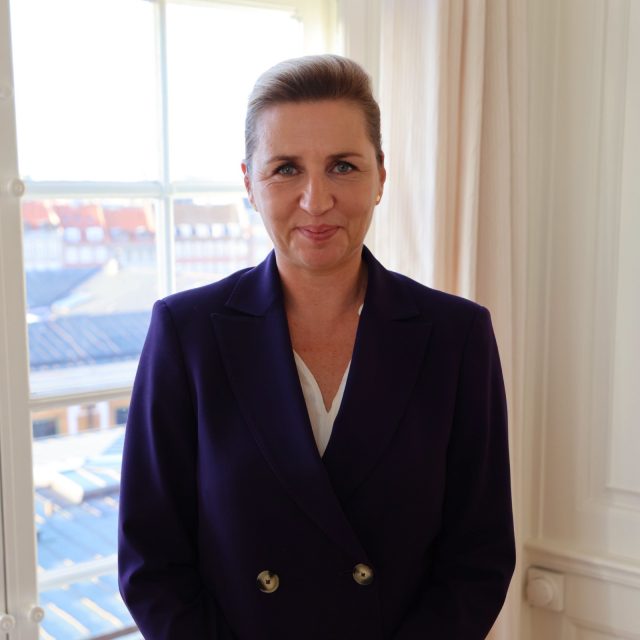
It is rare for a public statement by a centre-left political leader to receive so many favourable reactions from conservative circles. On 17 November 2026, during a radio podcast, Mette Frederiksen, Denmark’s Social Democratic Prime Minister, made a series of remarks that the left-wing and liberal establishment would consider highly controversial. In short, Ms Frederiksen, who has been in office since 2019, spoke unequivocally in favour of a “strong majority culture” and against the “great replacement” of Europeans. The Danish prime minister also stated that she believes in her national and European values and will not compromise on this issue.
The very fact that a Social Democratic leader — who has led her party for over a decade and headed a government for more than seven years — uses such rhetoric marks a turning point and strikes a direct blow against the pro-mass-migration establishment. This is not because she has made some groundbreaking discovery, but because she has said out loud what demographic data, crime statistics, and everyday life in the increasingly unsafe neighbourhoods of Western Europe have been showing for far too long.
To stand up for and defend one’s own values, to refuse compromises, and to oppose the replacement of one’s own population is to acknowledge a reality that is as harsh as it is dangerous. Egalitarian multiculturalism has never been a neutral policy, but rather a project of transformation that has promoted the false narrative that the identity and culture of the majority are negotiable and adaptable. The effects are all too visible throughout Western Europe: eroded social cohesion, very high crime rates, pressure on welfare systems, and the emergence of parallel societies with their own rules and “laws”.
Denmark is a special case. After 2015, it tightened its asylum policies, introduced measures against ghettos, and drastically reduced the number of approved asylum seekers. Mette Frederiksen, leader of the Social Democratic Party since 2015, whose public stance against mass immigration has grown increasingly hard-line, realised that the welfare state would not survive if the majority became a minority. That is why her position is now even more straightforward than that of some conservatives.
The Danish prime minister spoke about “population replacement” — and rightly so. This demographic phenomenon is a reality, not a conspiracy theory, even though some idealists still insist on treating it as one. Fertility rates below the replacement level (around 1.5 in Denmark, below 1.4 in many European countries), combined with high net immigration from culturally distant parts of the world, are causing a shift in the population’s composition. Projections show that, under scenarios of continued immigration, the proportion of ethnic Danes will decline significantly in the coming decades. The trend is equally pronounced in other European countries. The refusal to call things by their proper name has been a form of intellectual censorship that has sought to protect ideology at the expense of factual reality.
What the Danish prime minister has publicly stated should serve as a lesson to anyone who still believes in truth and common sense. The majority is not oppressive by definition; rather, it is the key condition for a society to function. A nation is not a hotel where anyone can walk in and demand that the house rules be changed to suit the guests’ desires. Mette Frederiksen’s strict policies set an example worth following. What is truly at stake is whether Europe will follow the Danish example before the demographic shift becomes irreversible.
Ms Frederiksen’s statements essentially represent a classic conservative argument: a society that loses its historical majority will, over time, lose its main features as well. Realism, nothing more, nothing less. When a prime minister from Northern Europe says this openly, the taboo is broken. It remains to be seen whether the rest of Europe has the courage to act accordingly before demographic reality dictates otherwise.