





 Subscribe


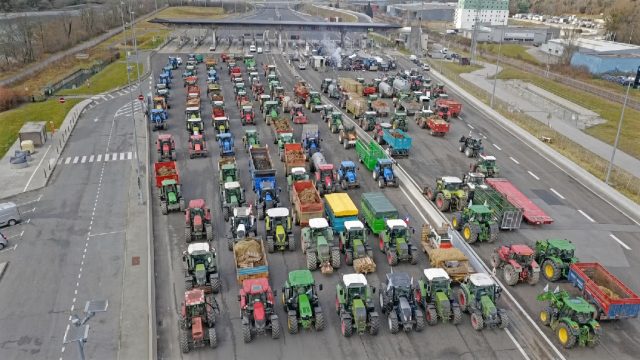
On 26 and 27 November 2026, European leaders will sit down in Brussels and decide the shape of the Union’s budget for 2028–2034. For Romania’s farmers, and for hundreds of thousands of their counterparts from Spain to Poland, those figures will decide whether the next seven years look like a workable living or another stretch of watching costs climb while prices and support slide.
Romanian farmer organizations have already put their position on paper. In an open letter timed for the European Council, groups representing more than 14,000 farms and roughly six million hectares, the Alliance for Agriculture and Cooperation, the Romanian Farmers’ Club, the Forum of Professional Farmers and Processors, and others told President Nicușor Dan, Prime Minister Luca Niculescu and the relevant ministers that Romania must reject any further cut to the Common Agricultural Policy. They want a dedicated, ring-fenced PAC budget of at least €433 billion, the floor demanded by the European Parliament and adjusted for inflation. For Romania itself they set a clear national floor: no less than €22 billion for direct payments and investments across the seven years.
The Commission’s earlier proposal had already stripped roughly €100 billion from the envelope for food production compared with 2021–2027. A new draft tabled on 21 November by European Council President António Costa layered on further reductions. Parliament’s co-rapporteur Siegfried Mureșan called it unacceptable. France criticized it for failing to protect farm incomes. Because the decision in the Council requires unanimity, Romania’s voice carries real weight. The organizations insist it must be used to finish the external convergence of direct payments with fresh money, not by redistributing cuts, and to lock in alliances with France, Poland and Italy.
The Alliance for the Union of Romanians (AUR) has publicly lined up behind that position. Its statement frames the negotiations as the moment Romania either defends the rural economy or watches it thin out. AUR MEPs Georgiana Teodorescu, Gheorghe Piperea and Adrian Axinia have pledged to fight for the same targets inside the European Parliament, and the party has called on every Romanian MEP, across political families, to do the same.
The budget fight does not stand alone. At a Cogeca business forum in Spain focused on scaling agro-food cooperatives, European farmers drew a second hard line: water. Ángel Villafranca, president of Spain’s agro-food cooperatives, put it plainly: policies that restrict farmers’ access to water, to already-authorized plant-protection products and to fertilizers in the name of the Green Deal are eroding competitiveness and, ultimately, food security. “In southern Europe the idea is spreading that water should no longer be used for agriculture,” he said. “We need a European water policy that guarantees access for cooperatives and their members.” Without that, the next drought, a situation already too familiar in Romania’s south and east, becomes a structural problem rather than a bad season. Romanian voices at the same gathering, including from the Fermierul Nădlăcan cooperative, added the familiar domestic burdens: scarce long-term liquidity, banks that still treat agriculture as high-risk, and the absence of a mandatory national risk-management tool.
A third front is the double standard on organic production. In the European Parliament, AUR MEP Georgiana Teodorescu voted against a report on organic products from third countries precisely because the compromise text refused the “mirror rules” she and others had sought in the Agriculture Committee. Under the version that reached plenary, organic goods produced outside the EU can still carry the green European leaf logo if they meet a few additional conditions on top of their home-country rules. They do not have to satisfy the full suite of EU requirements that Romanian and other European organic farmers already bear: higher input costs, strict transition periods, and, in Romania’s case, chronic obstacles to irrigation investment. Teodorescu’s argument was simple: the single market is built on equal treatment. If a product wants the EU organic label, it should meet the same standards the European producer does. Anything less undercuts the farmers who have already invested in the transition Brussels claims to want.
AUR deputy Florin-Bogdan Velcescu has asked Agriculture Minister Florin Barbu for precise, non-estimated figures on how Law 217/2016 on reducing food waste is actually working. The law requires operators to report annually on waste-reduction plans, free transfers of edible food, and results. The Ministry was supposed to have the national platform ready by 30 June 2025 and to publish yearly progress data. Velcescu wants the number of operators who actually filed, the coverage rate, whether donor and recipient quantities match, how many controls and fines have been issued since the law entered force, and the status of the national strategy. The demand for exact numbers rather than ranges is itself a sign that transparency and enforcement remain incomplete.
These pressures sit on top of problems the Ministry of Agriculture has not yet resolved for the current season. Organic farmers report that 2025 subsidies still had not arrived by late November, months after the July deadline, forcing them onto high-interest working-capital loans. Drought compensation for nearly 54,000 farmers covering more than 700,000 hectares has been scaled down because claims exceed the available budget; earlier calculation errors in the formula had to be corrected after the fact. The Ministry itself has stated it needs an additional 1.2–1.5 billion lei before year-end simply to address existing payment and co-financing obligations. Farm-gate prices for live pigs remain stuck at levels producers say are below cost. Promised measures, such as diesel without excise, new fixed-rate credits, are still described as “under discussion” with the Finance Ministry rather than operational. Irrigation and water-access legislation continues to act as a bottleneck rather than an enabler.
European farmers have already shown they will not absorb these pressures quietly. Earlier protests in Brussels, including Romanian participants, mixed opposition to PAC cuts with rejection of the Mercosur trade deal and the carbon border adjustment on fertilizers. The message that has travelled from Spanish cooperatives to Romanian open letters is consistent: high standards without corresponding support and equal treatment for imports do not produce a green transition. They produce fewer farms, more imports, and a countryside that empties on the daily.
The European Council meeting this week will not settle every irrigation permit or reporting platform. It will, however, set the financial architecture that either keeps European and Romanian production viable for the next seven years or locks in a permanent competitive disadvantage.