





 Subscribe


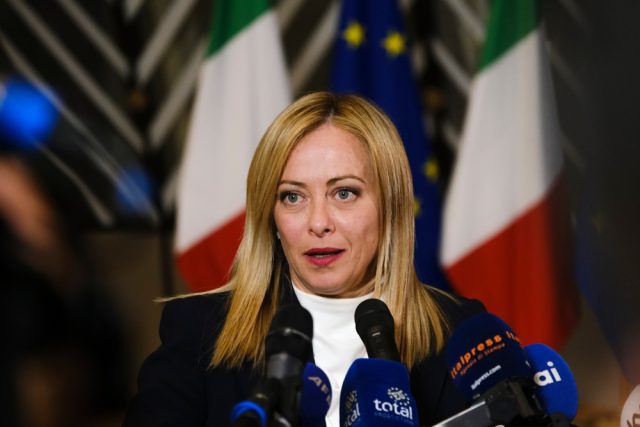
In the context of an international system increasingly characterized by dynamics of instability and a progressive intensification of geopolitical tensions, Prime Minister Giorgia Meloni’s recent visit to the Persian Gulf region represents a particularly significant strategic initiative. The trip, scheduled to visit Saudi Arabia, Qatar, and the United Arab Emirates on April 3 and 4, 2026, comes at a critical time marked by the escalation of the conflict with Iran, whose repercussions extend far beyond the regional level, affecting global dimensions such as energy security, market stability, and international economic and financial equilibrium. In this context, Italy’s diplomatic initiative not only appears timely given the evolving events, but also takes on a considerable political and symbolic significance, representing the first official visit by a European leader to the area since the beginning of the new phase of the crisis. This element highlights Italy’s proactive positioning on the international stage, as well as the Government’s willingness to play an active role in de-escalation and political mediation processes. At the same time, the mission is part of a broader foreign policy strategy aimed at protecting national interests by strengthening bilateral relations with strategic partners in terms of energy, economics, and security. The Prime Minister’s direct presence in the region’s key decision-making centers also demonstrates the intention to consolidate a pragmatic and multilevel approach to international crisis management, based on dialogue, cooperation, and the building of stable and lasting partnerships.
THE STRATEGIC DIMENSION OF THE ITALIAN PRESENCE
The mission in the Gulf is not simply a symbolic gesture, but rather a targeted action to strengthen Italy’s position in an area crucial to global security. As highlighted in the Prime Minister’s video message, Italy’s presence in places where key dynamics for security and the national economic future are being determined is a priority. Italy’s commitment is based on a vision of foreign policy as a concrete tool for defending national interests, in a context where the stability of the Gulf directly impacts key economic variables, including energy prices and the competitiveness of the manufacturing system.
ENERGY AND INTERDEPENDENCE: THE ROLE OF THE GULF
One of the mission’s central aspects concerns the energy dimension. The Gulf region represents a strategic hub for global energy supplies, and for Italy in particular. Qatar, for example, covers approximately 10% of the country’s gas needs, while the entire area contributes approximately 15% of its total oil needs. In this context, any interruptions in the production or transit of energy resources, especially through the Strait of Hormuz, would have immediate repercussions on the Italian economy, impacting costs for businesses and households’ purchasing power. Awareness of this interdependence has guided Italian diplomatic efforts toward strengthening relations with partners considered reliable and strategic.
SAUDI ARABIA: SECURITY AND STRATEGIC PARTNERSHIP
The first stop on the visit took place in Jeddah, where Giorgia Meloni was received by Crown Prince and Prime Minister Mohammed bin Salman. The meeting provided an opportunity to reaffirm Italy’s support for Saudi Arabia at a time of particular vulnerability, marked by Iranian attacks. During the talks, the two leaders addressed the prospects of the conflict and ongoing efforts toward a diplomatic solution, emphasizing the need to overcome the current cycle of regional conflict. Italy’s defensive military assistance was also discussed, highlighting the country’s concrete contribution to the security of its regional partners. Another key topic was the continuity of energy supplies and mitigating the effects of the crisis on businesses and citizens. In this context, the two leaders shared the urgent need to ensure freedom of navigation in the Strait of Hormuz, a critical infrastructure for global trade. Finally, the meeting enabled the strengthening of the strategic partnership launched in 2025, with particular reference to cooperation in the economic, infrastructural, security, and defence sectors.
QATAR: ENERGY COOPERATION AND CRISIS MANAGEMENT
The second leg of the trip took the Prime Minister to Doha, where she was received by the Emir Sheikh Tamim bin Hamad Al-Thani. Once again, the visit had strong symbolic and political significance, representing a sign of closeness to a country hit by Iranian attacks. A notable element was the gratitude expressed for Qatar’s support in the evacuation of Italian citizens, particularly tourists in transit, at the beginning of the conflict. This collaboration highlights the solidity of bilateral relations and their operational dimension. The dialogue between the two leaders focused on diplomatic efforts to resolve the crisis and on building a sustainable regional security architecture. Particular attention was paid to energy issues, with a focus on possible measures to mitigate the shocks resulting from instability. In this context, the Prime Minister expressed Italy’s willingness to contribute, through the expertise of its production system, to the rehabilitation of Qatar’s energy infrastructure, underscoring the strategic role of these facilities for global energy security. The meeting also opened up prospects for cooperation in areas such as defence, critical infrastructure, food security, and migration management, confirming the desire to strengthen a multidimensional partnership.
UNITED ARAB EMIRATES: SECURITY, INVESTMENT, AND COOPERATION
The visit concluded in the United Arab Emirates with a meeting between the Italian Prime Minister and President Sheikh Mohamed bin Zayed Al-Nayyan. Once again, the mission had a dual significance, both symbolic and operational: on the one hand, Italy’s closeness to a nation hit by attacks was reaffirmed; on the other, heartfelt thanks were expressed for the support provided in the repatriation operations of Italian citizens present in the country at the beginning of the crisis. The meeting addressed the prospects of the conflict and the conditions necessary for a cessation of hostilities, with particular reference to freedom of navigation in the Strait of Hormuz. This theme emerges as a cross-cutting element of the entire mission, highlighting the centrality of maritime routes for global economic stability. On a bilateral level, the two leaders discussed strengthening mutual investments in the strategic sectors of energy, defence, and security, confirming their desire to consolidate an already significant cooperation.
FREEDOM OF NAVIGATION AND THE STRAIT OF HORMUZ
A recurring theme in discussions with regional leaders is the need to ensure freedom of navigation in the Strait of Hormuz. This maritime passage is a key hub for the transit of a significant portion of the world’s energy resources. In the context of the current crisis, the security of this infrastructure is of strategic importance not only for the countries of the region, but also for economies heavily dependent on energy imports, such as Italy’s. The position expressed by the Italian Government underscores its commitment to the stability of trade routes and maritime security.
FOREIGN POLICY AND NATIONAL INTEREST
The mission in the Gulf offers a concrete example of how foreign policy can be translated into a tool for protecting national interests. As emphasized by Giorgia Meloni, international stability has direct implications for citizens’ daily lives, affecting variables such as energy costs, employment, and purchasing power. When instability grows in the Gulf, it’s not just the international balance that is affected; it also impacts energy prices, business costs, jobs, and ultimately, household purchasing power. From this perspective, Italy’s diplomatic commitment is essential for protecting the country’s economic and social system.
AN ACTIVE ROLE IN REGIONAL STABILIZATION
The Prime Minister’s visit to the Gulf region highlights Italy’s willingness to take an active role in managing international crises. In a context marked by the instability generated by the conflict with Iran, Italian diplomatic action stands out for its ability to combine solidarity with regional partners and the protection of national interests. Strengthening bilateral relations, attention to energy security, and commitment to the stability of maritime routes are the pillars of a strategy aimed at consolidating Italy’s presence in an area of global importance. Ultimately, the mission in the Gulf confirms that foreign policy, far from being a distant dimension, is a fundamental tool for addressing contemporary challenges and ensuring Italy’s economic and social future.