





 Subscribe


To explain contemporary Spanish politics to a foreign observer, perhaps no phrase is more illustrative than the one Pedro Sánchez himself once used regarding the independence of the Public Prosecutor’s Office.
“Whom does the Prosecutor’s Office depend on? Well, it depends on the Government.”
This remark has continued to follow Sánchez. At the time, critics interpreted it as indicative of a broader philosophy: the belief that institutions serve not primarily as checks on power but as instruments for exercising it. Regardless of its fairness, this perception has persisted throughout Sánchez’s premiership for nearly a decade.
Currently, this perception faces its most significant test.
Certain moments in the life of a democracy transcend individual scandals, becoming tests of institutional strength, measures of political culture, and indicators of the balance between power and accountability within a constitutional order. Spain appears to have reached such a juncture. The ongoing succession of judicial investigations, criminal proceedings, convictions, and allegations involving central figures in Pedro Sánchez’s political sphere is significant in itself. However, focusing solely on the specifics of each case overlooks the broader narrative. The true significance of the current crisis lies not only in the potential penetration of corruption into the highest levels of government, but also in the continued functioning of the institutions responsible for investigating these matters, despite sustained political pressure, public intimidation, and increasingly overt attempts to subordinate them to executive authority.
For nearly a decade, Pedro Sánchez has maintained a dominant position in Spanish politics, demonstrating tactical skill that is arguably unmatched among European leaders of his generation. He has withstood electoral setbacks, parliamentary instability, internal party dissent, separatist challenges, economic crises, and frequent predictions of his political demise. In other countries, governments have collapsed over less severe errors than those endured by his administration. Prime ministers across Europe have resigned due to expenses scandals, ministerial indiscretions, or ethical controversies that pale in comparison to the volume of allegations currently facing the Spanish Government. Nevertheless, Sánchez has consistently emerged from each crisis seemingly strengthened.
However, the current situation appears fundamentally different. This distinction does not arise from the novelty of corruption in Spanish politics, as such issues are unfortunately longstanding. Nor is it due to the unprecedented nature of allegations against senior politicians. Instead, the current moment is distinguished by the concentration of legal and political jeopardy surrounding individuals at the very core of the governing coalition, particularly within the inner circle that facilitated Sánchez’s ascent to power.
Spain is currently experiencing what may become the most significant corruption scandal of its democratic era. Former Transport Minister José Luis Ábalos has just been sentenced this week to twenty-four years in prison, representing the harshest corruption sentence ever imposed on a minister in democratic Spain. Once among Sánchez’s most trusted associates and a principal architect of his return to Socialist Party leadership and subsequent rise to the premiership, Ábalos’s downfall marks a pivotal moment in contemporary Spanish politics. His adviser and close associate, Koldo García, received a nineteen-year sentence. Santos Cerdán, until recently the Socialist Party’s organisational secretary and arguably the second most influential figure within the PSOE after Sánchez, is now at the center of an expanding judicial investigation that extends into the core mechanisms of party governance.
Judicial proceedings involving the Prime Minister’s wife, Begoña Gómez—whose passport has been withdrawn pending trial—, and his brother, David Sánchez, are ongoing, resulting in an exceptional situation where individuals from the Prime Minister’s immediate personal and political environment are simultaneously under judicial scrutiny. Regardless of the eventual outcomes and the presumption of innocence that must be maintained, the cumulative political impact is indisputable, in both depth and breadth. Such a concentration of investigations surrounding the immediate circle of a sitting head of government is rare in modern European democracies.
The Resilience of Institutions
While the scandals themselves are notable, the institutional response is perhaps even more significant, demonstrating that the system has not yielded to pressure as many had feared.
For years, critics of Sánchez have argued that Spain has been undergoing a gradual process of institutional colonisation. Disputes involving the General Council of the Judiciary (CGPJ), repeated attempts to modify the mechanisms for judicial appointments, increasingly hostile rhetoric toward judges whose decisions were inconvenient for the government, and persistent efforts to portray judicial investigations as political conspiracies have all contributed to concerns that Spain is moving toward a model in which constitutional checks are increasingly subordinate to executive authority.
Comparable concerns have arisen within the security services. When investigations approached politically sensitive areas, attention frequently shifted from the substance of the allegations to the legitimacy of the investigators. The Civil Guard’s elite anti-corruption unit, the UCO, became a particular focus of criticism. Investigators faced accusations of political motivation, scrutiny of their methods, and challenges to their credibility. However, the most notable aspect of the current crisis is that these efforts appear to have ultimately failed.
The UCO has investigated ministers, senior Socialist Party officials, members of the National Police, and members of the Civil Guard itself when warranted by evidence.
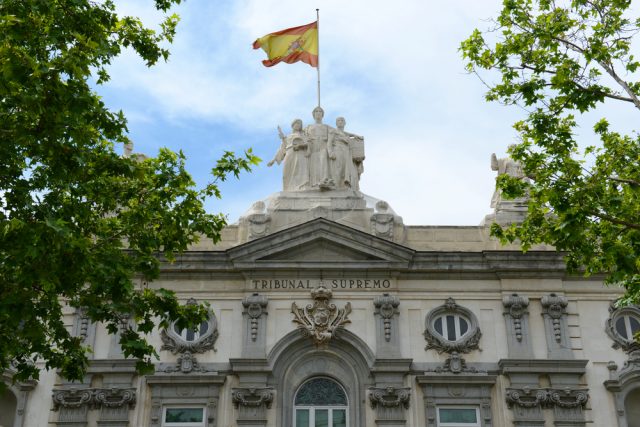
Judges have continued to authorise searches and arrests. Courts have proceeded with hearing cases. The Supreme Court has continued to issue rulings. The mechanisms of accountability have remained operational, even when such actions became politically inconvenient for some of the most influential individuals in the country.
This is significant because democracies do not fail solely due to the presence of corruption, which exists to varying degrees in every political system. Democracies fail when institutions cease to investigate wrongdoing, when prosecutors serve politicians, when judges become instruments of political parties, and when police forces lose the capacity to pursue misconduct wherever it occurs. The most encouraging aspect of Spain’s current situation is that, despite sustained pressure, its institutions have thus far demonstrated a resilience that many believed had been lost.
Each judicial investigation that progresses sends a reassuring message to citizens: despite imperfections and delays, the system continues to function.
A profound paradox lies at the center of the current crisis. Each new revelation may weaken the Government, yet simultaneously strengthens public confidence in the constitutional order. Every judicial investigation that advances, every indictment issued, and every conviction delivered reinforces the message to citizens that, despite imperfections and delays, the system remains functional.
Democracy’s Long Memory
Spanish citizens have long maintained a healthy skepticism toward their political class. Corruption scandals have periodically affected parties across the ideological spectrum. Nevertheless, there remains a widespread belief that justice, though often slow, ultimately prevails. This belief may explain why public outrage has not resulted in institutional despair. Citizens increasingly appear convinced that the state retains the capacity for self-correction.
This dynamic is particularly significant given Spain’s complex historical context. Few European countries possess such a substantial legacy of political polarisation, institutional distrust, and ideological conflict. Throughout the twentieth century, Spanish politics was frequently characterized by the tendency to treat state institutions not as neutral guarantors of the common good, but as assets to be captured and used against political opponents. The democratic transition was marked by the creation of institutions capable of transcending this logic. The central question of the Sánchez era is whether these institutions remain robust enough to resist renewed attempts at politicization.
To date, the evidence suggests that they do.
Political Legitimacy and Its Limits
Political legitimacy depends on more than parliamentary calculations. A government can withstand economic challenges, unpopular policies, and electoral setbacks. However, it cannot easily survive the gradual erosion of public confidence in its moral authority to govern. When voters perceive a government as not merely mistaken but compromised, exhausted, or ethically discredited, political survival becomes significantly more difficult.
Many governments have collapsed for far less. Across Europe, political careers have ended over controversies that are minor compared to the accumulation of scandals currently surrounding Sánchez’s administration. Recent challenges faced by other European leaders illustrate how rapidly political capital can dissipate as public trust declines. The latest to fall has been Starmer in the United Kingdom this week, although his Government will survive him. The key distinction is that Sánchez has repeatedly defied such trends, with his career characterised by survival in seemingly insurmountable situations.
Therefore, predicting Sánchez’s imminent departure would be premature.
However, it would be equally unwise to underestimate the magnitude of the challenge he currently faces.
The central question facing Spain is no longer whether corruption exists. There is now little doubt that serious wrongdoing has occurred within circles very close to political power. Nor is the primary question whether additional revelations will emerge, as they are highly likely. Instead, the key issue is whether the Government’s legitimacy can withstand a process that has already implicated ministers, senior party officials, and members of the Prime Minister’s immediate circle.
Sánchez Delenda Est
Pedro Sánchez has demonstrated for nearly a decade that he is among the most resilient political figures in Europe. The coming months may determine whether he can withstand the judgment now being rendered not by parliamentary opponents or critical media—though they, too, will be judged in their response to this obscene corruption—, but by the institutions of the Spanish state.
Cato the Elder concluded every speech in the Roman Senate, regardless of the topic, with the same demand: Carthago delenda est, meaning Carthage must be destroyed. He recognised that certain threats to the republic were so fundamental that they required persistent acknowledgment until resolved. Increasingly, a similar argument can be made regarding the Sánchez government’s influence on Spanish political life. This perspective is not rooted in partisan hostility, but rather in the accumulating evidence in Spain’s courts and before its judges, which suggests a systematic effort to subordinate the institutions of democracy to the will of those in power.
If these institutions continue to fulfill their responsibilities, as they have thus far, history may ultimately determine that the greatest achievement of this crisis was not merely the exposure of corruption, but the demonstration that Spain’s democracy remains more resilient than those who sought to undermine it.
Spain deserves better.