





 Subscribe


As political negotiations have progressed in recent times, it has become increasingly clear that the Republic of Moldova’s accession to the European Union is no longer merely an institutional project. An economic and security strategy is beginning to take shape around this process, one that could fundamentally transform the country’s profile in the coming years. The economy, security, and investment are the new stakes in the Republic of Moldova’s accession.
The Moldova–European Union Investment Conference, held in Chișinău in the presence of European Commissioner for Enlargement Marta Kos, was one of the clearest signals in this direction. During the event, projects and investment plans totaling over one billion euros were announced. The anticipated investments come from both European companies and international financial institutions. This is not merely about funding for specific projects, but rather the beginning of Moldova’s economic repositioning in relation to the European market. Investors traditionally seek legislative stability and institutional predictability, and Moldova’s rapprochement with the European Union offers precisely these guarantees. As Moldovan legislation is harmonised with European standards, investment risks decrease, and private-sector interest increases. This is why European leaders argue that reforms should not be viewed as obligations imposed by Brussels, but rather as tools that enhance the competitiveness of the Moldovan economy, and the message conveyed by President Maia Sandu to investors reflected precisely this idea:
“The Republic of Moldova should no longer be viewed as a country on the periphery of Europe, but as an economy preparing to enter the world’s largest single market.”
At the same time, European Commissioner Marta Kos noted the rapid pace of reform implementation and the absorption of European funds, noting that the Republic of Moldova ranks among the top-performing beneficiary countries of European development programs. However, the economic dimension is not the only one gaining importance.
The Russia-Ukraine war has also radically altered the Republic of Moldova’s security priorities. Moldovan airspace has been repeatedly violated by drones originating from the conflict in Ukraine, which is why authorities in Chișinău have begun to speak openly about the need to develop a national defense industry. Recently, Maia Sandu announced the government’s intention to amend legislation to allow for public-private partnerships and foreign investment in the production of interceptor drones and modern anti-drone defense systems.
For a country that, until recently, avoided almost any discussion regarding the development of the defense industry, this initiative by the authorities in Chișinău represents a major shift. The model is largely inspired by the experience of Ukraine, which, under the pressure of war, has built one of Europe’s most dynamic drone and military technology industries. For the Republic of Moldova, the development of such capabilities is primarily defensive in nature. The stated goal is to protect its airspace and reduce the population’s exposure to hybrid threats. This military component completes the picture of European integration because the European Union no longer views the Republic of Moldova exclusively through the lens of administrative reforms, but also as a partner that contributes to regional security. The messages conveyed by European officials earlier this month all point to the same conclusion: a stable, prosperous Moldova capable of protecting its democratic institutions represents a strategic gain for all of Europe. For this reason, the accession process cannot be reduced to the negotiation of technical chapters because, in reality, it means transforming a state on the Union’s eastern border into an active player, capable of participating in Europe’s economic, energy, and security projects. It is precisely this transformation that explains why, in June 2026, the Republic of Moldova’s accession dossier became one of the most important topics on the European political agenda.
Once negotiations begin, the real challenges are just getting started. The stakes of accession and the Republic of Moldova’s European future
The official opening of the first negotiation cluster (on the 15th of June 2026), during the intergovernmental conferences held in Luxembourg, was viewed in Chișinău as a historic victory. For the first time since declaring independence, the Republic of Moldova was effectively entering the process through which a candidate country can become a full member of the European Union. The enthusiasm of the moment, however, was accompanied by a message of caution coming directly from European officials. The accession process will not be automatic, nor will it be without obstacles. On the contrary, the experience of recent enlargements has led Brussels to rethink the rules of the game.
European Commissioner for Enlargement Marta Kos announced that the European Union is working on a new system of safeguards under which future member states will be required to honor the commitments they have made not only before accession but also after joining the Union. In essence, Brussels wants to avoid a repeat of situations encountered in the past, when certain governments backtracked on reforms regarding the judiciary, institutional independence, or the rule of law after becoming members of the European Union.
According to European Commissioner for Enlargement Marta Kos, the mechanisms currently being developed will include transition periods, safeguard clauses, and the possibility of imposing restrictive measures if a member state fails to meet its obligations. The European official summarised the philosophy behind the new approach in a simple statement:
“If the rules are followed, there is no reason to intervene; if they are violated, the European Union must have effective tools to respond”
Behind these changes lies the experience of the past decade, particularly the difficulties encountered in relations with Hungary. Budapest’s repeated use of its veto to block decisions on sanctions against the Russian Federation or support for Ukraine has led several member states to call for stricter rules for future enlargements. France, Germany, and the Netherlands are among the countries that argue the accession process must be accompanied by mechanisms capable of ensuring long-term adherence to European values. From this perspective, the Republic of Moldova is entering a negotiation process that differs from the one Romania and Bulgaria went through two decades ago.
For Chișinău, this change in the negotiation process is not necessarily a disadvantage. On the contrary, Moldovan authorities have indicated that they are willing to accept stricter criteria, provided that they are transparent and applied equally to all candidate countries. The same principle applies to the pace of negotiations. Brussels insists that each country will advance solely based on its own results. While the Republic of Moldova and Ukraine have proceeded almost in parallel so far, European officials acknowledge that, once all chapters are opened, the two processes may evolve differently. The country that implements reforms more quickly will be able to close the negotiation chapters sooner and will have a better chance of completing the process before the other candidates. This new approach confirms one of the most significant changes in the European Union’s enlargement policy: the focus is no longer on collective negotiations, but on the performance of each individual country.
Moldova’s European integration continues to spark intense debate both in Chișinău and in European capitals. One of the most discussed topics in recent months has been the possibility of reunification with Romania, presented by some Moldovan officials as an alternative should the process of joining the European Union encounter major obstacles. The discussion has been fueled by statements from several political leaders, but the message conveyed by European institutions has been a cautious one. European Parliament President Roberta Metsola emphasised that the future of the Republic of Moldova must be decided exclusively by its citizens and that the European Union respects that choice. At the same time, the head of the European Parliament insisted that Brussels remains committed to supporting the Republic of Moldova’s European path and that closer integration with the single market is already producing visible results through integration into SEPA, the elimination of roaming charges, and the expansion of economic cooperation.
While the European Union’s position on the issue of a union between Romania and the Republic of Moldova has been reserved, the Russian Federation’s reaction was swift. Russian Foreign Ministry spokesperson Maria Zakharova publicly criticised the scenario of a union between Romania and the Republic of Moldova and argued that the Transnistrian region and the Gagauz autonomy do not share the goal of European integration, preferring close ties with Moscow. Numerous analysts interpreted these statements as a new attempt to fuel internal tensions and maintain Russian influence in the Republic of Moldova. These reactions demonstrate that the Republic of Moldova’s accession to the European Union goes far beyond the administrative dimension of the negotiations, and that this entire process has major geopolitical implications that alter the strategic balance in the Black Sea region. From Moscow’s perspective, Moldova’s rapprochement with European institutions is gradually reducing the traditional influence it has exercised over the former Soviet space, while from Brussels’ perspective, Moldova’s integration would mean strengthening the security of the Union’s eastern border and reducing the vulnerability caused by the war in Ukraine. This is precisely why Chisinau’s European path is being closely monitored both in Western capitals and in the Kremlin.
There is, however, also an economic dimension that explains the importance of accession. In recent years, the European Union has become the Republic of Moldova’s main trading partner, absorbing the bulk of Moldovan exports. Full integration into the single market would mean removing the remaining trade barriers, accelerating infrastructure development, increasing foreign investment, and, consequently, expanding access to European funds.
The experience of Central and Eastern European countries has shown us that accession to the European Union produces long-term economic benefits through increased investment, the development of the private sector, and the modernisation of public administration. However, these benefits do not materialise automatically overnight. They depend on each country’s ability to implement the reforms it has committed to and to capitalise on the opportunities offered by the European market.
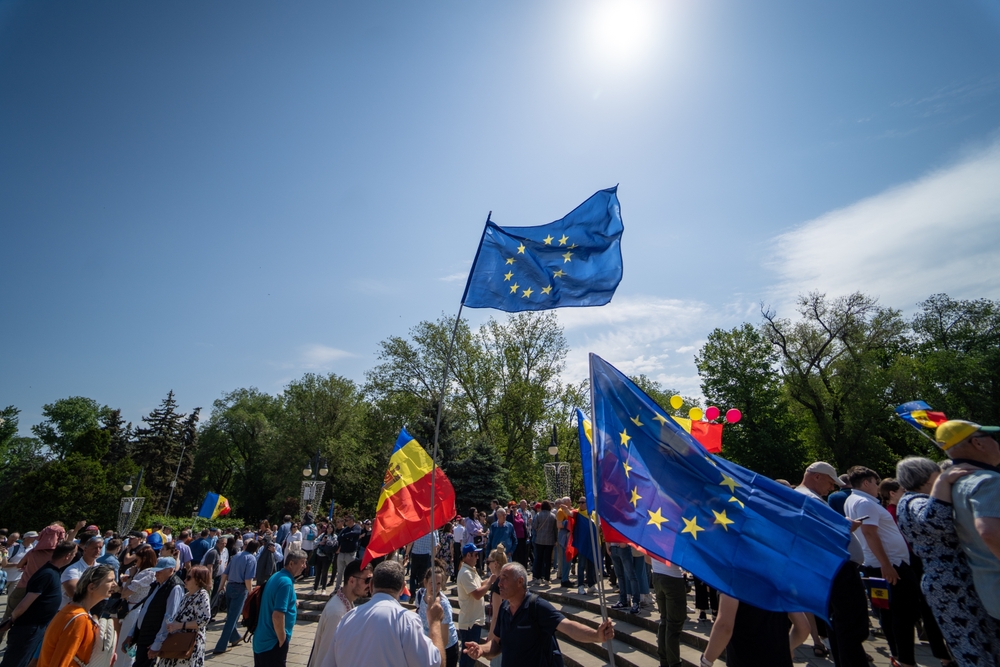
For the Republic of Moldova, the challenges remain considerable. Judicial reforms must continue, public administration must be modernised, and the fight against corruption must yield irreversible results. At the same time, Moldovan authorities will have to manage external pressures, hybrid attacks, and disinformation campaigns which, according to European institutions, will continue to accompany the entire accession process. At the same time, Moldovan society will have to face an equally important challenge: maintaining internal consensus on the European path. Accession negotiations are a lengthy process, and public support will depend not only on political rhetoric but also on the concrete benefits that citizens will experience in their daily lives.
Looking back, June 2026 will most likely go down in the history of the Republic of Moldova as the moment when the European project moved from the phase of promises to that of actual negotiations. After years of reforms, assessments, and diplomatic negotiations, Chișinău has received confirmation that its European future is no longer merely a political aspiration but an institutional process already underway. For the Republic of Moldova, the road to full membership will be long and difficult, and each chapter of the negotiations will entail new reforms, compromises, and complex decisions. However, unlike in previous years, the question is no longer whether the Republic of Moldova has a European perspective, but how quickly it will manage to meet all the conditions for becoming a member of the European Union.