





 Subscribe


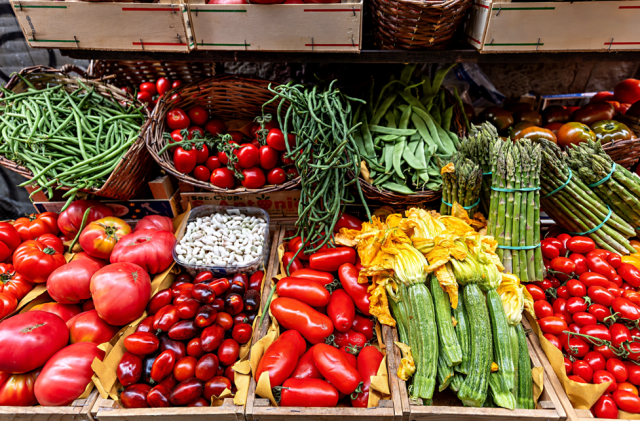
In the daily work within the Committee on Agriculture and Rural Development (AGRI) of the European Parliament, the ECR group (specifically the Italian delegation led by Fratelli d’Italia) has articulated the defense of Made in Italy and agri-food quality through various legislative initiatives, amendments, and policy directive dossiers.
Here are the main lines of legislative action and key dossiers advanced by the group in the AGRI Committee:
- Reform of the EU Regulation on Geographical Indications (PDO and PGI)
During the revision process of the regulatory framework on Geographical Indications (GIs), ECR MEPs worked to secure the legislative text against any form of misleading practice or dilution of brand value:
- Extension of digital protection: Promoted amendments aimed at making binding the automatic blocking and counteraction of illicit use of PDO/PGI names on web domains (top-level domains such as .com or .eu) and global e-commerce channels, extending producer protection beyond the boundaries of physical stores.
- Stop to new misleading registrations: The delegation insisted on inserting safeguard clauses to prevent third countries or other Member States from submitting registration applications for products that resemble protected Italian brands phonetically or conceptually (a principle applied to counter dossiers such as Croatian Prosek).
- Labeling transparency: Strong support for the mandatory clear indication of the raw material’s country of origin and the producer’s name on packaging.
- Countering misleading labeling and defending the wine sector
In the AGRI Committee, the labeling battle saw ECR on the front lines across two hot topics:
- No to mandatory Nutri-Score: Through shadow rapporteur roles, resolutions, and amendments on dossiers dedicated to consumer health and responsible consumption, ECR opposed attempts to introduce Nutri-Score as a unified European model. The group pushed to defend single-ingredient foods (such as Extra Virgin Olive Oil) and Quality Label products (PDO and PGI), requesting their exemption from algorithms based solely on caloric penalization.
- Wine labeling and Health Warning Labels: In response to proposals (such as the one adopted in Ireland) to place health warning labels on wine bottles similar to cigarette packages, ECR MEPs in the AGRI Committee supported and passed the principle of a clear distinction between alcohol abuse and the moderate, conscious consumption of wine, protecting a symbolic Made in Italy sector.
- Countering cultivated meat and promoting traditional food
Driven by Italian national legislation, the ECR group brought to the AGRI Committee the request for an approach based on the precautionary principle and transparency regarding novel foods and lab-grown foods:
- Reserved sales denomination: Amendment proposals aimed at prohibiting the use of traditional livestock and butchery terms (e.g., steak, sausage, fillet) for ultra-processed plant-based foods or those derived from lab-cell cultures.
- Protection of the livestock supply chain: Submission of acts aimed at enhancing traditional livestock farming and short supply chains, emphasizing the socio-economic role of farmers in preserving rural and inland areas.
- Revision of the Common Agricultural Policy (CAP) and bureaucratic simplification
In the AGRI Committee, ECR’s action also focused on demanding a rebalancing of the CAP to avoid penalizing the productivity of traditional farms:
- Moratorium or revision of stringent environmental constraints: Opposition to certain measures of the Farm to Fork strategy deemed damaging (such as linear cuts to pesticides and fertilizers without viable biological alternatives already available on the market).
- Simplification for small and medium producers: Approved amendments in agricultural dossiers to reduce the bureaucratic burden and facilitate access to promotion funds for quality agri-food products in third-country markets.
In summary
The approach of the ECR delegation in the AGRI Committee is characterized by a legislative strategy of “proactive defense”: using every European dossier on trade, health, environment, and agriculture to prevent rules that could devalue the identity and economic worth of traditional Italian supply chains, while promoting single market rules based on consumer transparency.
Prof. Giuseppe Arnone