





 Subscribe


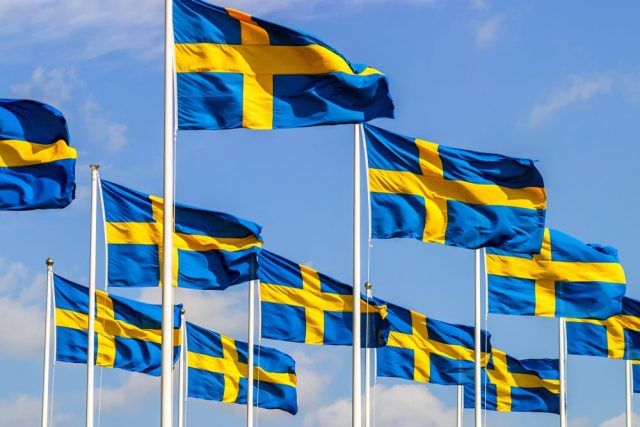
An election was held in Sweden on September 13. The left-wing coalition won by a narrow margin over the incumbent right-wing coalition. The four parties on the left challenging the sitting government received 49.6 percent of the votes cast, while the right-wing parties received 49.0 percent. The left-wing bloc secured 176 seats in the Riksdag, compared to 173 for the right-wing bloc. The result was the reverse four years ago, when the right-wing bloc won 176 seats and the left 173.
Voter preferences differed only slightly, then—yet it is enough for Sweden to get a new government.
However, it is by no means certain that forming a left-wing government will happen quickly. The four parties on the left are struggling to reach an agreement. The old Communist Party—which has called itself the “Left Party” since the 1990s—wants to take a seat in a Swedish government for the first time.
The party even has a congress resolution mandating that it should demand a seat in the government should the left-wing bloc win. The large and dominant Social Democrats, however, have absolutely no interest in this. Meanwhile, the small Centre Party once an interest group for Swedish farmers but now a neoliberal, progressive party for entrepreneurs and urban women—flatly refuses to accept the Left Party sitting in the government or even being part of the government’s supporting coalition. A week after the election, the prospects for the four left-wing parties to form a government still look bleak. The Left Party and the Centre Party refuse to budge, and an increasing number of people are seriously raising the question of whether Sweden might face a snap election.
For the major party on the left, the Social Democrats, the election victory proved to be something of a Pyrrhic victory. A couple more victories like that, and the party will be finished.
In fact, the Social Democrats posted their worst election result since universal suffrage was introduced in Sweden in the early 1920s. During their heyday in the 1950s, 60s, and 70s, the party typically garnered around 45 percent of the vote. Together with the small, fringe communist party, they governed Sweden in an unbroken stretch from 1932 to 1976.
But those days are long gone. For the past twenty years or so, the party has hovered between 30 and 35 percent—a figure that is still high by international standards for a party operating in a democracy with a proportional electoral system. And now, in 2026, they have lost even more ground. The party performed poorly in the 2018 election, securing 28.3 percent under leader Stefan Löfven. Löfven was succeeded in 2021 by Magdalena Andersson, who achieved 30.3 percent in the 2022 election yet still lost power to the right-wing bloc. However, after Magdalena Andersson had spent four years in opposition, there were expectations that the Social Democrats could boost their election result once more—perhaps to the 33–35 percent range. Opinion polls conducted during the term suggested the party was indeed at that level—right up until the final months. Then, they began to slide significantly, ultimately landing at a record low of 28.1 percent.
The question is why this party, once so dominant in Sweden, is now seeing a steady decline in its share of the vote in Swedish elections. The party—a classic social-democratic working-class party—has previously lost voters to the new right-wing nationalist party, the Sweden Democrats.
It has primarily been male workers who have gravitated toward the new right-wing party. The incumbent party leader made a serious attempt to win some of these voters back. Magdalena Andersson explained that the party had shed its former naivety regarding migration and criminal justice policy. The party had returned to its roots, she declared during the election campaign. The focus was now to be on law, order, and security for working families. Throughout the parliamentary term, the Social Democrats said almost nothing about LGBTQI rights or even gender equality. Climate policy, identity politics, and minority rights were downplayed. Instead, the aim was to win back conservative working-class voters. That effort was decidedly unsuccessful.
The left-wing bloc won. Social Democratic leader Magdalena Andersson is now attempting to form a left-wing government. Yet the Social Democrats themselves are faring worse than ever. They have lost male working-class voters, and the voter groups they now rely on are less stable. These include women working in the public sector—who might just as easily vote for the Left Party or the Green Party—and older Swedes who vote Social Democrat out of tradition; this demographic is dwindling and not being replenished. It also involves certain immigrant groups who may well be drawn to the Left Party instead.
In many European countries, social democrats and socialists have seen their traditional parties all but implode. We have not reached that point in Sweden yet, but we might soon.