





 Subscribe


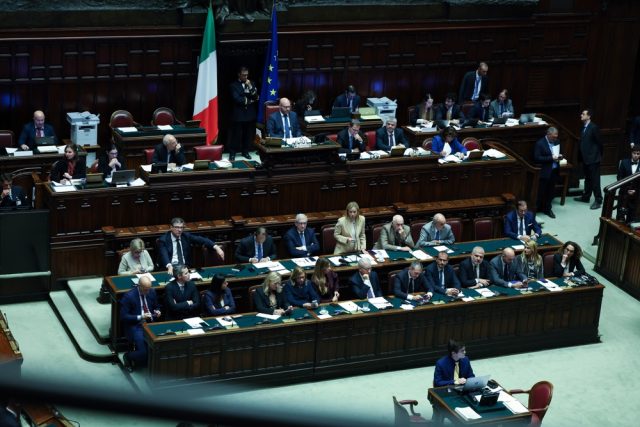
On March 11, 2026, the Italian government addressed the growing tension in the Middle East in parliament, with particular reference to the conflict involving Iran and the military operations conducted by the United States and Israel. Prime Minister Giorgia Meloni outlined the government’s position during a session of the Senate, ahead of the European Union Council meeting scheduled for March 19 and 20. The parliamentary briefing comes against an international backdrop characterized by a rapid deterioration in regional security and an increase in unilateral military actions. According to the Italian government, such initiatives increasingly tend to fall outside the regulatory framework defined by international law. In this context, Italy has chosen to reiterate its non-participation in military operations and to prioritize diplomatic instruments to contain the escalation.
THE PRINCIPLE OF NON-PARTICIPATION AND THE INTERNATIONAL LEGAL FRAMEWORK
One of the central elements of the Italian position concerns the exclusion of direct involvement in the conflict. During her statement to the Senate, Meloni clearly emphasized that the country does not intend to participate in ongoing military operations. This position reflects a policy aimed at maintaining a prudent stance in a context of growing instability, preventing the conflict from spreading further.
At the same time, the Prime Minister emphasized the importance of respecting international agreements regarding the presence and use of military infrastructure on national territory. In Italy, some bases are used under bilateral agreements with the United States and commitments undertaken within the framework of Western alliances. The government reiterated that these facilities may be used exclusively in accordance with the provisions of existing treaties. Should requests for use outside these agreements arise, the government clarified that the decision would be up to Parliament, in accordance with institutional procedures. The Italian position appears to be in line with that of other European partners. In particular, it was recalled that the Spanish government also confirmed its intention to limit the use of its military bases to the cases provided for in bilateral agreements with Washington.
DIPLOMACY AND COOPERATION WITH EUROPEAN PARTNERS
In addition to opting not to intervene militarily, Italy has intensified diplomatic efforts with various regional and international actors. The government has initiated contacts with the leaders of the Gulf countries, with the aim of encouraging a de-escalation process and promoting initiatives capable of restoring greater stability in the region. Coordination with some of Italy’s key European partners also plays a significant role. In the days leading up to her parliamentary address, Meloni held several meetings with German Chancellor Friedrich Merz, British Prime Minister Keir Starmer, and French President Emmanuel Macron. These discussions aimed to share analyses on the evolution of the crisis and coordinate possible joint responses, taking into account the potential economic and strategic repercussions of the conflict.
THE STRATEGIC ISSUE OF THE STRAIT OF HORMUZ
The crisis in the Strait of Hormuz represents one of the most sensitive points in the geopolitical conflict in the Middle East. Huge quantities of energy resources transit daily through this maritime corridor bound for global markets, and any disruptions or threats to shipping safety could have significant consequences not only for Europe, but for the entire global economy. Among the options being discussed internationally is the possibility of providing military protection to commercial vessels passing through the area. However, the Italian government has expressed caution regarding initiatives that could be interpreted as further escalation. At this stage, the stated priority is to maintain coordination with allies and carefully evaluate possible joint strategies.
From this perspective, organizations such as the United Nations and other multilateral diplomatic platforms could play a decisive role in coordinating potential initiatives for maritime security and regional stability.
PROTECTION OF CIVILIANS AND CONDEMNATION OF VIOLENCE
During her address to the Senate, Meloni also addressed the humanitarian consequences of the conflict. Specifically, she strongly condemned the attack on a girls’ school in the southern Iranian city of Minab, resulting in the deaths of several girls. The Italian government expressed solidarity with the families of the victims and called for a swift investigation of those responsible for the incident. This condemnation of the incident is part of a broader call for the protection of the civilian population during military operations. Italy reiterated the importance of ensuring the safety of non-combatants, with particular attention to the protection of minors.
THE OUTCOME OF THE PARLIAMENTARY DEBATE
The position outlined by the government is based on three main pillars: non-participation in the conflict, respect for international agreements, and diplomatic commitment to promoting a reduction in tensions. In an increasingly complex global context, these elements constitute the framework through which Italy intends to contribute to managing the Middle Eastern crisis.