





 Subscribe


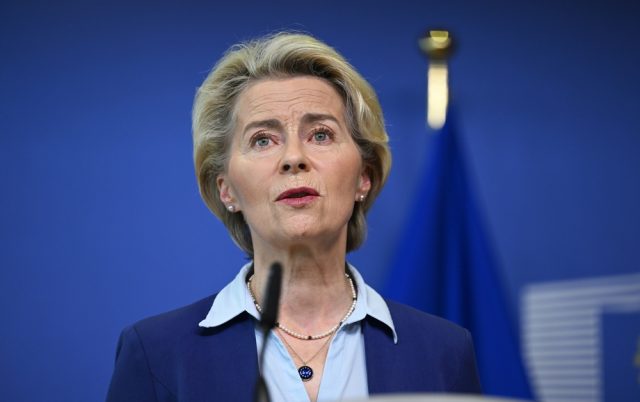
The European Union and Australia have concluded a comprehensive free trade agreement, accompanied by a defence and security partnership and the launch of discussions regarding Australia’s association with the Horizon Europe program. The announcement, made in Canberra during a visit by European Commission President Ursula von der Leyen and Prime Minister Anthony Albanese, represents a significant step in redefining the economic and strategic relationship between the two regions. The process leading to the agreement began in 2018, and it now comes at a time of significant geopolitical instability and growing competition for access to resources. In this context, cooperation between Brussels and Canberra is presented as a tool to strengthen existing relations and generate mutual benefits in economic and security terms. The final outcome aims to facilitate access for European products to the Australian market by removing over 99 percent of the tariffs currently in place on EU exports, with some restrictions in the steel sector.
ECONOMIC IMPACT AND GROWTH PROSPECTS
Forecasts indicate a 33 percent increase in European exports to Australia over the next ten years, with an estimated annual value of €17.7 billion. At the same time, European companies could benefit from savings of approximately €1 billion per year thanks to the elimination of tariffs. Investment also appears set to expand, with a potential growth of 87 percent in European flows to the Australian market. Sectors identified as particularly dynamic include dairy products, motor vehicles, and chemicals, with expected increases of up to 48, 52, and 20 percent, respectively.
THE CENTRAL ROLE OF AGRI-FOOD
One of the most significant areas of the agreement concerns the agri-food sector, which benefits from the complete elimination of tariffs on numerous European products exported to Australia. This opening occurs at a time when the European Union already has a trade surplus with Australia, amounting to approximately €2.4 billion in 2024. However, for products considered particularly sensitive, such as beef, sugar, rice, and some dairy products, a more conservative regime is envisaged, with the application of zero tariffs limited to specific quotas. To protect European producers, a bilateral safeguard clause has also been introduced, which would allow for protective measures to be adopted in the event of significant increases in Australian imports.
PROTECTION OF GEOGRAPHICAL INDICATIONS
A crucial element of the agreement concerns the protection of Geographical Indications. However, transitional solutions have been negotiated for some Italian products. In some cases, the use of the designation will be progressively restricted, ultimately allowing its use exclusively for products originating in Italy five years after the agreement enters into force. For example, for Prosecco, protection of the geographical indication will be accompanied by a ten-year transition period during which Australian producers will be able to continue using the term, provided it refers to the grape variety and not the geographical origin. At the end of this period, Australia will cease exporting wines with this designation to third-party markets. A similar distinction applies to Parmigiano Reggiano, which will be fully protected, while the term “parmesan” will remain usable in regulated contexts, provided that no graphic or symbolic elements that might evoke an Italian origin are used.
CRITICAL RAW MATERIALS AND ECONOMIC SECURITY
Beyond trade in goods, the agreement is of strategic importance in the field of critical raw materials. Australia, a leading global producer of resources such as aluminum, lithium, and manganese, is a key partner for the EU, which aims to reduce its dependence on dominant suppliers such as China. The agreement provides for easier access to these resources through reduced European tariffs, helping to strengthen the continent’s economic security and its industrial competitiveness. In a context where global demand for strategic materials is expected to grow and supply chains are vulnerable to geopolitical shocks, this dimension takes on particular importance.
DEFENSE, RESEARCH, AND GLOBAL PROJECTION
The trade agreement is accompanied by a defense and security partnership, aimed at strengthening military cooperation and industrial integration between the two parties. This initiative reflects the awareness that European security is closely linked to the stability of the Indo-Pacific region. A crisis in this area, in fact, could have direct effects on global trade and the European economy. In this sense, the agreement with Australia is part of a broader strategy of European presence in key geopolitical scenarios, as demonstrated by the recent similar agreement with India.
A DIVERSIFICATION STRATEGY
Overall, the agreement between the European Union and Australia represents a significant step in Brussels’ trade and geopolitical diversification strategy. Faced with an international context marked by uncertainty and rivalry, the EU aims to build a network of partnerships that guarantee market access, security of supply, and strategic cooperation.