





 Subscribe


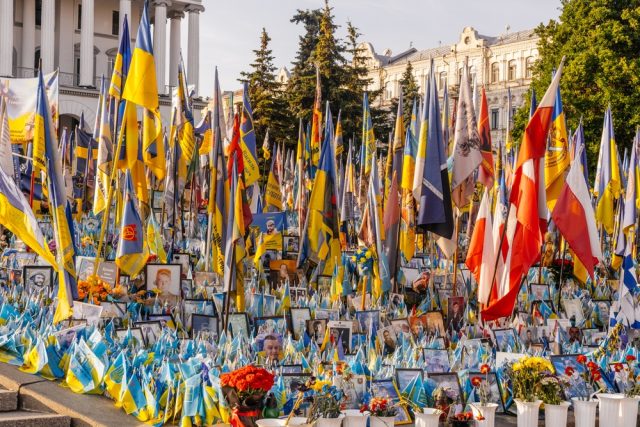
The conflict between Ukraine and Russia continues to unfold along two closely intertwined lines: on the one hand, military operations continue; on the other, there is growing diplomatic activity involving major Western capitals, international organizations, and Kiev’s strategic partners. In this phase of the war, the conflict is no longer limited solely to the battlefield, but also concerns the parties’ ability to consolidate alliances, strengthen economic support, and maintain political pressure on their adversaries. Ukraine is currently in a particularly delicate phase, in which maintaining Western support is as crucial as military dynamics on the ground. For this reason, the Kiev leadership has intensified diplomatic efforts to preserve the unity of its European partners and the G7 countries, considered essential to continuing resistance against the Russian invasion and to building possible future negotiating paths.
UKRAINE’S STRATEGY TO CONSOLIDATE WESTERN SUPPORT
In recent months, Kyiv’s foreign policy has demonstrated a clear strategic focus on strengthening coordination between Europe and the United States. President Volodymyr Zelensky has repeatedly emphasized the importance of Western unity, identifying cohesion among allies as one of the main tools for countering Russian ambitions. With this in mind, the Ukrainian leadership has sought to avoid any weakening of the international front supporting the country. Particular attention has been paid to both the European Union and the G7, bodies that represent the main decision-making centers for financial aid, military assistance, and economic sanctions against Moscow. Kyiv’s strategy is based on a dual objective: on the one hand, ensuring the continuity of the military and financial support necessary to sustain the war effort; on the other, maintaining high diplomatic pressure on Russia so that any negotiations can take place under conditions favorable to Ukraine. In this context, Zelensky insisted on the need to simultaneously involve Europe and the United States in any future diplomatic initiative, preventing the negotiation process from being managed unilaterally by a single power or a small group of actors.
THE G7 SUMMIT AND ZELENSKY’S CENTRAL ROLE
A significant element of Ukraine’s strategy is Zelensky’s participation in the G7 summit scheduled in Évian-les-Bains, Haute-Savoie, from June 15 to 17. The official invitation extended to the Ukrainian president demonstrates the desire of major Western economies to keep the conflict at the center of the international agenda. The Ukrainian leader’s presence takes on particular political significance at a time marked by divergences between European governments and US President Donald Trump regarding the handling of the Ukraine issue. The French authorities’ stated objective is to foster renewed convergence among G7 members on support for Kiev, addressing both aspects directly related to the war and those related to possible negotiation prospects. A session specifically dedicated to strengthening international unity around Ukraine and defining the conditions for a potential dialogue with Russia is scheduled for the summit. This approach is perfectly in line with Kiev’s stance, which aims to avoid any fragmentation of the Western front and consolidate a coordinated approach among allies.
EUROPEAN SUPPORT AND THE ROLE OF THE MAJOR CONTINENTAL POWERS
Europe’s commitment to Ukraine has also been reaffirmed through a series of high-level meetings between the continent’s main leaders. In particular, a recent summit held in London brought together Zelensky with the leaders of France, Germany, and the United Kingdom. On that occasion, Emmanuel Macron, Keir Starmer, and Friedrich Merz expressed support for Ukraine’s proposal to promote direct dialogue between Kiev and Moscow, provided it takes place with the active involvement of both the United States, and Europe. Ukraine, in fact, interprets European political support not only as a guarantee of immediate security, but also as a tool to strengthen its negotiating position vis-à-vis Russia. A further sign of the solidity of European support emerged from the Tallinn summit, which Zelensky attended along with representatives of the Nordic and Baltic countries. During the meeting, these states reaffirmed their view of Russia as the primary threat to Euro-Atlantic security. The nations involved also called for an immediate cessation of hostilities and the initiation of peace negotiations, while maintaining a stance of strong support for Ukraine. For Kiev, strengthening the axis with the Northern European and Baltic countries is an important component of its international strategy, as these governments are among the most staunch supporters of a tough stance toward the Kremlin.
EUROPEAN SANCTIONS AND ECONOMIC PRESSURE ON RUSSIA
In parallel with diplomatic developments, the European Union continues to use economic sanctions to limit Russia’s ability to sustain the conflict. Brussels has announced its twenty-first package of restrictive measures against Moscow. The new sanctions target numerous sectors of the Russian economy, including energy, finance, and fishing. The measures also include restrictions on entry into the European Union for Russian war veterans. According to the European Commission, these measures are contributing to the progressive weakening of the Kremlin’s economic resources. Commission President Ursula von der Leyen highlighted how Russia is facing growing economic difficulties, characterized by rising inflation and a significant reduction in energy sector revenues.
ZELENSKY’S POSITION: BETWEEN MILITARY REALISM AND DIPLOMATIC OPENNESS
In his political communication, Zelensky has adopted a stance that combines realism and determination. In a recent interview with the Guardian, the Ukrainian president argued that Russia is not losing the war strictly speaking, but is gradually ceding the strategic initiative. Through these statements, the Ukrainian leadership intends to convey to Western partners the message that international support continues to produce concrete results on the ground. At the same time, Zelensky reiterated the need to strengthen Europe’s defense capacity. Among the proposals put forward is the creation of a continental anti-missile defense system, conceived as a tool to increase Europe’s strategic autonomy and improve collective security. While maintaining a firm stance on the military front, Ukraine continues to explore possible diplomatic openings. Zelensky identified a potentially positive sign in the meeting in Chisinau with Steve Witkoff and Jared Kushner, describing it as a useful step towards reviving dialogue with Washington. At the same time, the Ukrainian president confirmed that peace still appears distant. In his view, any negotiating process should begin with a complete and unconditional ceasefire. Only then would it be possible to organize a summit involving Ukraine, Russia, Europe and the United States.
RUSSIAN RESISTANCE AND EUROPEAN SECURITY PROSPECTS
Despite the diplomatic efforts of Kiev and its allies, the Kremlin continues to reject European mediation. Even the proposal for a direct meeting between Zelensky and Putin was not welcomed by the Russian president, who made any summit conditional on a preliminary agreement on the resolution of the conflict. In this context, there is growing discussion within European institutions about the need to strengthen common security instruments. European Defense Commissioner Andrius Kubilius has proposed transforming the E5 group, which includes Italy, into a sort of informal European Security Council. This initiative reflects the belief that the Ukrainian conflict has accelerated the process of redefining the continent’s defense policies. The current phase of the war highlights how the conflict between Ukraine and Russia cannot be interpreted solely through the military dimension. Diplomatic, economic, and energy dynamics are playing an increasingly crucial role in determining the balance of power in the conflict. Against this backdrop, Ukraine has developed a strategy based on strengthening cooperation with the European Union and the G7 countries, considered essential interlocutors to ensure continued political, financial, and military support. Zelensky’s participation in the Evian Summit, the strengthening of relations with European partners, dialogue with Washington, and the call for unified Western involvement in future negotiations are the main tools through which Kiev seeks to maintain unity on the international front. While Russia continues to reject many of the proposed diplomatic initiatives and Europe increases economic pressure through new sanctions, the Ukrainian leadership aims to transform Western support into a decisive factor both for the continuation of military resistance and for building the conditions necessary for a future negotiated solution to the conflict.