





 Subscribe


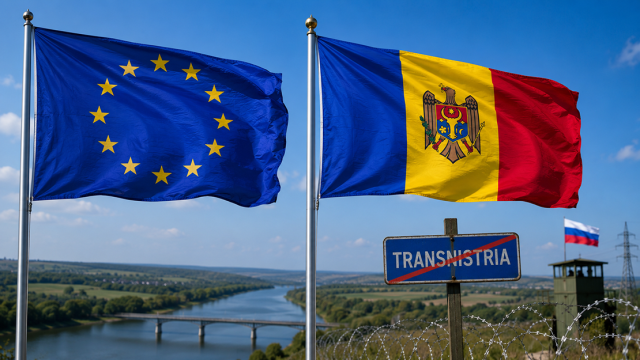
Brussels reaffirms support for Moldova’s sovereignty and territorial integrity as regional security concerns remain high
The European Union and Moldova have renewed their joint call for Russia to withdraw its military forces and ammunition from the separatist region of Transnistria, underscoring their shared commitment to Moldova’s sovereignty, territorial integrity, and long-term stability.
The appeal came at the conclusion of an EU-Moldova summit in Brussels, where leaders issued a joint declaration emphasizing their support for Moldova within its internationally recognized borders. The statement also reiterated a longstanding demand that Moscow fulfill commitments made more than two decades ago at the 1999 Organization for Security and Co-operation in Europe (OSCE) summit in Istanbul.
According to the declaration, the European Union and Moldova urged the Russian Federation to respect its pledge to remove all troops and military stockpiles from Transnistria, a narrow strip of territory along Moldova’s eastern border with Ukraine that has remained outside the effective control of the Moldovan government since the early 1990s.
The issue has gained renewed significance in recent years as security concerns across Eastern Europe have intensified following Russia’s invasion of Ukraine. While Transnistria has remained relatively stable, the continued presence of Russian military personnel in the region has become an increasingly sensitive topic for both Chisinau and its European partners.
For the European Union, the question extends beyond Moldova itself. The unresolved status of Transnistria is widely viewed as one of several frozen conflicts that continue to affect regional security and complicate efforts to build lasting stability across Europe’s eastern neighborhood.
Moldovan authorities have consistently argued that the presence of foreign troops on their territory without the consent of the national government violates the country’s sovereignty. Brussels has repeatedly supported this position, framing the issue as part of a broader commitment to international law and respect for recognized national borders.
At the same time, the joint declaration highlighted the constructive approach adopted by Moldova in managing relations across the Nistru River, which separates government-controlled territory from Transnistria. European officials praised Chisinau’s efforts to preserve peace and stability while encouraging greater cooperation and gradual convergence between the two sides.
The EU specifically commended the Moldovan government for pursuing policies aimed at fostering dialogue, economic integration, and confidence-building measures rather than confrontation. These initiatives have sought to improve practical cooperation in areas such as trade, infrastructure, and mobility, helping maintain relative calm despite the unresolved political status of the region.
European leaders described these efforts as an important contribution to regional security at a time when geopolitical tensions remain elevated. They also reaffirmed the EU’s willingness to continue supporting initiatives designed to promote a peaceful and durable settlement.
The concept of reintegration remains central to Moldova’s long-term strategy. Rather than seeking a military solution, successive Moldovan governments have emphasized the importance of achieving a comprehensive political settlement through negotiations and international mediation. The European Union has consistently backed this approach, viewing peaceful reintegration as the most sustainable path toward national unity.
The summit declaration made clear that Brussels intends to remain actively engaged in supporting this objective. European institutions have increased cooperation with Moldova in recent years, providing financial assistance, political backing, and technical expertise as the country advances reforms and strengthens its relationship with the EU.
Moldova’s growing ties with Europe have accelerated dramatically since the outbreak of the war in Ukraine. The country has pursued closer integration with European structures while seeking to reduce vulnerabilities linked to energy dependence, economic pressure, and regional instability.
Against this backdrop, the Transnistria issue has acquired additional strategic importance. Many European policymakers view progress toward a peaceful resolution as an essential component of broader efforts to strengthen resilience and security in Eastern Europe.
While prospects for an immediate settlement remain uncertain, the latest EU-Moldova declaration signals a continued alignment between Brussels and Chisinau on one of the region’s most persistent geopolitical challenges. By reiterating support for Moldova’s sovereignty and calling for the implementation of longstanding international commitments, the European Union has once again positioned itself as a key partner in the search for a peaceful and lasting solution.
As regional tensions continue to shape Europe’s security landscape, the future of Transnistria will remain an important test of diplomacy, international law, and the ability of European institutions to support stability along the continent’s eastern frontier.
Alessandro Fiorentino