





 Subscribe


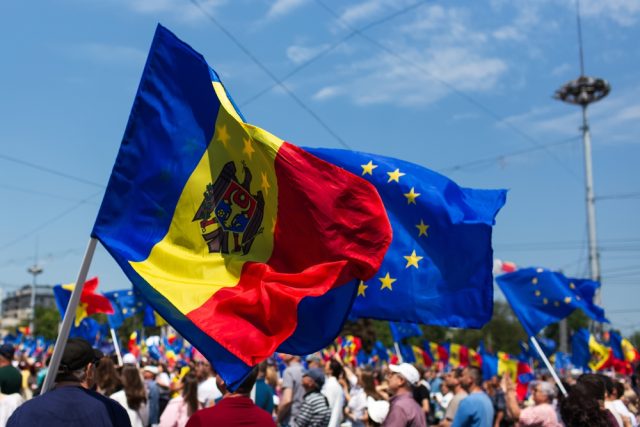
After more than three decades in which European integration was more of a political goal than a concrete prospect, the Republic of Moldova entered, in June 2026, a new phase that could permanently change the country’s direction. For the small state between the Prut and Nistru rivers, the European Union’s decision to open the first round of accession negotiations is not merely another bureaucratic step by Brussels, but marks the beginning of an unprecedented institutional, economic, and strategic transformation. How did Chișinău reach the start of accession negotiations, and what lies ahead after this historic moment?
In the first half of this year, in just a few weeks, several events took place that, viewed separately, might have been classified as mere diplomatic episodes: confirmation of support from major European capitals, the lifting of Hungary’s veto, the acceleration of the negotiation timeline, promises of investments exceeding one billion euros, firm statements on regional security, and the reaffirmation of Western support for the government in Chișinău. Taken together, however, all these moments paint a picture of a paradigm shift in the European Union’s enlargement policy.
If we look at the regional context, this acceleration of accession procedures makes sense. With the Russian Federation’s invasion of Ukraine, Europe’s security landscape has been profoundly altered, and countries that were until recently considered distant candidates have become part of a broader strategy to strengthen the Union’s eastern border. The Republic of Moldova, now integrated into this new geopolitical landscape, is no longer viewed merely as a recipient of European support, but as a partner contributing to the stability of the entire region. The road to accession is long and remains a difficult one. The opening of negotiations is only the beginning of a process that could take years and requires far-reaching reforms in administration, the judiciary, the economy, security, and the fight against corruption. At the same time, Chisinau must manage the pressure exerted by the Russian Federation, the challenges posed by the Transnistrian region, and internal political competition in which European orientation continues to be one of the most contentious issues.
June of this year, however, has shown us that, regardless of the obstacles, the Republic of Moldova’s European integration process has entered an irreversible phase. And the timeline of these events shows that this diplomatic success was not the result of a single political decision, but rather of a step-by-step process in which every agreement, every reform, and every negotiation contributed to bringing Chișinău closer to its goal of accession.
From deadlock to European consensus. How was Moldova’s accession process unblocked?
In early June, few European diplomats were willing to speak of a rapid opening of accession negotiations. Although the Republic of Moldova had fulfilled a large part of the obligations it had undertaken in its dialogue with the European Commission, its dossier remained linked to that of Ukraine. The two countries submitted their applications for membership simultaneously in 2022, were granted candidate status at the same time, and progressed almost in parallel through the technical stages of the European accession process. This joint approach had clear political advantages in the early years, but it also produced a significant side effect. Any roadblock encountered by Ukraine automatically affected the Republic of Moldova as well, even though the latter was making faster progress in implementing the reforms required by Brussels. The main obstacle came from Hungary, where the government led by Viktor Orbán, citing disputes over the rights of the Hungarian minority in the Transcarpathian region, repeatedly used its veto to block progress in Ukraine’s accession negotiations. In reality, the issue was far more complex, influenced also by the strained relations between Budapest and European institutions, including the suspension of certain European funds intended for Hungary.
However, the political shift in Budapest following the appointment of the new Prime Minister, Péter Magyar, radically altered the situation. The new Hungarian government adopted a much more pragmatic approach, resuming dialogue with Kyiv and accepting that the resolution of disputes concerning the Hungarian minority could proceed in parallel with the accession process. Technical negotiations between Ukrainian and Hungarian experts helped ease tensions, and Kyiv offered assurances regarding respect for the rights of the Hungarian community without immediately amending domestic legislation. This compromise was sufficient for Budapest to drop the opposition that had blocked Ukraine’s European accession process for nearly two years. The lifting of Hungary’s veto was not only a diplomatic victory for Ukraine but also the moment when the Republic of Moldova was finally able to capitalise on its own progress. Consensus among the 27 member states was reached at a time when Brussels was sending an increasingly clear message that the European Union’s enlargement is no longer merely a development policy, but also a strategic investment in the security of the Old Continent.
Russia’s aggression against Ukraine has demonstrated in recent years that Europe’s stability cannot be separated from the stability of its eastern neighborhood. From this perspective, the Republic of Moldova’s rapprochement with European institutions has become a component of the continental security plan. This is why, in the statements of European officials, economic arguments have increasingly been complemented by strategic and military ones. The expansion of the European Union is now presented as a means of strengthening resilience against Russian influence in the region. At the same time, the Republic of Moldova has consistently received praise from European institutions for the pace of its reforms. European Commissioner for Enlargement Marta Kos has repeatedly stated that the authorities in Chișinău have become an example for other candidate countries, praising the speed with which the measures agreed upon with Brussels have been implemented. The message conveyed by European officials was unequivocal: the Republic of Moldova has earned the right to move forward based on its own achievements.
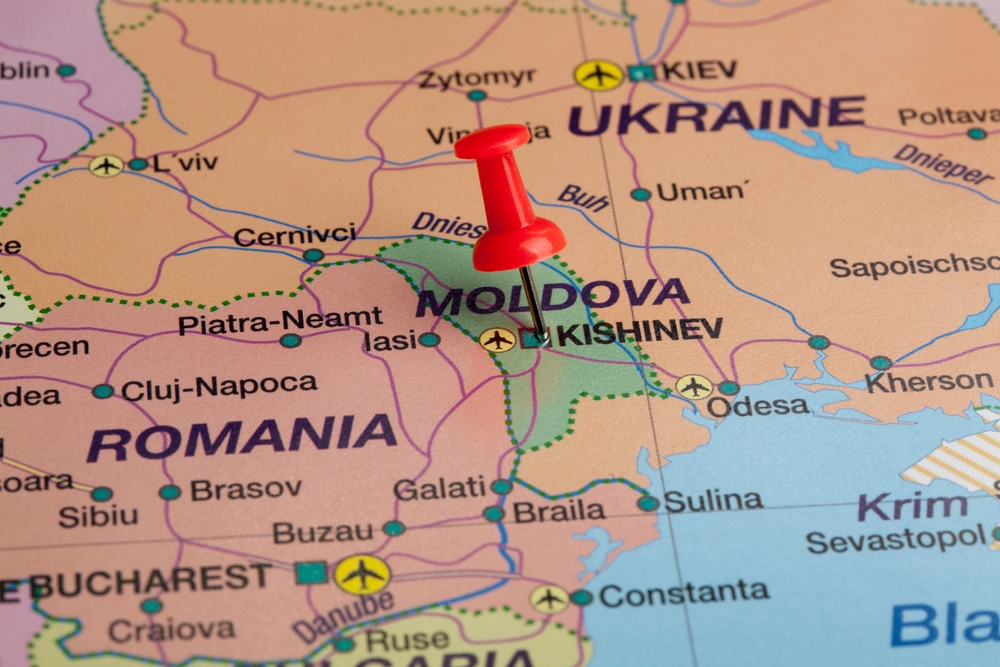
This idea would become one of the dominant themes throughout the month of June. In Brussels, there was increasing talk of the “merit-based” principle, according to which each candidate country must be evaluated solely on the basis of its own reforms, without being constantly conditioned by the progress of other countries in the accession process. In parallel with developments in Brussels, political support for Moldova’s integration also strengthened in other European capitals. France and Germany began promoting the idea of accelerating the enlargement process, proposing, among other things, that candidate countries benefit from economic advantages even before obtaining full membership status. Gradual access to the single market, participation in certain European policies, and involvement in the work of EU institutions are seen as tools through which reforms can be stimulated without waiting for all negotiation chapters to be finalised. For the Republic of Moldova, this approach has become particularly important. The country’s economy is already strongly integrated with the European market, and legislative alignment with EU standards is gradually reducing costs for investors and facilitating access for Moldovan products to the EU market.
At the same time, Romania has continued to play the role of Chisinau’s main political supporter within the European Union. The authorities in Bucharest have reaffirmed their willingness to provide technical expertise, institutional support, and assistance in the complex negotiation process, following the model through which Romania itself went through the stages of accession in the early 2000s. Western support, however, is not limited to political statements. A solid economic component is also beginning to take shape around the accession process. European investors are viewing the Republic of Moldova with growing interest, and the prospect of accession reduces the perception of risk and increases the country’s attractiveness to European capital. This is one of the main reasons why Brussels is insisting on accelerating reforms in the areas of justice, administrative transparency, and the fight against corruption. For the European Union, accession is not merely a political decision, but also a guarantee that the future member state will operate according to the same economic and institutional rules as the rest of the EU member states.
The first days of June demonstrated that, when there is political will and diplomatic compromise, obstacles that until recently were considered insurmountable can be overcome in a relatively short time. For the Republic of Moldova, this was the moment when the European objective ceased to be merely a promise and began to take on institutional form. The opening of negotiations does not automatically guarantee accession, but it fundamentally changes the country’s status in relation to the European Union and sends a strong signal to both investors and citizens that Chisinau’s strategic direction is clear and supported by most of its Western partners.
From Promises to Negotiations. How Did the Republic of Moldova Enter the Decisive Stage of European Integration?
While the first days of June were dominated by diplomatic negotiations between Brussels, Budapest, and Kyiv, the following period brought official confirmation that the European Union is prepared to turn political declarations into concrete steps. For the Republic of Moldova, the decisive moment came with the official notification sent by the Presidency of the Council of the European Union, inviting Chișinău to present its negotiating position for the first cluster, “Fundamentals,” considered the backbone of the entire accession process. From a technical standpoint, the document marks the beginning of a new bureaucratic phase. Politically, however, the message is far more significant: Brussels is confirming that the Republic of Moldova is sufficiently prepared to begin the actual negotiations. Moldovan authorities immediately interpreted this decision as validation of the efforts made in recent years. Deputy Prime Minister for European Integration, Cristina Gherasimov, summed up the idea in a simple message:
“Every step forward is the result of reforms implemented at home and the constant support received from our European partners”
Statements by Moldova’s Ambassador to the European Union, Daniela Morari, were along the same lines; she spoke of diplomatic progress built through ongoing collaboration with European institutions. During this same period, Brussels began to convey one of the most important political messages addressed to candidate countries:
“The enlargement of the European Union remains a strategic priority, despite the challenges posed by the war in Ukraine, geopolitical tensions, and the economic difficulties facing the continent.”
For the Republic of Moldova, this shift in approach holds special significance. For nearly two decades, the European Union’s enlargement policy was characterised by caution, and many of the candidate countries remained in the accession waiting room for years. Currently, however, the security context is forcing Brussels to view the integration of Eastern Europe through a completely different lens. This was also emphasised by European Commission President Ursula von der Leyen, who described the Union’s expansion as one of the most important investments in the continent’s peace and security. From Brussels’ perspective, bringing the Republic of Moldova and Ukraine closer to the EU is not only about expanding the single market but also about strengthening stability in a region under constant pressure from the Russian Federation. The optimism of European leaders was accompanied by clear warnings. The first cluster of negotiations is not merely symbolic; it is the most difficult of all. The chapter on fundamental values covers the functioning of democratic institutions, the independence of the judiciary, the fight against corruption, respect for human rights, and the strengthening of the rule of law. All these areas will be closely monitored throughout the negotiations and will determine whether all other chapters are opened.
If reforms slow down or regress, the entire accession process could be blocked. For this reason, the opening of negotiations should not be confused with immediate progress toward member state status, as the experience of other countries shows that negotiations can last for years, and sometimes even more than a decade.
In the case of the Republic of Moldova, however, the authorities have set an ambitious timeline. Negotiations are to be completed by 2028, and actual accession is expected to take place around 2030. Several European officials, including the Vice President of the European Parliament, Victor Negrescu, have noted that if the pace of reforms is maintained and if the process continues to be evaluated based on Chisinau’s own merits, the accession timeline could be realistic.The concept of “merit-based” is thus beginning to take center stage in European discourse, as each candidate country must advance based on its own results, without being held back by the difficulties encountered by other countries in the negotiation process. This approach is essential for the Republic of Moldova. Although its European path has been charted alongside Ukraine’s, numerous European officials have begun to acknowledge that, as negotiations progress, the two dossiers could evolve at different paces. This prospect offers the authorities in Chișinău an important opportunity: to capitalise on the reforms already implemented and to avoid potential delays caused by the complexity of the situation in Ukraine, which is still in the midst of a war. That is why European leaders have insisted that Moldova’s success will not be measured by the number of political statements or summits held, but by the authorities’ ability to consistently demonstrate that the reforms are irreversible. This is precisely where Chișinău’s true European test begins.
To be continued….