


 Subscribe


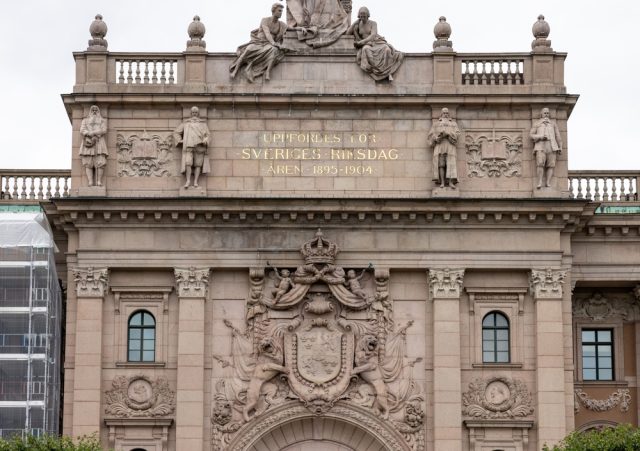
The last time Sweden held a snap election was in 1958. It may happen again in 2026.
The parliamentary norms of Sweden have been put under a unique type of strain in the aftermath of the parliamentary election on September 13th. The left-wing opposition – the Social Democrats, the Left Party, the Green Party, and the Centre Party – barely crawled ahead of the ruling right-wing coalition – the Moderates, the Sweden Democrats, the Christian Democrats, and the Liberals. When the final tally was presented, it stood 49,57 percent for the left, 48,84 percent for the right. The close race illustrates the fickle instability of contemporary Swedish politics, which is additionally complicated by the lack of cohesion on the left.
So how bad is it, exactly? Well, the Swedish left is so incongruent it is now debatable whether having a parliamentary majority necessarily equates winning in the first place. Before one can understand the parliamentary dilemma Sweden stands before, it is necessary to explain the political strifes that are currently holding the country hostage.
As of writing this, it has been 33 days since the polls closed, yet no government has been formed. The deadlock in the negotiations between the “winning” red-green parties is due to the entrenched positions of the Centre Party and the Left Party, who in many respects are each others’ polar opposites, despite being part of the same political bloc. Of the issues that are on the table, there are perhaps two that unite them; dismantling the strict immigration system built by the right-wing Tidö government, and supporting the Social Democratic leader Magdalena Andersson as Prime Minister of Sweden. Their differences amount to the classical tensions between socialists and free marketeers – yes, the Swedish left-wing houses some of the most committed capitalists found in the country.
Can the revolution be stopped at the doors?
But the most resounding political conflict on the left side of Swedish politics has been the state of the Left Party. After having spent more than a century being a passive supply and confidence partner to the domineering Social Democrats, the Left Party has under its current leader Nooshi Dadgostar adopted a more offensive strategy aimed at ministerial posts. This would be a massive step forward for the Left, which aside from the Sweden Democrats, is the only major party in Sweden to never have held a cabinet position.
It is according to democratic principle that a party with a decent support of the electorate (the Left Party sits at 8,4 percent of the vote) must not arbitrarily be left out of important offices if they are part of the ruling coalition. It is therefore easy to understand and sympathise with the motivations of the Left Party, which is actually quite similar to that of the Sweden Democrats, the nationalist party. Both parties are, although with vastly different backgrounds, histories and ideologies, the “black sheep” of their respective blocs, who have been met with dismissal and sidestepping from the political establishment and the established media.
The Left’s demands for recognition as a cabinet member are vehemently opposed by the Centre Party. As stated before, the ideological conflict between these two parties plays a large part in this tug of war, but is not the only factor at play. The Centre Party embodies ‘bourgeois’ propriety, and thus takes significant offense at the Left Party’s consistent problems with terrorist sympathies among their representatives. The Palestinian cause has become so important to the Left Party’s political success, that the party is often on the local levels (and increasingly on the higher levels) made up of activists who more or less conspicuously endorse violence and promote anti-Western and third-worldist worldviews.
The Centre Party’s opposition to this brand of politics holding some of the highest offices in the country is understandable and commendable. But the responsibility lies of course with the Centre Party for bringing this party to the thresholds of power, even if they are trying to keep the door shut. The Centre Party, historically tied to the rest of the traditional ‘bourgeois’ bloc with the Moderates, the Christian Democrats, and the Liberals, abandoned the Swedish right wing in the 2010s due to its resentment of the nationalist Sweden Democrats. This is perhaps a result of its voter base, which quite unanimously shares these resentments. But the Centre Party actively chose not to undergo a transformation process whereby a potential constructive relationship with the Sweden Democrats could get normalised.
The Liberals, once a highly reluctant member of the Tidö government, successfully reformed itself from the top down between 2022 and 2026 into an ally of the Sweden Democrats, and is appreciated by many centre-right voters as a liberal complement to the conservative nationalists. Why can’t the Centre Party do the same, lest they collaborate with crypto-communists and socialists in the Left Party? How does it benefit them or their voters to base their political decisions on the superficial resentment of nationalism, rather than on how they can help Swedish enterprises and industries flourish?
Instead, the Centre Party has been working hard to build bridges to the Left Party. In early October, the red-green parties gathered at a seminar at the invitation of the leader of the Centre Party, Elisabeth Thand Ringqvist. The event was much publicised and subject to political analysis. For the first time, the four party leaders of this eclectic coalition were photographed together, which many commentators quipped to be a major step forward, only three weeks after the election. The situation on the “winning” side of Swedish politics is certainly easy to ridicule, and often reality is more absurd than the jokes.
Where is the presumptive Prime Minister?
Amidst the focus on the Left Party and the Centre Party, the question is of course, where is Magdalena Andersson? The Social Democrats’ entire election campaign was based on their leader’s supposed appeal to voters, and as a unifying force on the left (this has subsequently become a point of criticism against her internally, where she has been perceived as if she has been personally “running for president” of the United States more than anything else).
This house of cards came crashing down fast, arguably before the polls had even closed, as it was already days before September 13th that she took a nose dive in the polls. Whereas she has spent the entire time in opposition as the most favourably perceived party leader in the country bar none, she dropped below both Prime Minister Ulf Kristersson of the Moderates and Ebba Busch of the Christian Democrats, at about the same time the Social Democrats’ predicted high election result started to evaporate. On September 14th, it was apparent that Magdalena Andersson had yielded the Social Democrats their worst turnout since 1908, with a mere 28 percent of the votes. She had done worse than her predecessor Stefan Löfven in 2018, and it was all for the benefit of the smaller parties in her imagined coalition. The Left Party in particular were huge winners of the Social Democratic failure, and this afforded them to drive their demands for representation in government very hard.
Today, one month after her triumphant victory speech, Magdalena Andersson has been largely invisible and has hardly publicly commented on the government formation progress (and certainly not lack thereof). Instead it appears to be the Centre Party and the Left Party who are driving the process, albeit in very different directions. That Andersson immediately proved unable to deliver on her central campaign promise – a swift, stable and predictable government – was a massive blow to her personal prestige. That she is not even in the foreground of the political happenings after the election either is yet another blow. We’re likely looking at a negative spiral where her failures on multiple fronts could accelerate her downfall. Many commentators have posited that it is not at all unlikely that Andersson will be forced to resign in a near future, either in conjunction with failing to pass parliament as Prime Minister, or in the event of a snap election being called, where the confidence for her likely will be depleted.
The path to snap election
On October 15th, the riksdag finally voted to reject Magdalena Andersson as Prime Minister. As predicted, the only party to support her ambition was her own, the Social Democrats. The procedure was preceded by speeches from the whips of each parliamentary party elaborating their stances; the Left Party and the Centre Party did not sugar coat their rejection of Andersson. But she will have another shot in a few weeks, due to how the Swedish parliament works.
The election of the Swedish Prime Minister is in the hands of the riksdag, whose first order of business after the election is to elect their speaker, who will then call upon a suitable candidate from among the party leaders, who will be tasked with forming the government. Upon rejection, a new candidate is picked, and this cycle continues for up to four rounds, before a snap election has to be called. This is the potential trajectory that Sweden is on right now.
The speaker is merely the lead administrative function of the riksdag, but is nonetheless loaded with symbolism. By tradition the speaker is picked from the biggest party in the governing constellation, with the three deputy speakers typically (with some exceptions) being picked from the largest opposition party, the second-largest governing party, and then the fourth largest party in parliament, respectively.
Already with the election of the speaker in September there was severe friction within the red-green camp. The Left Party, as a response to not having been promised cabinet positions by the Social Democrats, betrayed the predictable outcome and did not support the Social Democratic candidate for the speaker role. When it became clear that the parliamentary norms were in flux, the Tidö parties managed to prolong the term of the sitting Moderate speaker, Andreas Norlén, term with the help of the Left Party. Naturally, being deprived of their symbolic representation as the head of parliament drove a wedge between the Social Democrats and the Left Party. The Left’s point surely got across, however – for the first time in more than a century they were not going to be Magdalena Andersson’s door mat.
The speaker, formally neutral but for obvious reasons still in one way or another acting on behalf of the Moderates rather than the Social Democrats, bestowed the task to explore a government to Magdalena Andersson. The result of her trying to negotiate a tenable government programme that will satisfy both the Left Party and the Centre Party were as predicted; three weeks after the appointment, Magdalena Andersson was forced to concede before the speaker that she could not bridge the gap between the two parties.
Being rejected by the riksdag is a formality. What lies ahead is the next exploration task being appointed to sitting Prime Minister Ulf Kristersson (as of September 14th heading a transitory cabinet only), who has the option to negotiate with the Centre Party and the Sweden Democrats to try and reach a satisfying programme that includes both of them. This is, with the aforementioned Centre revulsion of the Sweden Democrats, also bound to fail.
Subsequently, what is the natural course of action? When the riksdag is into its third exploration round, the pressure on the obstacles to a red-green government are likely to start to falter. Many analysts agree that the deadlock between the Left and the Centre will crumble when they are faced with the ultimate choice of redrawing their respective red lines, or facing the voters in the first snap election in Swedish democracy in nearly 70 years. For natural reasons, Magdalena Andersson will be next in line after Kristersson, and her chances of striking a deal will be significantly higher than before.
That is not to say everything is said and done. There could be a point to the Left Party driving their demand to be included in the government to its natural conclusion, since they have a new-found conviction on this issue. They can also probably enter a new election cycle with wind in their sails, since the demands for representation in cabinet is democratically sound. For the Left Party, the looming of a snap election is probably emboldening. For the Social Democrats, who are already struggling with their worst numbers in over a century and a weak and derided leader, a snap election would be a nightmare.
What about the Centre Party, who is arguably the greatest obstructor in the political process? They do not have a particularly strong case for their obstinance, as politically agreeable as it might appear to most right-wingers. To base their entire involvement on the left side of politics on minimalising the Left Party’s influence is an odd motive. To most voters, it would appear far more natural for the Centre Party to just accept the influence of the Sweden Democrats and settle for a natural alliance with the rest of the centre-right parties. That is, with the exception of the Centre Party’s voters, of course.
In recent polling of how each party’s voters view the government stalemate, the Centre Party’s voters stand out – they insist on a government that includes neither the Left Party or the Sweden Democrats, epitomising the sub-surface centrist bloc of Swedish politics. Both the Moderates and the Social Democrats are seen as realistic coalition partners. This perspective is not found anywhere else in Swedish politics, and gives the Centre both a blessing and a curse. It is the only party that represents the rare true centrist (in reality a socially liberal and only fiscally centrist position), but this is also a group with a likely very fluid loyalty. When forced to choose, it is very likely that the Centre voters will accept a left-wing government rather than stick to principle – this pattern has been observed in situations that resemble the Swedish one, such as in France, when the liberal voters consistently back the socialist candidates when they are pitted against the nationalist candidates in the second round.
Most observers agree that the Centre Party is thus much more likely to fold their objections, than the Left Party. Already, there have been some indications of this happening. The party’s motives for refusing the Left Party cabinet positions have gradually shifted from moral objections about terrorist sympathies and antisemitism, to only economic policy. Economics is still a major hurdle between a socialist and a capitalist, but it is at least negotiable.
The next development is likely at least one week away, as of writing this. The speaker of the riksdag seems to not be in a hurry – he is giving the anticipating Swedish voters and the media the weekend off, until he formally delegates to Ulf Kristersson the government exploration task on Monday.