


 Subscribe


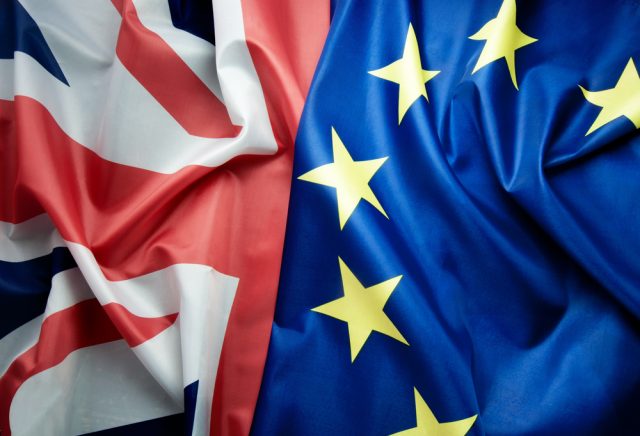
Ten years after the 2016 referendum and six years since its formal departure from the European Union, the possibility of the United Kingdom returning to the European project has once again taken center stage in European political debate. British Prime Minister Andy Burnham has acknowledged the need to re-evaluate the effects of Brexit, describing its overall outcome as largely negative. During the Labour Party conference in Liverpool and in an interview with BBC Radio 4, the Prime Minister announced his intention to present the country with various alternatives for establishing a stable relationship with Brussels—without ruling out future accession to the Union. Burnham views a rapprochement with Europe as a strategic necessity for restoring growth and prosperity, noting that uncertainty regarding the UK’s relationship with the European market hinders long-term economic planning. While expressing a personal hope for a return to the EU within his lifetime, he clarified that this is not an immediate objective, reaffirming the commitments made by the Labour Party for the current parliamentary term. This shift in stance marks a significant departure from the 2024 election manifesto, which had explicitly ruled out rejoining the Union, the single market, or the customs union, as well as the restoration of free movement.
INSTITUTIONAL ALTERNATIVES AND EUROPEAN CONSENSUS
The British government will need to assess four potential paths: maintaining the current arrangement, negotiating a customs union, rejoining the single market, or applying for EU membership once again. The option of a customs union echoes proposals previously put forward by former Chancellor George Osborne, while a return to the single market aligns with a position long advocated by the Liberal Democrats. London’s newfound openness has received support from France and Spain. President Emmanuel Macron has welcomed the possibility of a British return, arguing that it would be beneficial for both the United Kingdom and Europe. Spanish Prime Minister Pedro Sánchez has also described Brexit as a significant loss for the British people and for European integration, stating that Madrid would be open to welcoming London back. Macron, however, has highlighted a fundamental principle: the single market does not allow for the selective choice of economic benefits while excluding the obligations associated with other freedoms.
ECONOMIC IMPACTS: TRADE, PRODUCTIVITY, AND EMPLOYMENT
Economic prospects are a primary motivation for a potential rapprochement. The UK’s Office for Budget Responsibility estimates that, in the long term, Brexit will reduce the intensity of trade by approximately 15% compared to a scenario in which the UK remained in the EU, and lower potential productivity by about 4%. A potential return could reverse at least some of these trends. Reducing the customs checks and bureaucratic requirements introduced since 2021 would facilitate trade between British and European businesses, lowering administrative costs and transport times. Goods could circulate with fewer formalities, improving the integration of supply chains. Furthermore, restoring the free movement of workers could help address staff shortages in sectors such as healthcare, logistics, and agriculture. For citizens, a rapprochement could mean being able to travel using only an identity card, the elimination of electronic visas and roaming charges, and the reinstatement of the European Health Insurance Card. These benefits, however, would depend on the specific terms actually negotiated.
POSSIBLE CONDITIONS FOR A RETURN
The institutional path remains complex. According to Catherine Barnard, a professor of European Union law at the University of Cambridge, a new referendum could provide Brussels with a clear, consolidated expression of the British public’s will. While the government could, in theory, submit an application for membership without necessarily holding a new referendum, doing so might be politically expedient. Estimates suggest a timeframe of five to ten years, accounting for negotiations and the ratification process by member states. Brexit itself took four years from the start of the process in 2017 to the official departure in January 2020. Furthermore, London would need to meet the 1993 Copenhagen criteria, which concern democracy, a functioning market economy, and the capacity to implement EU law. Among the most sensitive issues are accession to the Schengen Area and the adoption of the euro—conditions that could strip the United Kingdom of its previous “opt-outs,” including the one regarding the single currency.
GEOPOLITICAL CONSEQUENCES FOR EUROPE
A British return would have implications that extend well beyond the economic sphere. Integrating London’s military, diplomatic, and strategic capabilities would bolster the Union’s standing vis-à-vis global powers like the United States and China, enhancing Europe’s ability to exert influence in international negotiations. In this way, the United Kingdom would help strengthen the continent’s strategic autonomy and mend the divisions that emerged with Brexit. The strategic partnership launched between London and Brussels in May 2025 has already ushered in a phase of rapprochement. The next bilateral summit, expected by the end of the year, could transform this dynamic into a broader discussion regarding a shared institutional future. Despite everything, no definitive decision has been made yet: a potential “Rejoin”—or “Unbrexit”—will depend on British political will, the conditions set by the EU, and London’s willingness to accept shared obligations without any special privileges.