


 Subscribe


On 28th October a Renfe high speed train collided with a stationary Iryo service at Urda (Toledo). 69 were confirmed dead, with as many still missing which suggests the total death toll will be well over 100. Just nine months previously on 18th January there had been the disaster at Adamuz which took 46 lives. Two disasters and an utterly devastating tragedy.
Spain deserves more than yet another procession of serious faces promising to learn the lessons. The first duty of the government is to protect the conditions in which ordinary life can go on safely. If the public don’t have confidence in the basic infrastructure then the failure is not confined to a department or a civil servant. It is a failure of the very legitimacy of those in public office.
Socialism kills when the state becomes an instrument of patronage, when the exercise of ideological moralising supplants the necessary element of professional competence and when the mere holding of office is more important than the actual performance of the office. That is the verdict which confronts Pedro Sánchez after more than eight years in office. A government which preens itself on its moral credentials has to account for the state of the country it governs.
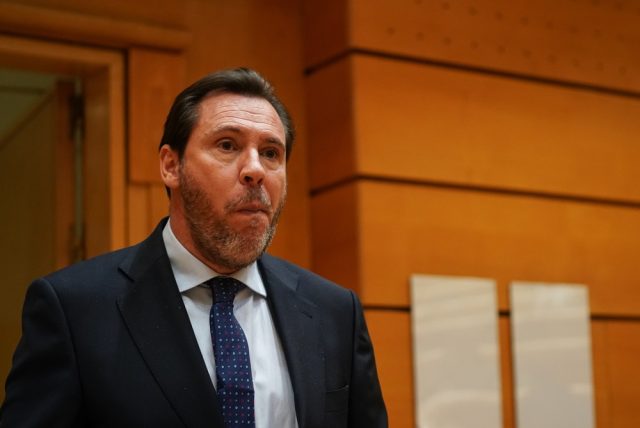
Nothing illustrates the chasm between the minister’s vanity and the reality of the public’s experience quite so starkly as Transport Minister Óscar Puente’s recent appearance on television. In a promotional sketch for Marc Giró’s Cara al Show (circulated on 19 October) a lift is seen to break down. Puente jokes: “As if we didn’t have enough with Renfe (Spanish public transportation company) already.” The scene ends with dancing. Promoting the clip on social media, he adds: “If I survive this…”
The people of Adamuz had only just buried their kin and the sketch was all about rail failures… A Transport Minister in the midst of such bereavement would surely appreciate why turning dysfunction into a form of entertainment can come across as sheer contempt.
Just a few days later came Urda. The contrast is utterly stark. A minister has time to make light of the body which is precisely the one whose operation and safety he is responsible for. His political responsibility now is to give direct answers on the issue of oversight, maintenance, operational safeguards and the application of lessons from previous failures. A resignation will not in any way substitute for those answers, but an investigation should not be a mechanism for endlessly delaying the political consequences.
The exact causes of Urda need to be established in their own right. The initial reports point to a technical failure and a series of human decisions which need to be looked at. There is currently no evidence to suggest that corruption was the cause of this collision. An appeal to human error however cannot be the end of the political debate. Safety systems are there in the first place because humans are going to make mistakes. Citizens must know why the safeguards failed, what the warnings were and whether those responsible for supervision fulfilled their obligations.
The string of disasters goes well beyond the rail. On 29th October 2024 the DANA floods hit Valencia and killed hundreds. Two years on the families’ associations are still calling for truth, justice and accountability. The criminal inquiry is ongoing. The families have a right to know why the warnings and the decisions were so fundamentally flawed and to see responsibility established where the evidence points to it. Time cannot be a further mechanism for burying the questions.
That demand inevitably includes the Partido Popular. The PP were in charge of the Valencian regional government under Carlos Mazón. The way they dealt with the crisis is exactly the same sort of thing that Sánchez is being called upon to account for. The opposition cannot legitimately be criticising evasion in Madrid when they themselves are allowing it to happen in their own party. The standard has to be the same as the responsibility, no matter which party is in power.
Then of course there are the wildfires. The Interior Ministry’s assessment for September recorded 21 fatalities from forest fires in 2026 (8 in 2025). The extreme weather makes it far more difficult to prevent fires and to respond to them when they do occur, and it also makes the need for preparedness far more pressing. The authorities have to deal with land management, resources, evacuation decisions and coordination. The courage of the firefighters in the face of the fires is not going to absolve the political leaders of the need to ask whether the institutions that support them were properly prepared.
The blackout of 28 April 2025 revealed yet another weakness. The various incidents have different causes and involve different administrations. The one political lesson that emerges from them all is that public duties have consequences. The various levels of government (national, regional and local) must be able to explain their decisions without then vanishing into the mire of overlapping competences. The citizen doesn’t experience the boundaries of administration when the floodwater comes into their home, when the fire reaches their village or when the power goes out.
Corruption makes the need for accountability all the more pressing. In June the Supreme Court sentenced former transport minister José Luis Ábalos to 24 years and 3 months and his former advisor Koldo García to 19 years and 8 months. The case was about pandemic procurement and irregular employment in public companies. The sentence included bribery, embezzlement, influence peddling and criminal organisation. Institutions which are supposed to be serving the public had been used for private gain.
Nepotism undermines the same bedrock. In July David Sánchez (brother of the PM) was found guilty by a court of administrative misconduct in respect of a public appointment and has been disqualified for nine years. The judgement is under appeal and he was acquitted of the charge of influence peddling. The fact that the post in question was clearly designed for him does however require a close examination of how public appointments are made and how public service posts are created. Connections must never trump merit or public need.
Neither case in fact establishes the cause of a rail disaster. Both cases do however demonstrate the institutional hazard of treating the state as a source of favours. Patronage undermines the expectation that expertise will win. Corruption uses up resources and rewards the practice of concealment. Political impunity leads to the inevitable result that the leader will be more concerned with getting through to the next scandal than with anything else. That’s a particularly pernicious set of characteristics in a situation where the decisions being made have a direct bearing on human life.
The cost of this culture is paid by those who have no access to the privileges of it. A family buying a train ticket can’t go and audit the signalling. An old person can’t go and re-create the emergency command structure as the flood waters rise. A small business can’t go and design the national grid. They’re reliant on the institutions to do those things. That creates a profound moral duty on public servants. To ignore that duty and at the same time demand ever more trust, ever more tax and ever more authority is a breach of the very people the state is in a position to act on their behalf.
After eight years Sánchez can’t just keep on being the man who watches Spain’s failings. He’s appointed ministers, he’s defended them, he’s set the agenda, he’s been in charge. The country is entitled to assess the outcome. Socialism’s case for protecting the citizenry collapses when its very apparatus of government is more interested in protecting itself than in the interests of the people. Spain needs a change of government and a return to public accountability.
PP and Vox therefore face a duty of their own. With a general election scheduled for 29 November, they must offer a credible path to change. Their differences should be debated honestly. But voters are also entitled to parties capable of reaching the agreements necessary to govern. Competition becomes irresponsible when defeating a potential partner matters more than replacing an exhausted administration.
PP have to make moderation mean seriousness, sound judgement and the nerve to act. Vox must demonstrate that its anger at institutional decay can produce capable administration. Both of them need ministers who understand their departments, who have the sense to know what actually works in the real world and who have the discipline to be able to negotiate when they have to. Neither party has any moral right to put their electoral vanity above the needs of the country.
Their programme should start with some very tangible commitments: independent assessment of rail safety; publication of responses to safety recommendations; protection for staff who raise safety issues; professional selection for technical posts; transparent procurement; and clear crisis procedures which identify who must act, when and on what information. Victims should get swift assistance and access to the truth. Accountability must be equally applicable to any future Conservative administration.
Maintenance must receive sustained attention. It offers few opportunities for ceremonial ribbon cutting, yet its success is measured in journeys completed safely and disasters avoided. Funding should follow documented need, with performance open to scrutiny. Ministers must be prepared to defend essential work that attracts little publicity. The public benefits every day from failures that never happen.
A conservative government must also resist the temptation to inherit the machinery of patronage for its own use. Its appointments, spending and records should withstand scrutiny by journalists, parliamentary opponents and independent inspectors. Officials should be rewarded for exposing weaknesses early and correcting them. Changing the governing party will achieve little if the incentives for concealment remain intact.
Adamuz and Urda demand an end to power without responsibility. The dead deserve truth, and their families deserve justice. The living need institutions worthy of their trust. Eight years of Sánchez are enough. The Spanish right must now earn the authority to replace him and demonstrate that competent public service is possible. A passenger should be able to board a train without wondering whether the state has forgotten its most elementary duties.