


 Subscribe


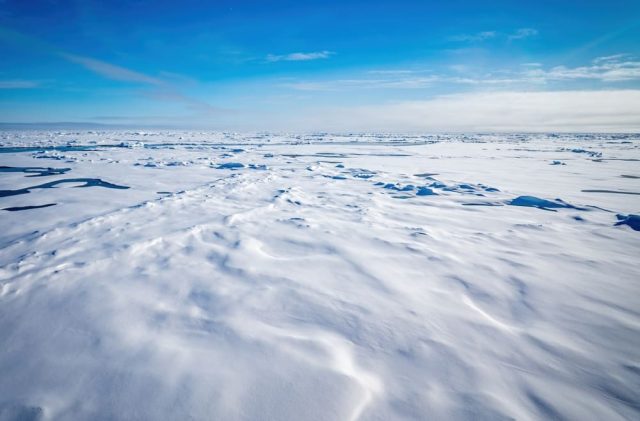
The Arctic is no longer merely an expanse of ice, spectacular landscapes, and fragile ecosystems. Today, it represents one of the most sensitive arenas for international competition, where economic interests, military security, and climate change are becoming increasingly intertwined. Compared to its 2021 approach, the European Union’s new strategy for the region marks a significant shift in perspective: alongside environmental protection, issues such as defense, the control of infrastructure, and European strategic autonomy have taken on greater importance. The situation is also particularly complex from a climatic standpoint. The Arctic is warming at a rate roughly four times faster than the global average, altering natural balances and fueling interest in trade routes and available resources. Furthermore, more than 500,000 EU citizens reside in the Arctic territories of Denmark, Finland, and Sweden. Consequently, the European presence in the region is not driven solely by geopolitical considerations; it directly concerns the security and well-being of local communities.
INTERNATIONAL TENSIONS RESHAPE EUROPEAN PRIORITIES
The strengthening of Russia’s military presence is a primary factor pushing Brussels toward a more assertive approach. The reopening of Soviet-era bases, the testing of new weaponry, drone incursions, interference with GPS systems, and potential acts of sabotage against undersea cables are all fueling European concerns. Compounding this picture is the growing economic and political influence of China, which seeks to consolidate its role in the region. Transatlantic relations have also introduced elements of uncertainty. Donald Trump’s previous statements regarding Greenland reignited the debate over the sovereignty of the island, an autonomous territory within the Kingdom of Denmark. Subsequently, Copenhagen reached an agreement with Washington that grants the United States a military presence, while simultaneously reaffirming Danish sovereignty and the principle of Greenlandic self-determination.
MARITIME DEFENSE AND INDUSTRIAL CAPACITY
To address new vulnerabilities, the EU aims to strengthen the surveillance of maritime activities through a “Maritime Security Hub,” which will also be tasked with monitoring Russia’s so-called “shadow fleet.” Complementing this is the IRIS² Arctic Connectivity satellite system, designed to support public communications, enhance surveillance, and provide early detection of potential threats. Another critical issue concerns icebreakers, which are essential for operations in challenging Arctic waters; Europe currently lacks sufficient capacity to meet emerging strategic requirements. The establishment of an “EU Industrial Maritime Value Chains Alliance” is intended to help map European production needs and capabilities, while also evaluating the potential for joint procurement and resource sharing. Options under consideration include advanced propulsion systems, such as nuclear-powered propulsion.
SUBSEA CABLES AND DIGITAL AUTONOMY
Arctic security also depends on infrastructure that is less visible yet vital: the subsea cables that carry data and communications. There are approximately seventeen such cables in the North Atlantic, a network heavily dominated by major U.S. operators. Protecting them has become a strategic priority, as any disruption could compromise economic services, communications, and national security. In this context, the “Pan-Arctic Cable” project seeks to establish a secure, autonomous subsea link between Greenland and Europe, with the potential for future extensions to Canada, Japan, and South Korea. The EU has already allocated 107 million euros toward connectivity for Greenland, building upon earlier proposals such as “Far North Fibre.” Rounding out the picture is the Arctic Cable Hub, designed to coordinate the monitoring, protection, and repair of cables among European Union countries, Norway, and Iceland.
TRANSPORT, RESOURCES, AND ENVIRONMENTAL LIMITS
The strategy also encompasses the development of land-based infrastructure, including the promotion of the “Rail Nordica” railway project. At the same time, Europe aims to leverage critical raw materials and the opportunities presented by renewable energy—both of which are vital for the energy transition and for reducing strategic dependencies. This ambition, however, faces a clear environmental constraint: no drilling activities may compromise the ecological balance of the Arctic. Oil, gas, and coal must remain in the ground. The challenge, therefore, lies in reconciling industrial autonomy and security of supply with the protection of a highly vulnerable ecosystem.
DIPLOMACY AND COOPERATION: AN ONGOING ENDEAVOR
European Commission President Ursula von der Leyen and High Representative Kaja Kallas have emphasized the need to adapt European policy to address emerging threats, by strengthening the EU’s presence in the Arctic and collaborating with like-minded partners, including Canada, Norway, Iceland, and the United States. The future of the region will thus depend on the ability to strike a balance between deterrence, international cooperation, and environmental protection. For Brussels, the challenge is not merely to maintain a presence in a strategic territory, but to demonstrate that security and sustainability can go hand in hand—even within one of the most complex geopolitical landscapes on the planet.