





 Subscribe


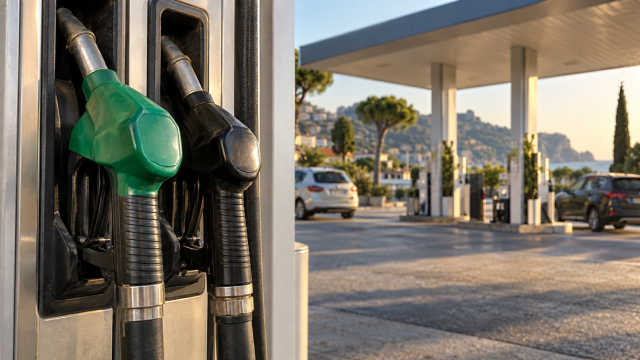
Q8 joins a government-backed effort to ease pump prices, but lasting relief will depend on fair treatment across the supply chain.
For Italian motorists, the most persuasive energy policy is often the number displayed above a petrol pump. Q8 Italia’s decision to cap petrol and diesel prices for 30 days from October 1 therefore gives the government something tangible to point to: another major supplier responding to its appeal for restraint as households struggle with expensive fuel.
The announcement follows initiatives by Eni and Socar, the Azerbaijani company controlling the IP network. Together, these moves suggest that Prime Minister Giorgia Meloni’s approach of pressing energy companies to contribute voluntarily is gaining traction. Securing successive commitments deserves measured recognition, particularly when immediate relief matters more to drivers than arguments over who should deliver it.
Yet a price ceiling is only as useful as its reach. Q8 has promised a flexible implementation reflecting the different parts of its distribution network, alongside support for operators and commercial partners. Its announcement does not specify a numerical ceiling. That distinction matters: participation in the initiative should not automatically be read as identical pricing across every participating brand or location.
Eni’s scheme, launched on September 28, sets maximum prices of €1.99 per litre for petrol and €2.19 for diesel. IP is introducing the same limits, initially at 300 stations, with expansion dependent on assessments of local market conditions and the sustainability of the distribution chain.
The potential benefit is clear. Ministry figures reported by the ministry’s fuel observatory put average self-service road-network prices at €2.152 for petrol and €2.369 for diesel. Against those benchmarks, Eni’s ceilings imply savings of approximately €8.10 on a 50-litre petrol purchase and €8.95 on diesel. These are illustrative comparisons, rather than guaranteed savings for every customer.
For a family balancing commuting costs against groceries and utility bills, such differences are meaningful. Politically, the government can reasonably argue that its appeal has helped turn corporate capacity into consumer relief. Meloni has thanked Kuwait and Q8, as well as Azerbaijan’s leadership and Socar, highlighting the role of international energy relationships in the domestic response.
However, the queues reported at some Eni stations, and instances of supplies running out, expose the practical limits of a successful discount. A cheaper pump that has no fuel offers little reassurance. Concentrating demand at selected outlets can also create difficulties for nearby operators unable to match prices.
This is where the industry’s objections deserve serious attention. Dealers warn that lower retail prices could squeeze their margins unless wholesale charges fall accordingly or compensation makes up the difference. Eni says it will cover costs arising from its measure; operators want written safeguards.
Independent distributors raise a broader question of fairness. Assopetroli-Assoenergia welcomes the initiatives but wants support extended to wholesale sales, allowing benefits to reach customers outside the participating networks. That is a constructive challenge for ministers: widen the gains without weakening the businesses needed to deliver them.
Road haulage adds urgency. Assotir is seeking updated operating-cost benchmarks, enforcement of diesel-price adjustment clauses, activation of the sector’s consultation body and a levy on energy companies’ excess profits. Sicilian hauliers have announced a stoppage from October 16 to 20, citing unanswered demands over fuel costs and Sea Modal Shift payments.
Their position illustrates why cheaper forecourt prices cannot settle the entire dispute. Commercial transport needs predictable costs and functioning support mechanisms, while households need relief that remains accessible beyond a handful of busy stations.
The government has earned a modest political dividend by encouraging major suppliers to act. Its next task is less photogenic but more consequential: ensure transparent terms, protect dealers and bring the wider supply chain into discussions. Q8’s commitment buys 30 days of breathing space. Whether that becomes a credible policy success will depend on what ministers and companies build during the pause for consumers throughout the country.
Alessandro Fiorentino