





 Subscribe


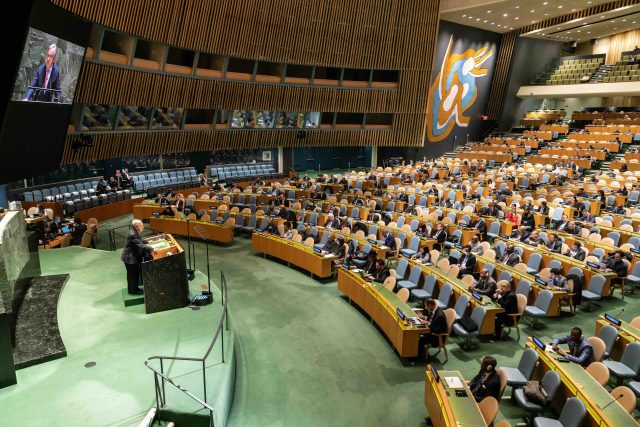
On 25 March 2026, the UN General Assembly adopted a Declaration on the trafficking of enslaved Africans as ‘the gravest crime against humanity’, calling for reparations. The initiative came from African and Caribbean states, with only three states voting against it: the United States, Argentina, and Israel. The 27 member states of the European Union abstained, as did the United Kingdom, Norway, and my own country, Iceland. This Declaration ignores the fact that more whites were enslaved by Arabs and transported to North Africa (one million or more) than blacks enslaved by Europeans in Africa and transported to North America (around 470,000, but many more, to be sure, to Brazil and other countries in Central and South America).
The 1627 Raids on Iceland
The Icelanders should know. In 1627, Iceland was ruled by the Danish king, who resided in Copenhagen. That year, two groups of pirates raided Iceland’s eastern and southern coasts, killing many and capturing around 400, whom they brought to Salé and Algiers in North Africa and sold into slavery. One captive, the Rev. Ólafur Egilsson from the Westman Islands, was later set free to travel to Denmark and raise money for ransoms. Around 50 Icelanders eventually returned. Ólafur wrote a remarkable travelogue about the raids and his journey from Algiers to Copenhagen. North African pirates also looted villages in Ireland and elsewhere, killing or enslaving their populations. They were only suppressed during the so-called Barbary Wars, which the United States, Sweden, and the Kingdom of Sicily fought against them in the early nineteenth century.
The Initiative of the United Kingdom
Leaving aside the prevalence of slavery in Ancient Greece and the Roman Empire (as well as in China and India), it should be noted that it persisted much longer in the Arab world than in Europe. It was the United Kingdom that took forceful action against slavery in the early nineteenth century, using its powerful navy to intercept slave vessels on their way from Africa to the Americas. It should also be noted that the transatlantic slave trade usually began with African tribal chiefs capturing members of other tribes and selling them to European slave dealers. Almost half (5.5 million) of the enslaved Africans were brought to Brazil, which, ironically, voted in favour of reparations at the UN General Assembly.
How to Abolish Slavery
The United Kingdom has often been criticised for compensating slave owners after the 1833 abolition of slavery throughout the British Empire. But this was a more prudent way to abolish slavery than fighting a bitter civil war, which claimed 700,000 lives in the United States and left the South in ruins. On the other hand, the Icelandic chronicler Snorri Sturluson (1179–1241), in his history of the Norwegian kings, described an ingenious way to abolish slavery. He wrote of a prominent Norwegian landowner, Erling Skjálgsson, who allowed his slaves to work part-time on their own plots and to buy their freedom with the proceeds. ‘Many freed themselves in the first or second year, and all those that were any good freed themselves in three years,’ Snorri observed. Erling used the money thus gained to buy more slaves, who then bought their freedom in the same way.
Unprofitable for Society
Finally, whereas chattel slavery may have been profitable for slave owners, it was not profitable for society as a whole. The reason was not only that it was costly to maintain, but also that others could not benefit from the slaves’ potential abilities and skills through a free labour market. In an economy where individuals were forced to work from dawn to dusk collecting cotton, their special abilities and skills could hardly be revealed and developed.