


 Subscribe


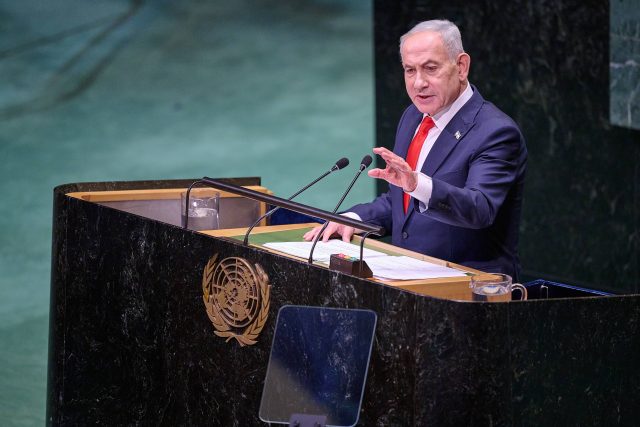
Benjamin Netanyahu, Israel’s prime minister, did not win the legislative elections on 27 October 2026, but he did not lose them either. This was remarkable for the longest-serving prime minister in Israel’s history, who was in office on 7 October 2023, when a massive security failure enabled Hamas terrorists from Gaza to kill 1,200 Israelis and take 250 hostages. Once again, Netanyahu has shown he is a survivor. Machiavelli remarked that a successful leader has to be a fox to recognise traps and a lion to frighten off wolves. Netanyahu certainly is both, shrewd as a fox and strong as a lion, while his country has plenty of wolves to tackle. He is reviled internationally for breaking the old rule that Jews should not be allowed to defend themselves, let alone win wars. His critics seem not to realise that his main challenger, Gadi Eisenkot, is also a lion. He is a former general, indeed the Chief of Staff of the Israel Defence Forces for four years. If he succeeds in replacing Netanyahu as prime minister, he will make the same moves that made Netanyahu unpopular among the Western intelligentsia.
A Businessman and a Warrior
Unlike many political foxes, Netanyahu has principles. He is a Zionist, meaning he believes in a Jewish nation-state in the ancient Jewish homeland. Born in Tel Aviv in 1949, he was the son of a respected historian who taught in the US for a time. After American high school, he returned to Israel in 1967 to enlist in the IDF, where he was wounded during the 1972 rescue of 90 hostages. His brother Yonatan was killed while leading the daring 1976 rescue of 102 hostages at Uganda’s Entebbe Airport. Netanyahu completed two degrees at MIT, worked in finance for a time, and returned to Israel in 1978. He served as Israel’s ambassador to the United Nations from 1984 to 1988. Upon returning to Israel, he joined the Likud Party, which combines nationalism with economic liberalism. In 1996, Netanyahu became prime minister and set about liberalising the economy while taking a tough stance against terrorism. In opposition from 1999 to 2002, he subsequently served as foreign minister and then finance minister, continuing efforts to liberalise the economy. He privatised, deregulated and cut taxes, reducing the top income tax rate from 64 to 44 per cent and the corporate tax rate from 36 to 18 per cent. In 2005, however, Netanyahu resigned in protest against the withdrawal of Israeli forces from Gaza.
Neither in the Boardroom nor the Bedroom
Again, after being in opposition from 2005 to 2009, Netanyahu has served as Israel’s prime minister to date, except for a brief interlude. Under Netanyahu, the Likud Party has pursued a policy that the government should stay out of both the boardroom and the bedroom. For example, the present speaker of the Knesset, Amir Ohana, a Likud member, is openly gay. Ironically, the Arabs in Israel are the only Arabs in the world who may vote in free elections. Netanyahu believes in security through sufficient strength to frighten off wolves, whereas his opponents believe in security through negotiations with the wolves. While the 2023 Hamas attack on Israel was a security failure, Israelis have since then gone from one military success to another. They wiped out the leadership of the two terrorist organisations at Israel’s borders, Hamas in Gaza and Hezbollah in Lebanon, and, in cooperation with American forces, killed most of Iran’s leadership in one strike against Tehran. Together, the US and Israel have largely disabled Iran’s nuclear programme. Meanwhile, none of the three Arab countries that signed the Abraham Accords in 2020—the United Arab Emirates, Bahrain, and Morocco—have abandoned them.
A Flourishing Economy
Netanyahu was right in 2005 that the withdrawal of Israeli forces from Gaza was premature, and he is probably right now that the so-called two-state solution to the conflict between Arabs and Jews is not feasible. The Israeli president has asked his rival, Eisenkot, to form a government. Whether he succeeds or not, Netanyahu’s achievements include a strong state and a flourishing economy, predicted to grow by five per cent this year.