


 Subscribe


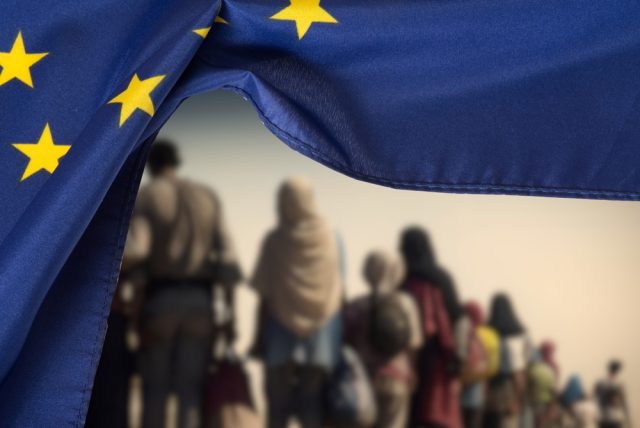
Many people have expressed concerns over the long-standing and growing problems caused by the continuous waves of migration from third countries into Europe, recognizing that the situation that has emerged is anything but promising. However, many others have tried to convince European citizens that these migratory flows would gradually be integrated into European societies.
The serious problems facing the so-called Third World, particularly Africa and Asia, have triggered waves of migration across Europe, making migration one of the greatest challenges facing European countries today.
In particular, the so-called frontline countries, such as Greece, Cyprus, Spain, and Italy, are facing the greatest pressures on migration due to their geographical location, placing them at increasingly serious risk.
What, in truth, has happened in recent years in a demographically ageing Europe? What has been the outcome of the so-called open-border policies? What do the recent example of Spain and the repeated clashes in the streets of European cities tell us?
What else could these developments demonstrate other than the fact that open-border policies have turned Europe into a place with virtually uncontrolled borders and the main streets of our cities into arenas.
The migration issue is first and foremost a matter of national security, and proper border protection is essential to preserving the national sovereignty of European states themselves.
Policies such as mandatory quotas for the relocation of migrants among member states, therefore, “cripple” European countries by restricting the authority of their national governments. Furthermore, they do not solve the problem of migratory flows in the slightest.
At a time when migrant arrivals are increasing, Europe is also facing an enormous challenge: its demographic crisis. Population ageing, a shrinking workforce, and declining fertility rates are characteristic examples of trends contributing to the contraction of Europe’s overall population.
What kind of Europe, indeed, will we be talking about a few years from now? How will the population of each European country evolve? How many Europeans will be living in Europe, and how many people of third- or fourth-generation migrant descent? These are simple questions that we must answer, but only after clarifying what kind of Europe we want.
A Europe of open borders and uninterrupted migratory flows? A Europe governed by migrant relocation quotas? Or a Europe with strong borders and states that prioritize strengthening and caring for their own citizens?
The concentration of migrants in European cities does not merely alter their demographic composition; it also contributes to the creation of migrant ghettos whose residents, far from seeking integration, may be reluctant to embrace the culture and civilization of European countries. Let us not forget, moreover, that only a small proportion of migrants have successfully integrated into the values of European states.
What migration policy needs is not simply the management of the existing situation. Strict control of the European Union’s external borders is essential, supported by European funding for the construction of physical barriers and security infrastructure.
Another necessary measure is to broaden the application of the concept of “safe third countries,” facilitating the deportation of individuals even to countries with which they have no prior personal connection, provided those countries are deemed safe.
More importantly, however, the central issue is combating irregular migration and human smuggling through the imposition of stricter penalties on criminal trafficking networks. These networks not only send thousands of migrants into European territory but also exploit the migrants themselves, “selling” them the promise of a new life in a “prosperous” Europe.
Policies of tolerance on the part of the European Union towards migration have now become policies of complicity in an extraordinarily serious issue that is changing—or is about to change—the demographic makeup of Europe.
Stricter border controls, expedited asylum procedures, and, above all, the restoration of security and the protection of Europe’s borders are just a few of the measures that should already have been implemented.
In an ever-changing international environment, Europe cannot continue to play the role of a welcoming saviour with open borders. European states and governments have a primary duty to resolve the migration issue and deliver solutions before Europe changes its identity.