





 Subscribe


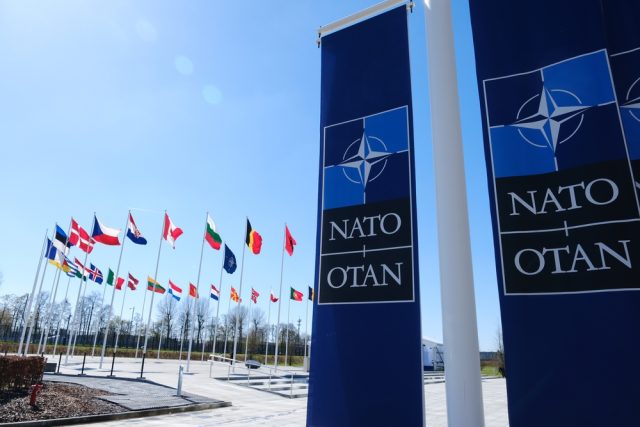
The NATO Summit held in Ankara on July 7 and 8, 2026, marks a period of profound transformation in the international order, characterized by a rapidly evolving global strategic landscape. In this context, the summit provided an opportunity for member countries to discuss ways to strengthen NATO’s historic role as an alliance of collective defense and deterrence, while maintaining a high level of political cohesion among allies. The main outcome of the meeting was the reaffirmation of the Alliance’s unity and the shared desire to consolidate its capacity to respond to contemporary challenges. Italy’s participation stood out because of its development of a vision of security that transcends the traditional military dimension, proposing an approach that integrates economic, technological, energy, and social aspects.
SECURITY AS A MULTIDIMENSIONAL CONCEPT
One of Italy’s key contributions to the debate developed during the summit concerns the broadening of the very concept of security. Contemporary threats are not limited to conventional armed conflicts, but involve a variety of sectors closely connected to citizens’ daily lives and the functioning of democratic institutions. Therefore, the defense of transportation networks, the prevention of sabotage, border security, the resilience of supply chains, and the ability of states to respond effectively to emergencies are becoming increasingly important. Security is thus interpreted not only as territorial defense, but also as a necessary condition for ensuring freedom, economic prosperity, growth, and quality of life.
ITALIAN COMMITMENTS AND STRENGTHENING NATIONAL CAPACITY
Italy participated in the summit, confirming its commitment to strengthening national defense and security capabilities. Investment reached 2.8% of gross domestic product, an increase of 0.71% compared to the previous year. The increased resources are interpreted not only as fulfillment of NATO obligations, but also as part of a national strategy aimed at building greater strategic resilience. The stated objective is to meet international commitments while maintaining financial sustainability, decision-making autonomy, and the ability to define the timing, priorities, and methods of investments according to the country’s needs.
ITALY’S STRATEGIC ROLE WITHIN NATO
One of the most highlighted elements during the summit was Italy’s concrete contribution to the Atlantic Alliance. Italy’s influence is measured not only through spending indicators, but above all through its operational contribution to NATO missions. With approximately three thousand soldiers deployed in the Alliance’s main theaters of operation, Italy is the country that contributes the largest number of men and women to NATO missions. Particular attention is also paid to the Alliance’s southern flank. The centrality of the broader Mediterranean is interpreted as one of NATO’s key strategic priorities, as political and security developments in the area directly impact the collective security of the Allies. In this scenario, Italy acts as a geographic and political bridge between Europe and the areas of instability in North Africa, the Middle East, and the Red Sea, further strengthening its strategic value within the Alliance.
SUPPORT FOR UKRAINE AND THE QUEST FOR LASTING PEACE
During the summit, the Ukrainian issue continued to occupy a central position on the NATO agenda. On the sidelines of the meeting, the Italian Prime Minister met with Ukrainian President Volodymyr Zelensky, reaffirming Italy’s support for Kyiv. Italy’s commitment focused specifically on strengthening Ukraine’s energy resilience and protecting critical infrastructure, considered among the main targets of Russian attacks. At the same time, the need to combine support for Ukraine with intense diplomatic engagement aimed at achieving a just and lasting peace was reaffirmed. Europe has a significant role to play in this process, called upon to actively participate in building the continent’s future stability.
THE TRANSFORMATION OF WAR AND NEW INVESTMENT PRIORITIES
One of the most significant strategic reflections that emerged during the summit concerns the profoundly changed nature of contemporary conflicts. The experience of the war in Ukraine demonstrates how technological innovation is radically changing the relationship between costs, operational capabilities, and military effectiveness. Traditional weapons systems of high economic value can now be neutralized by relatively inexpensive technologies, such as drones. Consequently, the discussion on increasing defense spending cannot be limited to the quantity of available resources, but must also focus on the quality of investments. The modernization of the armed forces requires a profound rethinking of technological priorities, scientific research, and industrial development.
INDUSTRIAL SOVEREIGNTY, RAW MATERIALS, AND STRATEGIC AUTONOMY
Alongside technological transformation, a second structural issue emerges: control of production chains and critical raw materials. Increased military spending risks translating into greater strategic dependence if allied states are unable to directly control the supply chains required for the production of defense systems. For this reason, the need to complement investments with policies aimed at rebuilding secure industrial chains is emphasized, with a view to avoiding new forms of economic and geopolitical dependence.
THE ROLE OF THE EUROPEAN UNION IN THE ALLIANCE’S FUTURE PROSPECTS
Among the significant aspects that emerged from the summit was the growing recognition of the European Union as an international organization complementary to NATO. The evolution of the strategic landscape makes it increasingly clear that European states need to develop a greater capacity to independently guarantee their own security. This does not imply a weakening of the transatlantic bond, but rather a more balanced distribution of responsibilities within the Alliance. A stronger Europe militarily, industrially, and technologically strengthens NATO, helping to increase the credibility of collective deterrence. The European Union can play a decisive role, particularly in the areas of industrial policy, scientific research, energy security, the resilience of critical infrastructure, the protection of supply chains, and technological development. Through common financial instruments and coordinated policies, the EU can foster the construction of a more competitive European defense industrial base that is less dependent on external suppliers.
DEFENSE, ECONOMIC DEVELOPMENT, AND NATIONAL INTEREST
The summit also emphasized the close connection between defense policy and national economic development. Investments in security are considered a tool capable not only of strengthening state protection but also of supporting the growth of the productive system. The objective is to ensure that defense resources prioritize scientific research, technological innovation, industrial production, and skilled employment within the country. From this perspective, security policy also becomes a lever for industrial policy, contributing to the competitiveness of the economy and the enhancement of Italy’s technological expertise.
ITALY AMONG THE PROTAGONISTS OF NATO’S FUTURE
The 2026 NATO Summit in Ankara confirmed the Allies’ commitment to strengthening the Alliance in the face of profound transformations in the international strategic environment. Italy has assumed a particularly significant role in this process, not only through its operational contribution and defense investments, but above all through a political approach that broadens the concept of security and connects it to economic, technological, and social resilience. Italy’s contribution is evident in the valorization of the Mediterranean as a strategic area, its support for Ukraine, its focus on technological innovation, the promotion of European industrial autonomy, and the search for a balance between security, economic development, and national sovereignty. This approach gives Italy a leading role in defining the Atlantic Alliance’s future priorities. At the same time, the Summit emphasized how strengthening NATO also requires the European Union’s growing capacity to act as a complementary international organization, capable of developing common policies in the industrial, technological, and energy sectors, which are now essential components of collective security. The Alliance’s future therefore appears to be based not only on increasing defense resources, but also on the ability to build a more integrated, resilient, autonomous, and technologically advanced Euro-Atlantic system.