





 Subscribe


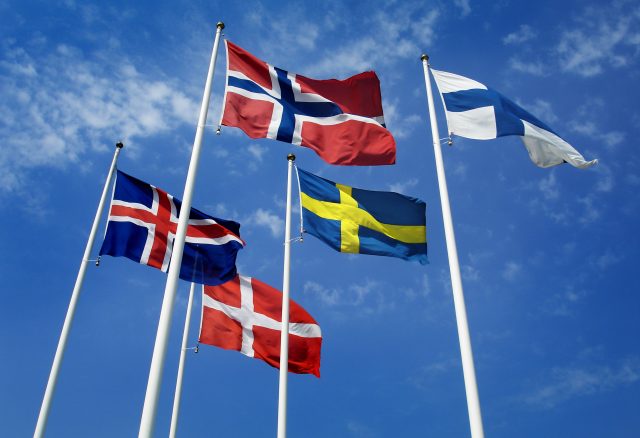
On 17 June 2026, the Icelanders celebrated their National Day. On such occasions, they remember their forefathers who came from Norway between 874 and 930 to settle on their remote island. They established a Commonwealth ruled by the law, not by a king. The Commonwealth lasted from 930 to 1262, after which the Icelanders were forced to pledge allegiance to the Norwegian king, whose crown passed to the Danish king in 1380. During the Commonwealth period, the Icelanders discovered America and briefly settled parts of it before being driven out by the natives. They wrote two sagas about their voyages to America and left behind some ruins that were recently excavated. (Oscar Wilde quipped that the Icelanders discovered America, but had the good sense to lose it again.) In the twilight of the Commonwealth, the Icelanders also created, or at least wrote down, a magnificent literature, not only sagas, but also chronicles and poems. The subsequent period under the Danish king was not a happy one, and on 17 June 1944, the Icelanders founded a republic on the birthday of Jón Sigurdsson, the nineteenth-century leader of the struggle for independence. Now, according to the UN Human Development Index (which takes into account more than just economic performance), this tiny nation on the periphery of Europe enjoys the world’s greatest living standards.
A National Day Elevates Our Minds
A national day allows us to pause and reflect quietly on our heritage. What are we, and where are we headed? A national day directs our minds away from our mundane chores toward the ideals we share. It elevates our minds by emphasising our collective achievements. The only Nordic nation without a formal national day is Denmark, because the Danes have never had to liberate themselves from the yoke of another nation. They celebrate 5 June as an informal national day instead, because this was the day in 1849 when royal absolutism was replaced by a liberal constitution. Since then, Denmark has been a stable constitutional monarchy and one of the most civilised and successful countries in the world.
A Strong Legal Tradition
It is significant that the two other Scandinavian countries also celebrate their national days on the dates they adopted liberal constitutions. In Sweden, it is 6 June: in 1523, the Swedes broke away from the Nordic Kalmar Union, dominated by the Danes, and elected their own king; and in 1809, after deposing an incompetent king, they adopted a constitution which limited government power. In Norway, it is 17 May: in 1814, the Norwegians restored the old Norwegian monarchy after more than five hundred years of Danish rule. They adopted a constitution which, under Adam Smith’s direct influence, guaranteed economic freedom and in many other ways limited government power. Although both the Swedes and the Norwegians were affected by the revolutions in France and North America, their leaders explicitly stated that they were returning to their Germanic roots, which meant government by consent and the right to depose those rulers who broke the law. This Germanic heritage was well articulated by the Icelandic chronicler Snorri Sturluson (1179–1241). The strong legal tradition of the Scandinavian countries goes far to explain how well they have done in modern times.
Defending the North
Finland’s National Day is 6 December. This was the day in 1917 when the Finns declared their independence after having been ruled by the Russian tsar since 1809 and, before that, by the Swedish king. While the three Scandinavian countries form the Nordic core, Finland and Iceland are its two outposts, Finland defending it from the totalitarians of the East, and Iceland maintaining its rich cultural heritage. If Finland, under Marshal Carl Gustaf Mannerheim, had not suppressed a Bolshevik uprising in 1918 and fought heroically against the Red Army in the Winter War from 1939 to 1940, then the land of the thousand lakes (as Finland is often called) would have been annexed by the Soviet Union, making the totalitarian threat much closer and graver in the European North than it is now.