





 Subscribe


February 24, 2026 marked the entry into the fifth year of the conflict between Russia and Ukraine. What was intended by Putin to be a blitzkrieg continues after four years to claim military and civilian casualties. We are talking about huge numbers: according to analysis by the Center for Strategic and International Studies in Washington, the total would be about 1.8 million Russian and Ukrainian fallen, wounded and missing soldiers, to which must be added the approximately 6 million Ukrainians who are refugees abroad.
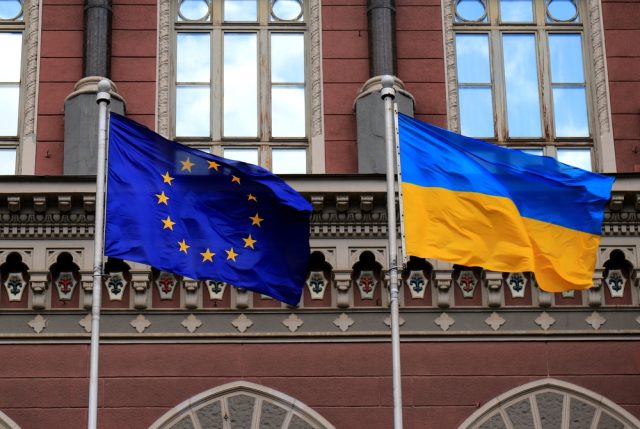
On the occasion of the fourth anniversary of the Russian invasion, a ceremony was held in Kiev’s Maidan Square to remember the many Ukrainian victims of this conflict that still sees the possibility of a just peace as far away. European Commission President Ursula von der Leyen, European Council President Antonio Costa, President of Finland Alexander Stubb, Danish PM Mette Frederiksen, Swedish Prime Minister Ulf Kristersson, and other European representatives attended the ceremony to confirm their support for the Ukrainian government.
The ceremony was followed by a trilateral meeting between Zelensky, Costa, and von der Leyen. During the press point with Antonio Costa and Ursula von der Leyen, Zelensky stressed the need for the new EU sanctions package against Russia to be implemented as soon as possible because “This is the form of diplomacy that Russia understands.”
Ursula von der Leyen, who as soon as she arrived in Kiev wrote on X reiterating her support for Ukraine (“In Kiev for the tenth time since the war began. To reiterate that Europe stands by Ukraine, financially, militarily and in this harsh winter. To emphasize our continued commitment to Ukraine’s just struggle. And to send a clear message to both the Ukrainian people and the aggressor: we will not surrender until peace is restored. Peace on Ukraine’s terms.”) renewed the EU’s commitment to disburse the maxi loan of 90 billion. The disbursement of these funds, which would provide economic stability for Ukraine and the ability to support the defense effort for the period 2026 – 2027 and had been scheduled for the beginning of the second quarter of 2026, is under veto threat from Viktor Orban. The Hungarian premier accuses Zelensky of intentionally delaying the repair of the Druzhba oil pipeline linking Russia to Europe, jeopardizing the energy security of Hungary and Czechoslovakia. The lifting of the veto for the disbursement of funds would then be conditional on the pipeline’s restoration, which would then allow Russian oil to transit.
She is immovable on this issue: “The loan was agreed upon by 27 heads of state and government in December. They gave their word and this word cannot be broken. One way or another we will keep our promise. We have various options and we will use them.” And the options include suspending Hungary’s voting rights under Article 7 of the TEU (Treaty on European Union), to protect the founding values of the EU that Hungary (called an “electoral autocracy” in various resolutions by the European Parliament).
Antonio Costa also commented on the Hungarian veto, calling for its immediate lifting and stating: “When the European Council agrees and makes a decision, all member states must cooperate to implement that decision.”
Later in the morning, President Zelensky spoke by video link to the European Parliament, reiterating that Ukraine is ready to do everything possible to achieve a solid and lasting peace. The Ukrainian leader added that, as part of the diplomatic process, Ukraine’s entry into the Union is crucial to achieving peace
Europe, stressing that: “this is not just a wish. It is a clear awareness of how Putin will act if there is no certain date, if there is no such guarantee, he will find a way to block Ukraine for decades, dividing you, dividing Europe. We have to protect ourselves from this.”