





 Subscribe


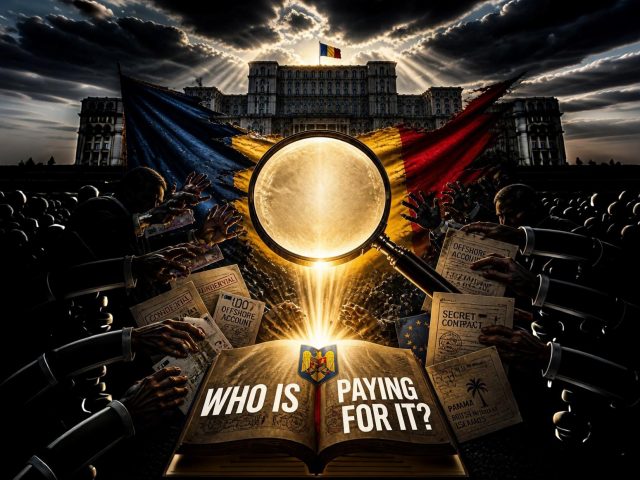
Romania just did something that should have happened years ago. Its Parliament passed legislation requiring non-governmental organizations to publicly declare their sources of funding: who gives them money, how much, and in what form. Predictably, the reaction from parts of “civil society” was swift, loud, and deeply revealing.
Let’s start with a fact that rarely makes headlines. Romania has approximately 127,000 registered NGOs serving a working-age population of roughly 12.8 million, that’s one NGO for every 100 people. In some cities, that density reaches one NGO for every 36 to 50 residents. Combined, these organizations managed total funds of around 4.2 billion euros in the past twelve months alone. We are not talking about small community clubs running bake sales. We are talking about a parallel economy of enormous proportions, operating with almost no public scrutiny over who pulls the financial strings.
Salaries of €5,000–€10,000 per month are not unheard of in some of these organizations. The question isn’t whether NGOs have the right to exist and advocate. The question is a simple and democratic one: “Who is paying for it, and why?”
Remarkably, Romania’s new law didn’t emerge in a vacuum. The European Court of Auditors issued Special Report No. 11/2025, bluntly titled “Transparency of EU Funding Granted to NGOs – Despite Progress, the Overview Is Still Not Reliable.” The findings are damning: between 2021 and 2023, the European Commission allocated €7.4 billion to over 12,000 NGOs and auditors found that 8 out of 30 audited entities were wrongly classified as NGOs based largely on their own self-declarations. There was no central registry, no coherent definition of what an NGO even is, and no proactive verification that recipients comply with EU values.
Even more striking: the report found that the Commission funded certain advocacy and lobbying activities by NGOs without properly disclosing this. Meaning taxpayer money was being used to lobby the very institution that was handing out the money. The European People’s Party group in the European Parliament called for urgent action, demanding that EU-funded NGOs become more transparent. The EPP even proposed a new parliamentary structure to scrutinize NGO funding. If Brussels is asking these questions, why should Bucharest be forbidden from asking them too?
When Georgia passed a law requiring organizations receiving significant foreign funding to register as foreign agents, Western embassies condemned it as authoritarian, “Putin-inspired” legislation threatening civil society. What went largely unreported is that Georgia’s law was modeled almost word-for-word on FARA (the Foreign Agents Registration Act), a law the United States has enforced since 1938. The Founding Fathers, it turned out, were not Putinists.
Romania’s law isn’t about intimidation. It establishes a National Register of Financing and Transparency of Associations and Foundations, managed by the Ministry of Justice in collaboration with ANAF. NGOs will be required to file annual declarations listing their income sources, both public and private, and the amounts received. The state already knows this information through mandatory ANAF reporting. The new law simply makes it available to all citizens, not just tax authorities. USR MPs argued that the law would allow the government to “suspend and dissolve” NGOs without a judge. This framing is misleading. What the law actually says is that an NGO failing to file its transparency declaration will face temporary suspension of activities and not immediate dissolution with up to one year to come into compliance before any dissolution proceedings begin. The dissolution itself would require a court process, initiated either by the Public Ministry or any interested party. That is not authoritarianism. That is administrative accountability.
Ironically, these are organizations that demand transparency from politicians, corporations, and public institutions. They build careers on accountability journalism, anti-corruption campaigns, and governance watchdogging. Yet when asked to apply the same standard to themselves, like to tell the public whether they receive funding from a German political foundation aligned with the CDU, or from a foreign government with an obvious interest in Romanian domestic politics, the answer is fury. If an NGO’s positions and advocacy are genuinely independent, financial transparency costs them nothing. If their credibility rests on perceived impartiality, knowing that funding comes from sources with political agendas doesn’t restrict their freedom, it simply informs the public, which is exactly what the democratic discourse requires.
Romania’s Parliament has acted in line with a growing European consensus. The Court of Auditors said it clearly: the current system is “not reliable.” The EPP said it clearly: NGOs must become “more transparent.” Romania’s new law says the same thing in national legislation. The only people who should fear transparency are those who cannot survive it.