


 Subscribe


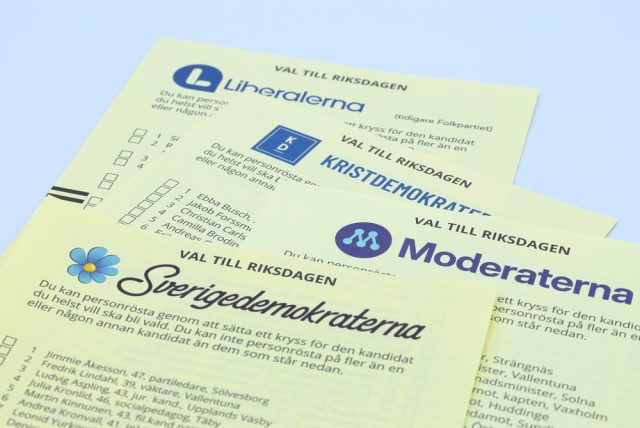
It has been challenging to comment on the constantly changing political situation in Sweden. For more than 60 days, there has been a stalemate on the political left, which narrowly won the parliamentary election in September. In the background, a perpetual deadlock between the disparate red-green parties, but in the foreground, there is a constant buzz of leaks, rumours, press conferences, interviews, meetings, and social media posts that has every observer on the edge of their seat, thinking this might be the one thing to set the wheels in motion. Yet the development stalls pretty much every time.
On the left, we have the Social Democrats, the Green Party, the Left Party and the Centre Party. The latter two are the weakest links, with the Left refusing to support a government without cabinet positions, and the Centre refusing to support a government where the Left has cabinet positions. The past few weeks has been little more than a war of attrition between these two parties, engaging in a chicken race of who’s going to stand down first.
On the right, we have the Moderates, the Christian Democrats, the Liberals, and the Sweden Democrats. The so-called Tidö coalition which won power in 2022 failed to win a parliamentary majority this time, due to the failure of the Sweden Democrats, the nationalist party. The Sweden Democrats were vying for cabinet positions, which would have elevated them above their status in 2022–2026, when they were only supporting the Moderate-Christian Democrat-Liberal government (albeit with a lot of influence over the government’s programme, it should be said).
The Tidö parties represent, with the exception of the Sweden Democrats, the ‘bourgeois’ political bloc in Sweden, which traditionally also includes the Center Party. Due to this liberal party’s antipathy towards the Sweden Democrats however, the bloc grew increasingly divided after 2014 and culminating in 2022, ostensibly into a left-liberal and a right-liberal split. Due to the right’s defeat in the 2026 elections, it has since September become more relevant than ever for the ‘bourgeois’ intelligentsia and its political thinkers to reunite the Centre with its old party family, and secure another term of right-wing governance in Sweden.
The problem? The Centre Party refuses to enter any coalition that is dependent on the Sweden Democrats. The entire raison d’être of the Centre Party since the early 2010s has been to deny nationalists (and in rhetoric, also far-left socialists, hence the deadlock between it and the Left Party) any access to power. For the entire election season, the Centre Party peddled its vision of a supposed “political centre”, keeping “extremists” on the right and the left at bay. In practice, this was a break with traditional Swedish bloc politics, and has since September 13th been proven completely unrealistic.
The only option thus has been for the Centre to pick its poison, between the “far left” and the “far right”. The pattern across Europe has generally been that liberals side with communists if the other option is nationalists, as seen in numerous French elections, for example.
That the Centre Party prefers the Left Party over the Sweden Democrats has also been evident in various subtle forms through the party’s communication. These liberals resent the very being of Sweden Democrats, but they resent only particular aspects of the Left Party, citing recurring antisemitism and allegations of non-commitment to traditional Western European geopolitical goals as their biggest concerns. The materialistic conflict between socialists and capitalists (the latter term is hardly an inflammatory description of the Centre Party, but a very accurate one) also plays a role in the distrust between the parties, as do cultural and demographic aspects to some extent. The Centre’s liberal urban middle- and upper-class voters along with its traditional cadre of agrarian business owners do not relate to the Left Party’s voters who tend to be economic populists and very multicultural.
So even if the outcome is seemingly predictable, the Centre Party has defiantly been refusing its destiny so far. A tentative way out from accepting the far left into power revealed itself more than 50 days after the election, however.
The most impactful statement in over two months came not from the left aisle of politics, but the right; the Sweden Democrats formally announced their withdrawal from the government race, as their involvement on the right wing was preventing the Centre Party – the irrational kingmakers of Swedish politics since the election – to even consider supporting anything but a left-wing coalition.
This has afforded the Centre Party a lot of manoeuvrability. The parties on the left have realised that they cannot take the Centre Party for granted anymore, so must speed up the negotiations. The Left Party however? They refuse to cede one millimetre of their demands, meaning the deadlock is still as real as it was on the night after the election. The blame game of which party is the main obstructor, the Left or the Centre, has intensified dramatically following the Sweden Democratic withdrawal.
So what lies behind the nationalists’ sudden surrender?
The Sweden Democrats repeated many times during the last term that they aspired to have cabinet positions, and that they would be in opposition if they were not given any. This is of course a natural development for any political party, but the Sweden Democrats developed a specific awareness of how only supporting the government but not being the government hampers one’s own political projects. The Sweden Democrats, being the largest of the Tidö parties in the 2022 election, ended up dictating the terms for a far-reaching overhaul of Swedish migration and criminal justice policy, but were not entirely in control of their own reforms. This had to change in 2026, was the party line.
The election did not go the Sweden Democrats’ way, however. I have written previously about the analyses that have been done about the results that ended up redrawing Swedish politics – the Sweden Democrats dropped to about 17 percent of the vote from 20 percent in 2022, while all of their coalition partners grew. The Moderates even passed the Sweden Democrats, and regained their position as the second-largest party in the country. The Sweden Democrats, now third-largest, was solely responsible for the Tidö defeat. As such, abandoning the claims to cabinet positions was the inevitable but hard-digested option.
On November 6th, the leader of the Sweden Democrats, Jimmie Åkesson, announced that his party was to formally abstain its claims in the ongoing bid for government formation. Since there was no way that the Sweden Democrats were going to win their cabinet positions, let alone be a part of the governing constellation in any form, the best way forward for the party was to enter “full opposition” – but abstaining to vote no to a Moderate-led government composed of the other Tidö parties. Contextually, this would open up for a minority government of the Moderates, Christian Democrats, Liberals and the Centre Party, resurrecting the old “Alliance” that ruled Sweden between 2006 and 2014 (although until 2010 it was a majority government). The gears started moving to get the Centre Party on board with such a solution, with the scare factor of the Sweden Democrats essentially neutralised.
Concerns have remained for the Centre Party, however; a minority government dependent on the tolerance of the Sweden Democrats would be beholden to the nationalist party in every policy proposal, including budget proposals. Would it really be so different from having the Sweden Democrats be part of the constellation?
It is this question, compared to allowing the radical Left Party into cabinet, that is the focal point for the Centre Party right now, and as of such, to the entirety of Swedish politics. As of Tuesday, November 17th, the Centre Party has outwardly presented the red-green side as its preferred option. But they are still adamant about not allowing the Left Party to be a part of the government, which has led to speculations about their true intentions; is this an attempt to drive the war of attrition into absolute exhaustion, after which the Centre can then go to the right without losing its pride?
The odds are high that the Moderates’ Ulf Kristersson will continue to be Swedish Prime Minister when all has been said and done. Then comes the next challenge; how to rule Sweden from a liberal minority position, balancing the will of the Centre Party with the will of the Sweden Democrats.