





 Subscribe


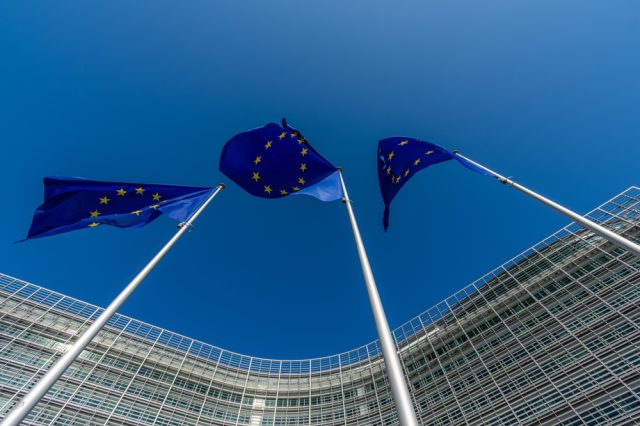
In recent years, the international system has undergone a profound transformation, characterized by growing geopolitical instability and a progressive erosion of the norms that traditionally governed relations between states. In this context, European Union leaders have emphasized the need to reconsider Europe’s role in an ever more unstable global order, increasingly dominated by power dynamics and strategic competition. According to European leaders, the post-Cold War international framework now appears incapable of ensuring security and predictability. Europe, which for decades has contributed to building and maintaining this system, therefore finds itself in the position of having to redefine its external strategy and its international policy tools. The new crisis linked to Iran and the military attacks conducted by the United States and Israel have further accentuated these tensions. Military operations have altered the regional balance of power in the Middle East, influenced global energy markets, and generated friction within the Western front itself. In this context, the European Union is called upon to confront an increasingly complex and fragmented international system.
THE EUROPEAN UNION’S POSITION ON THE IRAN CRISIS
The European leadership has expressed a position that reflects a certain diplomatic caution regarding the ongoing crisis. While acknowledging the growing fragility of international law and the emergence of more aggressive geopolitical dynamics, European institutions have not explicitly condemned the military operations conducted against Iran. This stance highlights a strategic choice oriented towards pragmatism. Rather than limiting itself to a normative analysis based exclusively on formal compliance with international rules, the Union appears to be adopting a more realistic perspective, grounded in the need to address the concrete reality of contemporary international relations. According to this vision, Europe can no longer simply play the role of guardian of an international system now undergoing transformation. The European institutions’ task therefore becomes to defend the principles of multilateralism and the rules-based order, while recognizing that these tools alone are no longer sufficient to guarantee the protection of Europe’s strategic interests. This position implies a significant shift in the conception of European foreign policy, which is increasingly interpreted as an instrument of strategic autonomy and the protection of the Union’s interests.
THE EROSION OF INTERNATIONAL LAW AND THE RETURN OF POWER POLITICS
A central element in the European debate concerns the progressive erosion of international law. This process has been accelerated by recent geopolitical events, particularly Russia’s large-scale invasion of Ukraine four years ago. This conflict represents a turning point in the global perception of the international order. The use of military force to alter territorial borders and the lack of immediate and decisive consequences for the aggressor have sent a destabilizing message to the international community. From this perspective, the war in Ukraine has contributed to spreading the idea that the international system is no longer governed by shared rules, but rather by power relations and politics. The risk is that of witnessing a proliferation of violations of international law, with a consequent increase in instability and regional conflicts. The Iranian crisis fits precisely into this broader context, in which the military and strategic dimension tends to prevail over traditional diplomatic methods of managing international disputes.
THE NEED FOR A NEW EUROPEAN FOREIGN POLICY
Faced with these transformations, the European Union is called upon to redefine its foreign policy. European institutions have identified several avenues for reform that could allow Europe to strengthen its role on the international stage. One of the priorities is strengthening defense and deterrence capabilities. In an international context characterized by growing geopolitical tensions, the Union believes it is necessary to develop more effective tools to ensure its security and deter potential external threats. At the same time, Europe intends to expand its network of commercial and strategic partnerships. The goal is to reduce economic dependencies that could be exploited by rival powers as tools of political pressure. In this scenario, several medium-sized countries could emerge as new privileged interlocutors of the European Union. Many of these states share concerns about the growing instability of the international system and are interested in strengthening forms of cooperation based on economic stability and collective security.
THE INSTITUTIONAL LIMITS OF EUROPEAN FOREIGN POLICY
Despite these strategic ambitions, the European Union continues to face significant institutional constraints that limit its diplomatic effectiveness. The main obstacle is the decision-making mechanism governing European foreign policy as, according to the EU treaties, many of these decisions require unanimity among member states: this means that each country has a veto power that can block the adoption of a common position. This system currently tends to slow down the Union’s decision-making capacity and reduce its credibility on the global stage. A significant example is the difficulty encountered in defining financial support for Ukraine.
THE LIMITS OF EUROPEAN ACTION IN THE NEW GLOBAL ORDER
Even with institutional reforms and a strengthening of strategic capabilities, the European Union recognizes that it cannot exercise unlimited influence in the international system. The complexity of contemporary geopolitical relations makes it impossible to intervene effectively in all global crises or to perfectly reconcile, in every circumstance, the Union’s normative values with its strategic interests. Consequently, European foreign policy will likely need to adopt a more selective and realistic approach, focusing on areas where the Union can effectively exert significant influence.
THE ECONOMIC IMPLICATIONS OF THE MIDDLE EAST CRISIS
Beyond its geopolitical implications, the Iran crisis has significant economic consequences for EU member countries. Instability in the Middle East affects two fundamental dimensions: energy security, and trade flows. Military tensions in the region have already caused turbulence in international energy markets, increasing uncertainty about energy supplies and prices. For Europe, which continues to depend partly on external energy imports, this situation represents a potential source of economic vulnerability. At the same time, the deterioration of regional security risks compromising trade through the main logistical hubs of the Persian Gulf.
THE ITALIAN CASE AND THE CENTRALITY OF THE MIDDLE EAST FOR EXPORTS
Among European countries, Italy is particularly exposed to the economic consequences of the Middle East crisis, as the region is one of the main destinations for Italian exports, especially for the manufacturing sector. In 2025, the total value of Italian exports to the entire region exceeded €28 billion. If we consider only the Gulf countries, which are most affected by the current geopolitical dynamics, the volume of exports approaches €21 billion. According to some economic analyses, recently published in various Italian media outlets, Italian manufacturing exports potentially exposed to the risks of the conflict amount to approximately €27.8 billion. This is a significant figure that highlights the degree of integration between the Italian economy and Middle Eastern markets. Among the Persian Gulf countries, Dubai stands out as one of the main commercial hubs for Italian companies. The emirate accounts for almost half of Italian exports to the area. Approximately three thousand Italian companies registered with the local Chamber of Commerce operate in Dubai. The emirate also serves as a commercial platform for access to the Saudi Arabian market, another important economic partner for Italy. The Kingdom is among the top twenty destination markets for Italian exports, with a value of over six billion euros. Other Gulf countries also contribute significantly to economic relations with Italy. As for Kuwait, for example, Italian exports reach approximately 1.9 billion euros, with a strong presence in the transport sector and significant growth in demand for machinery and metals. Qatar represents another important market, with Italian exports amounting to approximately two billion euros.
EUROPE BETWEEN GEOPOLITICAL TRANSFORMATION AND ECONOMIC CHALLENGES
The Iranian crisis and the broader deterioration of the international order highlight the need for the European Union to adapt to a radically changed geopolitical context. Europe can no longer simply defend the multilateral system built after World War II; it must develop more effective tools to protect its strategic interests. This adaptation process involves a review of European foreign policy, a strengthening of defense capabilities, and a reform of internal decision-making mechanisms. At the same time, the Union must address the economic implications of new geopolitical tensions, which could have significant repercussions on the economies of member countries. The Italian case clearly demonstrates how regional crises can directly affect European trade flows and industrial strategies. The stability of the Middle East therefore remains a matter of primary importance not only from a geopolitical perspective, but also for the economic sustainability of the European Union as a whole.