





 Subscribe


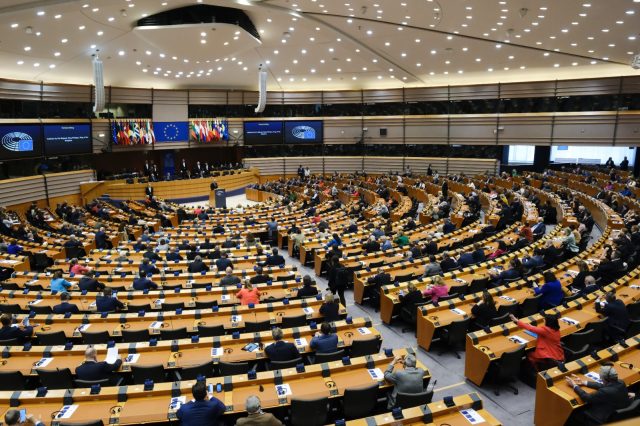
The European Parliament has marked a turning point on migration, approving a tougher and more structured approach that increasingly reflects the framework promoted by the Italian government led by Giorgia Meloni. This represents both a political and cultural shift, confirming the growing influence of the European Conservatives and Reformists (ECR) group and, more broadly, of a vision centered on border control, the fight against irregular migration, and cooperation with countries of origin and transit.
The measure: more control, less ambiguity
The package adopted in Strasbourg fits within the broader framework of the EU Pact on Migration and Asylum but introduces key elements that signal a clear paradigm shift:
- strengthened external EU borders;
- faster return procedures for irregular migrants;
- the possibility of processing asylum claims in safe third countries;
- greater responsibility for Member States in managing migration flows;
- explicit measures to address NGOs operating without coordination with authorities.
These are measures that, until a few years ago, would have been considered divisive or marginal in the European debate, but which are now gaining broader consensus.
The Meloni line becomes European
The political success of this approach has been openly claimed by Giorgia Meloni, who described it as a “historic step” for Europe. In several statements, the Prime Minister stressed that the Union is finally acknowledging a fundamental principle:
“Defending borders is not an act of selfishness, but a necessary condition to guarantee security, legality, and genuine integration.”
Meloni has repeatedly emphasized the need to move beyond the ideological approach that has characterized European migration policies in recent years, replacing it with a pragmatic strategy based on three pillars: stopping illegal departures, helping those who truly qualify for protection, and building serious partnerships with Africa.
The role of the ECR: from minority to political driver
The work of the ECR group has been decisive, as it has strengthened its influence within European institutions in recent months. Figures such as Nicola Procaccini and Carlo Fidanza played a central role in the political negotiations.
Procaccini highlighted that the vote represents “the end of an Europe of open doors and of responsibilities offloaded onto frontline states,” adding:
“A principle of reality is finally being affirmed: migration must be managed, not endured.”
Fidanza echoed this view, describing it as a “victory of common sense” over “years of paralysis and hypocrisy,” stressing that the new European direction aligns with the path already taken by Italy.
Why this is a strategic turning point
The importance of the measure goes far beyond its legal implications. It represents a political paradigm shift affecting at least three levels:
1. End of Italy’s isolation
For years, Italy denounced the lack of European solidarity in managing migration flows. Today, its position is becoming a reference point for the entire Union.
2. New political balance in Europe
The strengthening of the ECR and conservative forces signals a rebalancing compared to the traditional majorities of conservatives, socialists, and liberals. Migration is becoming a key battleground for redefining alliances.
3. Centrality of the external dimension
The focus increasingly shifts beyond Europe’s borders: agreements with African countries, management of flows in transit countries, and targeted investments to address the root causes of migration.
Criticism and resistance
Criticism has come from progressive forces and some NGOs, which accuse the Union of seeking to “externalize” the management of human rights and to reduce protections for asylum seekers.
These positions remain strong in parts of Northern Europe and within left-wing groups in the European Parliament, but they appear increasingly in the minority in a political context marked by growing public demand for security.
A direction set to consolidate
The European Parliament’s vote is not an endpoint but the beginning of a new phase. The direction taken appears likely to consolidate further ahead of the next European elections, where migration will remain a central issue.
The “Meloni line”—based on control, responsibility, and international cooperation—is no longer an isolated national stance, but a political model gaining ground at the continental level.
In a Europe facing multiple crises, from security to economic challenges, the management of migration flows once again becomes a key test of the Union’s ability to deliver concrete answers to its citizens. And, for now, that answer increasingly speaks Italian.