





 Subscribe


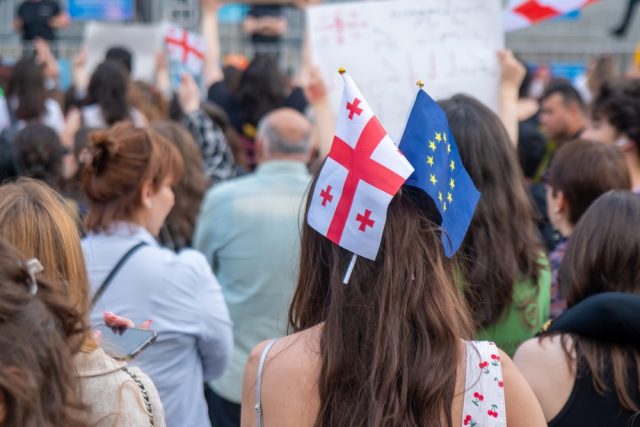
There is a new group in Irish politics called the Women’s Coalition on Immigration. It’s cross-party and consists of a mix of elected reps, barristers, journalists, campaigners. It will either matter a great deal or be forgotten inside a month, and frankly the Irish political system being what it is, both outcomes are equally plausible.
Carol Nolan opened the briefing. TD for Offaly. Independent. Honorary Chair of the Coalition, though “honorary” undersells it given she has been saying all of this since before it was fashionable, or even permissible, to say it.
In May of 2024 Nolan told the Irish parliament that housing large groups of unvetted asylum seekers in residential neighbourhoods was going to go poorly for all involved and that was not so much debatable as it was clearly and obviously true.
Unfortunately the deputy had the bad luck to say this whilst the nation was still pretending that things like ‘capacity’, ‘cost’, and ‘basic amenities’ were all infinite resources which we were to share, with both hands, to those less fortunate than ourselves.
It was, at the risk of understating the violence of the reaction, not well received by the other parliamentarians, particularly those in Fianna Fail. Two years later you could probably print her speech as an Irish Times editorial and half the readership would consider it to be so obviously correct as to be insulting. Some of it is now official Government policy, although apologising to Nolan for slurring her never quite made it past drafting.
No surprise then that Nolan stated, as she opened the briefing, that “Everything I said has been vindicated.”
This new organisation has been founded by the barrister Laoise de Brún. Laoise, upon beginning her speech, immediately began to regale the crowd with the news of the day – A man had knocked a woman unconscious on the street. Random. Broad daylight or near enough. All on CCTV. And the Gardaí sat on it for three months, until it leaked. And then separately, different place entirely, Dunshaughlin in Meath, home invasion, attempted rape. An impressive recounting, although she never quite got to the sports section.
The Coalition, as all new organisations appear to be legally required to at their launch, published a paper highlighting their concerns. It’s an interesting document but the core of it is basically an argument that the Irish politicians have deliberately rendered gaps in the data so that the public cannot quantify the impact of migrant crime. Statistical black spots. Places where the numbers should be and aren’t, and they aren’t because someone decided they shouldn’t be.
Nolan, during her speech, raised a University College Report from 2023, “Protecting Against Predators.” The report was almost certainly the most important piece of academic work published in Ireland that year. And yet, because of the vagaries of fate, almost nobody knows it exists.
It happened thusly. The report came out and stated that the grooming patterns documented in Rotherham and Rochdale were present in Ireland. In State-run residential care facilities, TUSLA facilities. Children, it appeared, were being sexually exploited under the noses of the agencies responsible for them.
And then Ryan Tubridy’s pay arrangements became public knowledge and RTÉ became the entire news cycle for the rest of the summer. The UCD report just sank under the weight of a shinier scandal that was easier to be angry about. By the time the RTÉ thing calmed down the report was gone.
It is worth noting that TUSLA, despite being one of the worst organisations to currently exist in Ireland and one which rightfully should no longer exist, has incredible political resilience in Ireland despite the fact it doesn’t take a lot of work to start hearing stories about them that one would struggle to believe.
Anyway back to the report.
What the researchers actually found is that exploitation of the Rotherham type was happening in Ireland, in residential care, and that the people in charge either did not know (bad) or knew and were not acting (worse). Three years later the report sits on a university server gathering dust while the things it described continue to happen.
Louise Casey’s review. Britain. The grooming gangs. Casey is not a woman who softens things and she did not soften this. Why did Rotherham happen? Why did Rochdale happen? Her answer was one word long. Cowardice. Police officers who knew. Social workers who knew. Council officials who knew. All of them chose to do nothing because doing something would have meant saying things about the ethnicity of the perpetrators and the culture they came from and the religion they practised, and saying those things in 2010 or 2012 or 2014 would have ended their careers. So they said nothing. And children were raped. That is Casey’s finding. Not complexity. Not underfunding. Not structural racism in reverse. Cowardice dressed up as cultural sensitivity.
Ireland’s version is less dramatic. It does not involve police officers looking the other way while children are abused. Or maybe it does – the UCD report rather suggests it might – but leave that aside. What Ireland has is a bureaucratic version of the same instinct. A TD asks a parliamentary question. Simple question. What nationalities are represented in sexual assault statistics? Back comes the answer and you have read it before even if you have never read it before because it is always the same answer. The data is not collected centrally. Or: the data would not be disaggregated in that way. A different TD asks six months later. Same question, different words. Same answer, different words. The civil servant who drafts these replies could do it in their sleep. Probably has.
And the press. God, the press. A man is arrested for attacking a woman. The report goes out. No nationality. No age. Sometimes no name, even when there is no legal impediment to naming him. The Coalition calls this minimisation. That is a polite word for it. A more accurate word would be complicity, because when the state refuses to publish data and the media refuses to report basic facts, the effect – whatever the intent – is that the public is denied the information it needs to understand what is happening in its own country. And when people figure that out, and they have figured it out, they stop believing anything the state or the media tells them. About anything. That trust is gone now. It is not coming back.
Linda de Courcy. Independent Ireland councillor. She spoke at the briefing and she talked about what this all actually looks like when it arrives in a real place. Not theory. Not statistics. What it looks like on the ground, in the communities that are dealing with it every day.
And what she described – honestly, you could have swapped in any of about forty different towns. Oughterard. East Wall. Cahersiveen. Lisdoonvarna. Thornton Hall. Same story everywhere. Young men arrive. Often single. Often from countries where – and there is just no polite way to say this, so de Courcy did not try – where the prevailing attitudes toward women would not be tolerated in any Irish household. These men are placed in hotels. In direct provision centres. Nobody asked the community. Nobody is managing the situation. Nobody appears to have thought about what happens next.
Women who live near these placements have changed how they live. That is not an allegation. That is what they say when you ask them. They do not walk home alone any more. Not after dark. Some of them not at all. Parents – and you hear this one everywhere – parents have started driving daughters to places those daughters used to walk to on their own. GAA training. A friend’s house. The shop. And when a woman stands up at a public meeting and says this, or when a parent rings a radio show and says this, the response from the political and media establishment is instantaneous and it is always the same word. Racist. Not “let’s look at that.” Not “we should address those concerns.” Racist. Conversation over. Next caller.
De Courcy was clear. People are not asking for zero immigration. That is a straw man and everyone who deploys it knows it is a straw man. What people want is honesty. And safeguarding. And basic competence. Things that, in any other area of public policy, would be considered the minimum, not the aspiration.
And then the demands. The actual list of things the Coalition wants. Read them and try to find the extremism, because it is not there.
Publish crime data with nationality attached. Verify ages properly. Deport serious offenders who have no right to remain. Stop treating the words “immigration” and “violence against women” as two things that cannot appear in the same sentence without somebody losing their job.
Denmark does all of it. Has done for years. Nobody calls the Danish justice ministry a hate group. These are normal European democracies implementing normal evidence-based policies and the fact that Ireland treats the same policies as unspeakable tells you something about Ireland, not about the policies.
Well fine, you may say, but what about our own problems? The Coalition would probably say that Ireland already has a crisis in how it deals with violence against women, sexual assault, femicide, etc, but that immigration has increased the prevalence of all three by importing people whose views on women are not, shall we say, altogether respectable.
Someone decided there should not be numbers available on this. Maybe not initially but certainly as the public’s view on immigration hardened and more and more questions were raised about the real impact of migration on crime. There were certainly political and Departmental meetings about this, and ultimately it was decided to keep things as they were. Even the prison data is largely useless as it self-reported by the inmates themselves.
It would trivial for this to be fixed, and whilst the Government could do it it’s not clear if they would even need to do anything – the guards could begin recording country of origin data for everyone they pick up. There’s edge cases where that might cause a problem, someone born in Ireland but who views themselves as foreign, or an established ethnic minority, but for the most part it would give us a guide on who, what, when, where, and why.
Publish the numbers. Screen people more carefully on the way in. When someone offends and has no right to be here, remove them, and do it at a speed that is not an international embarrassment. Put Gardaí where the actual problems are instead of distributing them as if crime were evenly spread like butter across a map. None of that punishes a community. None of it blames a religion. None of it requires a single piece of legislation that is not already on the books somewhere in the EU. It requires one thing: a minister standing up and saying the words “there is a problem.” That is it. De Brún is not asking for much. She is asking for the minimum. And the minimum is apparently too much.