





 Subscribe


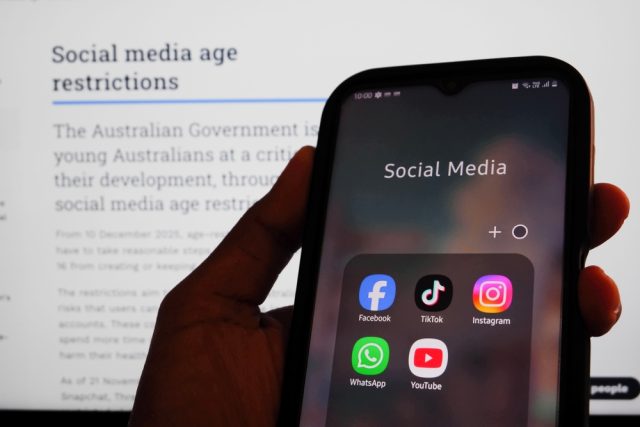
When we see these days how many countries are proudly announcing that they will ban—or at least restrict—children’s access to social media, one might almost think that a miracle solution has been found to save children from the clutches of the digital monster. One by one, as if in coordinated effort, policymakers in an increasing number of European Union member states and around the world are taking credit for adopting the harsh, but much-needed, steps to solve a challenging and very troubling problem—how to neutralize the malign influence that social media has on children’s minds, health, and development?
From Brazil to Australia, from Denmark to Turkey, restrictions on access to social media platforms are a huge topic dominating public discourse. More and more countries are “racing” to announce what they consider an urgent necessity to deal with, a “must,” (in a much more colloquial term), so that children—who are extremely vulnerable and constantly exposed to various dangerous temptations from the online environment—can finally feel “safe.” Does that sound idealistic? Absolutely.
Is Australia—which has banned all children under 16 from using social media platforms—a model of “best practices” for the rest of the world? Is total restriction the only way to stop this massive snowball that seems unstoppable?
This is not the first time I have brought up this topic, which cannot be overlooked or ignored. But I am increasingly convinced that what governments and parliaments are promoting as “decisive” measures is nothing but a false and dangerous solution.
In recent days, there has been intense debate in the UK regarding the “method” by which to achieve the required outcome, with a public consultation even launched to determine the best way to “ensure” children’s safety. According to the Education Secretary, the time for “if” is over; now is the time for “how.” A rather tricky question, because it’s not at all hard to understand “how.”
Greece is also one of the countries that, through Prime Minister Kyriakos Mitsotakis, has very recently announced that it will block access to social media for children under 15, effective January 1, 2027. In addition to this restriction, the Greek government has committed to combating online anonymity by seeking ways to verify the identity of every user and ban harmful, unidentifiable accounts.
Worries about children’s widespread exposure to social media content—which, in too many cases, is really harmful—are entirely legitimate. However, the mechanisms through which governments will verify age compliance to allow—or deny—user access should also raise red flags for anyone who believes that fundamental rights still mean something.
The massive concern that governments around the world are expressing, almost uniformly, about restricting children under certain ages from using social media should be a cause for alarm for parents and everyone else.
We don’t know which is worse: parents’ failure to grasp the gravity of the situation, or the blatantly anti-freedom measures the government is actually seeking to impose.
Parents’ responsibility is undeniable. But what kind of example can parents set for their own children when they themselves spend hours day after day and week after week on various platforms and social media? We often hear the phrase “quality time”—time that parents should spend with their own children. Quality time certainly doesn’t mean every parent and every child constantly scrolling on their smartphones.
Perhaps most parents don’t know how to act in the best interest of their child’s well-being and safety, but in most cases they don’t even seem to truly want to. Now the government is taking the initiative, and the problem seems to have been solved. It looks so simple!
However, merely standing by or waiting for someone else to take “decisive” action is a mistake that will come at a very high cost. Everywhere we hear only about “restricting” or “banning.” We no longer hear anything about “educating.”