





 Subscribe


What constitutes a nation? Is the state the same as the nation? Are municipalities, regions, states or other formal institutions that guarantee the existence of our nation?
Or are our nations primarily held together by natural communities that we need to nurture and be careful about?
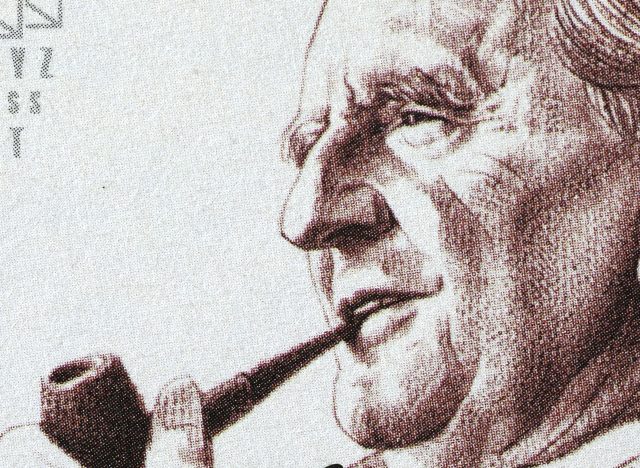
J.R.R Tolkien is often described as a conservative author. Most authors are radical and progressive in their thinking. This is probably because, as intellectuals, they value the role of thought in our social structures.
But J.R.R. Tolkien was conservative, both aesthetically and – it seems – politically.
Note, for example, that the loosely organized small nation called “The Shire” in his literature, and which is the Hobbits’ own homeland, has hardly any formal political leadership.
There is, of course, an administrative division between four different “farthings” in the country. And there are a few “sheriffs” who are tasked with maintaining law and order. But formal administration or the formal exercise of a monopoly of power does not seem to play any decisive role in the Shire.
There is also a vague idea of a connection to the King of Arnor, but no such king has been seen in the beginning of Tolkien’s great novel (or in The Hobbit) for many hundreds of years.
After the enemy Sauron has been defeated and the Ring of Power has been destroyed, King Aragorn declares that the Shire is an independent country under his protection, which no humans may enter. The hobbits are to live undisturbed in peace and freedom as they have always done.
Can contemporary European nationalists learn anything from Tolkien’s idealized image of the safe little Shire?
Perhaps we learn that the nation is not just the state. And above all, that a culturally (fairly) homogeneous nation may not even need a strong state.
Of course, modern nationalists want schools, defense, police, healthcare, cultural institutions and much more. But the natural cultural unity that exists in countries that have not been too careless with, for example, illegal immigration is in itself a factor that suggests that the country holds together and functions on its own.
Even our modern nation-states build a large part of their cohesion on culture and history. But it is still the case that many today want to diminish the importance of identity and history. It is believed that all citizens of the same nation-state can swear allegiance to the same flag, respect the same laws and wear the same military uniform. And this is a good thing. Our nations must be united by something more than a common origin. Otherwise, we cannot have free movement within the European Union, for example.
But it is also a fact that such a modern, and perhaps liberal or even socialist view of the nation ultimately becomes problematic. Because whether we like it or not, people will continue to define themselves in the future based on their origins and their historical loyalties.
So, you can be a French patriot or nationalist, for example, and still be quite indifferent to the formation of the French state. It is not the existence of the French state itself or even the existence of a country called France that makes the nationalist’s heart beat a little extra, but the French people, the French culture, the French identity, that is, the French identity that springs from French history.
Tolkien is of course describing an ideal. The fact remains that he is describing a homeland that barely has a nation-state. There is no state in the Shire, but the Shire does exist. It is the hobbits’ firm determination to live according to their own traditions in their own territory that constitutes their “nation”.
In the modern real world, this may not even be possible. The existence of institutions, constitutions, states, and common symbols helps to maintain the legitimacy of nation-states in times of international cooperation (EU, NATO) and significant migration. But we are entitled to find Tolkien’s thought sympathetic: The core of a nation is not the state but the people who bear the nation’s identity.