





 Subscribe


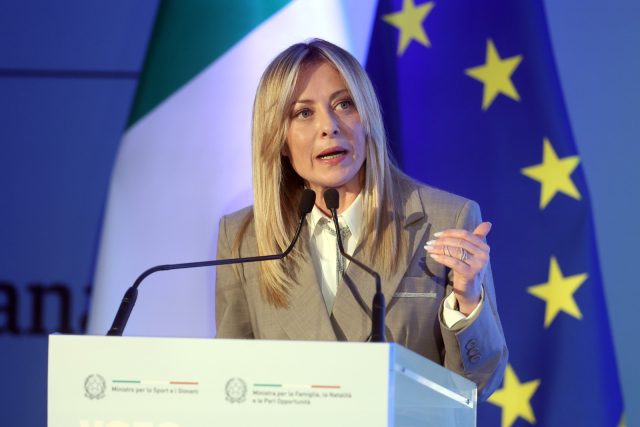
The latest television attack launched from Moscow against Giorgia Meloni cannot be dismissed as a mere media outburst. The words spoken by Vladimir Solovyov, one of Russia’s most well-known propagandists and a symbolic face of Putinist television, represent a serious, offensive, and politically significant episode. Not only because of the insults directed at the Italian Prime Minister, but also because they fit into a broader strategy of political and communicative pressure against one of the European governments that has most clearly supported Ukraine.
At the same time, however, it is necessary to maintain clarity and a sense of proportion. Solovyov is not the Russian government. Despite his closeness to the Kremlin and his central role in Moscow’s media system, his words do not automatically amount to an official statement by the Russian state. Confusing propaganda, television provocation, and formal diplomatic policy risks creating an emotional escalation that helps neither Italy nor Europe. That is precisely why distinctions matter — without minimizing the gravity of what was said.
The Attacks Against Giorgia Meloni
In recent days, Solovyov has devoted significant airtime to Italy and Giorgia Meloni in his television programs, using aggressive and offensive rhetoric. The Russian propagandist described the Italian Prime Minister as a “follower of Mussolini,” accusing her of dragging the country into a hostile position against Russia and attacking the Italian government’s pro-Ukrainian stance.
The language used was not accidental. The association with fascism is a recurring technique of contemporary Russian propaganda, especially since the beginning of the war in Ukraine. Moscow systematically uses references to Nazism and fascism as rhetorical tools to delegitimize political opponents, both domestic and Western. In this framework, Giorgia Meloni becomes an ideal target: a conservative and patriotic leader, firmly Atlanticist and openly supportive of Ukrainian resistance.
Solovyov also mocked Italy’s position within NATO and the European Union, accusing Rome of following a “Russophobic” line and of being trapped by its own Western propaganda. In other moments, the tone became openly insulting, moving beyond ordinary political confrontation and turning into outright verbal aggression. The episode inevitably triggered diplomatic and political reactions in Italy. The Russian ambassador was summoned to the Farnesina, while members of the government and parliamentary majority denounced the unacceptable nature of the attacks.
Italy’s Response and the Role of the Quirinale
Tensions between Rome and Moscow had already increased following remarks by President Sergio Mattarella, who warned that the logic of force and imposition leads to barbarism — an unmistakable reference to Russia’s war against Ukraine. The Head of State’s statements irritated the media universe close to the Kremlin, helping create the climate in which Solovyov’s attacks emerged. Once again, Russian propaganda reacted not by addressing the substance of Italy’s criticisms, but by attempting to delegitimize and intimidate those who condemn Russian aggression. For her part, Giorgia Meloni has maintained a consistent line since the beginning of the war: support for Ukraine, loyalty to the Atlantic Alliance, defense of international law, and rejection of any false equivalence between aggressor and victim. It is precisely this consistency that now makes the Italian government a target of the Russian propaganda machine.
Why Solovyov’s Words Matter
Reducing everything to a mere “television rant” would be a mistake. Solovyov is not a marginal commentator. He is one of the leading figures of Russian television, someone who for years has played a political role within the Kremlin’s communication system. His programs are not ordinary talk shows: they are instruments of ideological and narrative mobilization.
When a figure of this prominence directs personal insults at the head of the Italian government, the issue is not simply bad taste or verbal aggression. It concerns an attempt to symbolically strike a Western country through the delegitimization of its leadership. Italy has not been attacked militarily or diplomatically. But it has been targeted on the communicative front. And it is important not to underestimate the role of information warfare in contemporary conflict. For years, Russia has used television, social media, political influencers, and international propaganda to influence European public opinion, divide the Western alliance, and weaken support for Ukraine. Within this context, the insults against Meloni take on a broader significance.
Why Defending Meloni Matters
When the Italian Prime Minister is insulted by one of the leading propagandists of a foreign power, the response should be united. Defending Meloni in this case does not mean engaging in party propaganda. It means defending the dignity of Italian institutions. There is one point that part of the opposition and sections of the Italian public debate too often forget: internationally, the Prime Minister represents the Italian Republic. A violent attack against the Prime Minister is also an attack against Italy.
Even more serious is the attempt to associate Meloni with fascism through crude and instrumental propaganda categories. These accusations are constructed to demonize a political opponent and delegitimize her before international public opinion. Paradoxically, those who for years claimed that the Italian right was “isolated” in Europe should now acknowledge that Meloni’s government is in fact fully integrated within the Western and Atlantic camp. Meloni’s Italy is today one of NATO’s most reliable partners on the Ukrainian dossier. And that is precisely why Moscow is escalating its rhetoric.
The Contradictions of Putinist Propaganda
One of the most revealing aspects of recent days has been the evident contradictions within the pro-Russian media world. The same circles that now accuse Meloni of being a “follower of Mussolini” have often shown, in the past, a certain fascination with the symbols, language, and figures of European authoritarian nationalism. Some propagandists close to the Kremlin have even expressed positive judgments about Mussolini or about fascism’s ability to build a strong state.
This ambiguity reveals the purely instrumental nature of the current attacks. There is no genuine ideological battle against historical fascism. There is simply the opportunistic use of propaganda labels to strike a political leader considered hostile to Russian geopolitical interests. That is the logic of contemporary propaganda: coherence matters less than narrative effectiveness.
Distinguishing Propaganda from Diplomacy
That said, it would be wrong to transform Solovyov’s insults into a kind of diplomatic casus belli. International politics requires cold blood. Solovyov is close to the Kremlin, but he does not formally speak on behalf of the Russian government. His words reflect the ideological climate of Moscow’s propaganda system, not necessarily the official line of the Russian Foreign Ministry. This distinction matters.
Because the objective of propaganda is often precisely to provoke emotional reactions, radicalize confrontation, and fuel a spiral of permanent conflict. Italy was right to protest diplomatically and to express institutional indignation. But it was equally right not to transform the episode into something larger than it actually is. Firmness does not require hysteria.
A Lesson for Europe
The episode surrounding the insults against Giorgia Meloni ultimately contains a broader lesson for all of Europe. Western democracies must learn how to recognize and counter information warfare without falling into the trap of overreaction. They must defend their institutions, their sovereignty, and their democratically elected leaders without losing their composure.Propaganda thrives on emotional chaos.
For this reason, the best response to Solovyov’s attacks is not hysterical outrage, but political solidity. Giorgia Meloni was insulted because she represents a clear political line today: support for Ukraine, Italy’s Western alignment, and the defense of national interests within the Euro-Atlantic system. It is a legitimate, democratic position shared by the majority of Italians. And it is precisely this solidity that Russian propaganda is trying to undermine. Without succeeding.