





 Subscribe


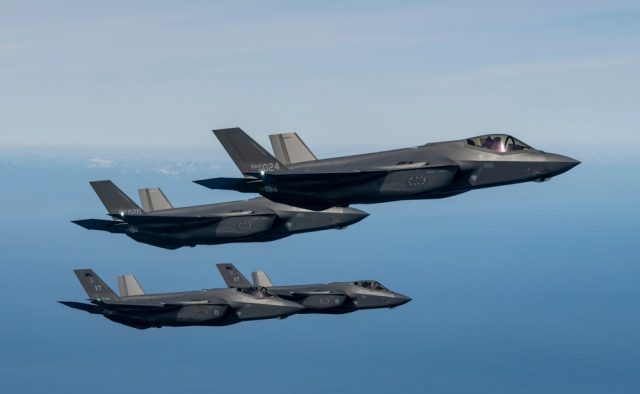
Poland has taken a major step forward in the modernisation of its air force, as the first three F-35 aircraft ordered from the United States have arrived in the country. With this delivery, Warsaw officially joins the select group of nations operating fifth-generation fighter jets. The three aircraft, symbolically named “Husari,” landed Friday evening (the 22nd of May) at the Łask Air Base and were greeted by Polish government officials, military representatives, and President Karol Nawrocki. The event attracted the attention of local and international media, being considered a landmark moment for Poland’s defensive capabilities and for strengthening NATO’s eastern flank.
The Polish Minister of Defense emphasised that these are the first fifth-generation aircraft deployed in this part of the North Atlantic Alliance, which gives Poland a significant strategic advantage in the region.
“Welcome to Poland! Three F-35s are already flying alongside our F-16s. They are the new protectors of Polish airspace,” the Polish official stated in a message posted on social media.
According to the Polish media, the aircraft arrived at the air base in the Łódź region around 6:00 p.m., following a transatlantic flight that included a technical stopover at Lajes Field military base in the Azores, a location frequently used for the transfer of U.S. military aircraft to Europe. The aircraft were manufactured at the Lockheed Martin plant in Fort Worth, Texas, and will be gradually integrated into the Polish Air Force. In the first phase, they will operate from the 32nd Tactical Air Base in Łask, where Poland’s F-16s are already stationed. Subsequently, some of the aircraft will be moved to the military base in Świdwin, from where the old Soviet Su-22 aircraft were recently withdrawn.
Authorities in Warsaw have announced that by the end of this year, Poland is expected to receive another 14 F-35 aircraft, and the remaining ordered aircraft will be delivered by 2027. The contract signed with the American company Lockheed Martin provides for the purchase of a total of 32 aircraft, in a transaction valued at approximately $4.6 billion. Some of the aircraft destined for Poland have already been used to train Polish pilots and technicians in the United States. The training took place at Ebbing Air Force Base in Arkansas, where Polish military personnel familiarised themselves with the systems and technologies specific to the F-35 aircraft.
Defense experts believe that the introduction of these aircraft will significantly change the response capabilities of the Polish Air Force. The F-35 is one of the most advanced fighter jets in the world, designed with stealth technology, which allows it to evade detection by enemy radars. Additionally, the aircraft can integrate and transmit vast amounts of data in real time to other military units, playing an essential role in modern warfare based on information superiority. With this acquisition, Poland is consolidating its position as a key military player on NATO’s eastern flank and sending a clear signal of its intention to invest heavily in modernising its military, amid security tensions in the region and the war in Ukraine.
The new U.S. strategy brings NATO’s eastern flank back into the spotlight
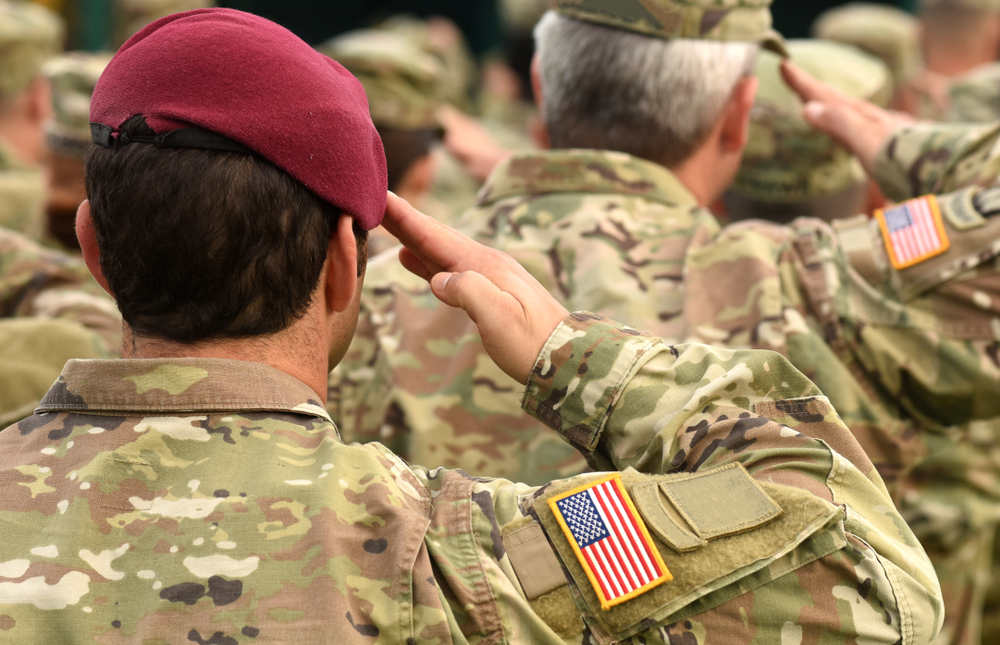
The U.S. administration is preparing a further expansion of its military presence in Eastern Europe, after President Donald Trump announced that the United States intends to send an additional 5,000 troops to Poland. The White House leader directly linked this decision to his close relationship with current Polish President Karol Nawrocki, a conservative politician and advocate of a hard line on regional security. The announcement came at a tense moment for the North Atlantic alliance, amid disputes between Washington and several European countries regarding their contributions to collective defense and their stance on the conflict in the Middle East. The move represents a significant shift in direction, especially since the Pentagon had recently considered suspending a troop rotation to Poland.
Donald Trump stated in a public message that the decision also stems from the excellent cooperation with the Warsaw administration. The American leader asserted that the selection of Karol Nawrocki sends a strong signal for strengthening the relationship between the two countries and for bolstering NATO’s eastern flank. Sources close to the U.S. administration claim that the new contingent could include mechanised infantry units, air defense specialists, and logistical structures capable of rapidly supporting military operations in the region. However, U.S. officials have not yet specified which bases the soldiers will come from, whether the deployment will be permanent or temporary, nor the exact timeline for the transfer of forces.
In recent months, Washington has sent mixed signals regarding the future of its military presence in Europe. While certain circles within the Pentagon advocated for reducing the U.S. contingent on the Old Continent, the White House continued to insist that European allies must contribute more financially to their own security. Poland, however, has been among the few countries consistently praised by the Trump administration for its high level of military spending, at 5% of GDP.
In recent years, the Warsaw government has invested heavily in American military equipment, purchasing F-35 aircraft, Patriot systems, HIMARS launchers, and Abrams tanks. For Washington, Poland has become one of the most important strategic partners in Central and Eastern Europe, especially following the outbreak of war in Ukraine and the escalation of tensions with the Russian Federation. In European diplomatic circles, the U.S. decision was interpreted both as a message of support for Poland and as indirect pressure on other NATO countries that have not sufficiently increased their defense budgets. Germany, in particular, has come under the Trump administration’s scrutiny following several exchanges between U.S. officials and leaders in Berlin. The U.S. president had previously suggested the possibility of withdrawing some troops from Germany and even significantly reducing U.S. forces stationed in Europe. According to military estimates, the U.S. currently has approximately 85,000 soldiers deployed on the European continent, mostly in Germany, Italy, the United Kingdom, and Poland.
Vice President JD Vance attempted to calm the reactions that followed the initial suspension of the troop rotation to Poland, explaining that the measure was only temporary and that Washington’s main goal is to encourage European nations to strengthen their own defense capabilities. At the same time, there are concerns within NATO regarding the lack of predictability in U.S. decisions. Alliance diplomats have already discussed the need for better coordination ahead of major announcements regarding troop redeployment in Europe.
How did Poland become one of NATO’s military pillars in Eastern Europe?
Over the past decade, Poland has radically changed its status within NATO. While in the 2000s it was considered merely an important regional ally, after 2014 and the Russian Federation’s annexation of Crimea, Warsaw became one of the North Atlantic Alliance’s main military platforms on the eastern flank. Poland’s geographical location, situated between Germany, Ukraine, and the Russian enclaves in the Kaliningrad region, makes the country a key strategic point for the defense of the European Union. Precisely for this reason, the United States has accelerated military investments and logistical infrastructure in this area in recent years.
Currently, there are several military bases and facilities in Poland used by the U.S. military and NATO. One of the most important is the base at Powidz, where the Americans have built a massive logistics center for storing ammunition, armored vehicles, and heavy equipment. The Powidz base also houses Abrams tanks and Bradley vehicles that can be rapidly deployed in the event of a conflict. Redzikowo is home to one of the components of the U.S. missile defense shield in Europe. The Aegis Ashore system is designed to intercept ballistic missiles and represents one of the most sensitive points of NATO infrastructure in the region. Moscow has repeatedly criticised this base, considering it a direct threat to Russian security. Near the city of Zagan, U.S. armored units are frequently deployed.
Joint exercises between the Polish army and U.S. troops take place here, utilising M1 Abrams tanks, Bradley fighting vehicles, and HIMARS artillery systems. Military exercises in this area have increased significantly since 2022. F-16 fighter jets and U.S. Air Force detachments operate periodically at the Łask Air Base. Additionally, Patriot air defense units are deployed on a rotational basis in Poland, intended to protect strategic infrastructure and NATO airspace.
The increased U.S. military presence in Poland is part of a broader North Atlantic Alliance strategy to strengthen the eastern flank. Following Russia’s invasion of Ukraine, NATO decided to reinforce combat groups in countries bordering Russia and Belarus.
Romania, the Baltic states, and Poland have thus become the main areas where additional troops and Western military equipment are being deployed. In Romania, for example, the Mihail Kogălniceanu base is currently undergoing expansion and is considered by experts to be one of the most important NATO facilities in Southeast Europe. Germany, however, remains the main hub of the U.S. military presence in Europe. Ramstein Air Base is the U.S.’s most important logistics and air hub on the continent. Numerous U.S. Air Force operations are coordinated here, and the infrastructure allows for the rapid transport of troops and equipment to any conflict zone. Stuttgart is home to strategically important U.S. military commands, including AFRICOM and EUCOM, which coordinate U.S. operations in Europe and Africa, while Bavaria hosts major armored and infantry units.
Italy, in turn, hosts essential bases for NATO. Fighter jets and surveillance drones operate out of Aviano and Sigonella, and the naval base in Naples is one of the alliance’s major maritime hubs. In the United Kingdom, the Americans use facilities such as RAF Lakenheath and RAF Mildenhall, where state-of-the-art aircraft are stationed, including F-35s and strategic bombers used in deterrence missions. The Baltic states also benefit from a strengthened military presence, albeit on a smaller scale. In Estonia, Latvia, and Lithuania, multinational battle groups led by the United Kingdom, Canada, and Germany are deployed, with U.S. logistical support.
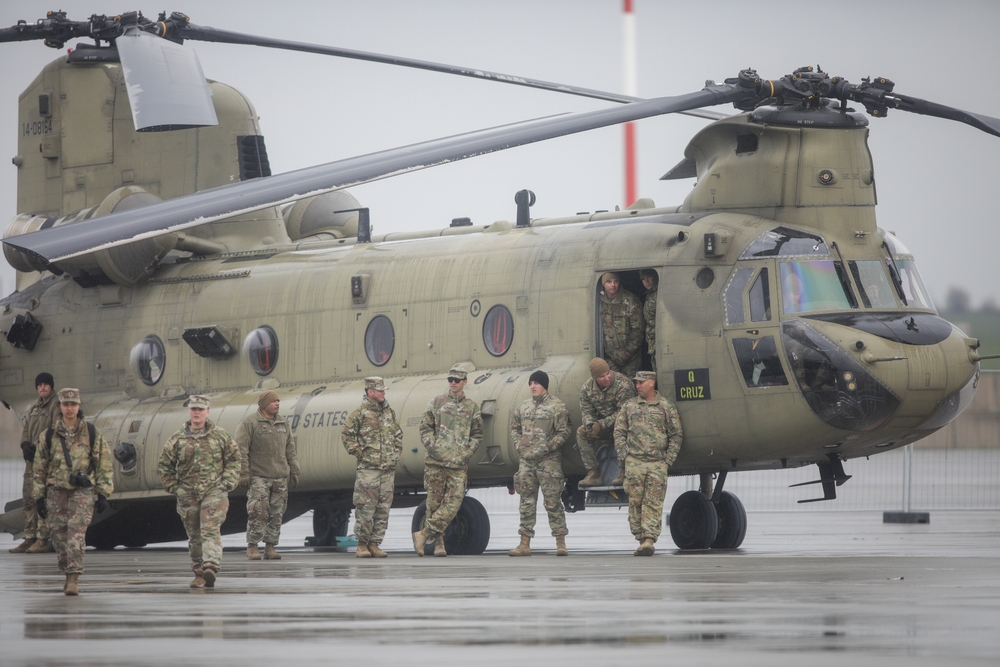
In recent years, NATO has placed increasing emphasis on air defense and rapid troop mobility; to this end, railway infrastructure, airports, and strategic roads have been modernized to enable the rapid transfer of military forces to Eastern Europe. In addition to the ground component, the alliance is also investing heavily in advanced military technology. Surveillance drones, high-performance radar systems, AWACS aircraft, and electronic warfare platforms are constantly integrated into exercises conducted on the eastern flank. Military analysts believe that Washington’s decision to increase troop levels in Poland sends a clear message to Moscow, as well as to European allies. On the one hand, the United States wants to demonstrate that it remains the primary guarantor of European security, and on the other hand, the Trump administration is trying to pressure NATO member states to invest more in defense and reduce their dependence on American support.
For Poland, the new U.S. contingent represents not only a military guarantee but also a domestic political advantage. The government in Warsaw can present this decision as confirmation of its special relationship with Washington and the strategic role the country plays in the region. At the same time, experts warn that increasing the U.S. military presence near Russia’s borders could further fuel tensions between NATO and Moscow. The Kremlin has frequently accused the alliance of aggressively expanding its military infrastructure eastward, while Western countries maintain that the measures are strictly defensive and intended to prevent potential threats. In the coming months, it will become clearer whether Donald Trump’s announcement marks the beginning of a new phase of U.S. military buildup in Europe or merely a temporary repositioning dictated by the current geopolitical context. What is certain is that Poland continues to gain importance within the European security framework, and the U.S. military presence in the country is growing increasingly substantial in terms of both troop numbers and combat capabilities and strategic infrastructure.