





 Subscribe


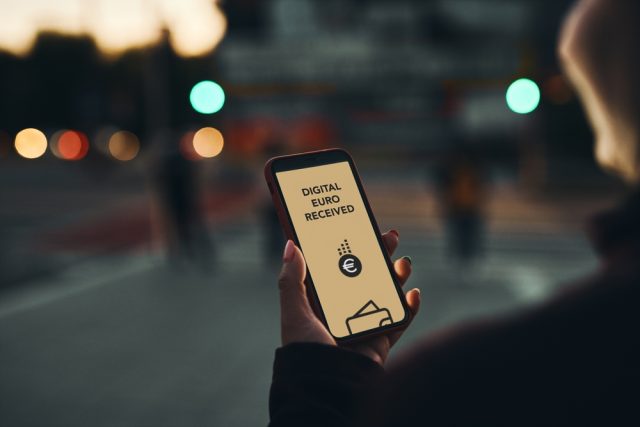
Europeans are one step closer to the long-discussed digital euro, an electronic version of cash, seemingly, which will be introduced to “complement” physical currency and ensure the Union’s financial sovereignty, as the European Central Bank – its issuer – is keen to emphasize.
Six years after the ECB’s initial steps to analyze its “feasibility” and three years after the Commission presented its legislative proposal, the European Parliament’s Committee on Economic and Monetary Affairs voted in favor of launching the digital currency. If everything goes according to plan, a pilot program will be implemented next year and run for twelve months, with the actual introduction of “digital cash” set for 2029.
For the enthusiasts, the day ECON gave the green light to the alternative digital currency was a “historic one”. For others – who are more cautious and more concerned about the future of privacy and cash – the implementation of the digital currency will be about neither safer transactions nor European financial autonomy, but rather about increased control and the gradual phasing out of cash. In short: it’s about less and less freedom.
The digital euro will not replace cash, the European Central Bank is keen to assure us, but rather its role will be to complement traditional currency. Nevertheless, the implementation of this digital money will be mandatory in all member states, and most companies will be required to use it. So much for freedom of choice.
Two of the features that have been heavily promoted in recent days are that the digital currency will not require fees for basic services and will not generate interest. The digital euro will behave like “traditional” cash, but will be accessible via electronic devices, according to the ECB.
The reality is that it will not function quite like cash, since not only will it not be possible to accumulate it, but the maximum amount each user of the digital euro will be able to hold will be 3,000 euros. Once again, so much for freedom of option.
To respond to concerns about the possible monitoring of all financial transactions – and, by extension, the invasion of privacy – the European Central Bank has announced that this digital currency will also function offline, meaning it will not require an internet connection. This offline functionality will offer “the same level of privacy” as cash, according to the ECB. On the other hand, losing the electronic device will effectively mean losing the amount “held” by that device. In such a case, a reasonable question arises: why would we choose digital currency over cash?
The most common argument in favor of the digital euro is that it would give Europeans so-called financial autonomy. Card payments rely on technical infrastructure outside the European Union, whereas a digital currency of their own would mean dependence on the European Central Bank. Much more “reassuring,” isn’t it?
Who can guarantee that money stored in a digital wallet created within the European Union is safer than money transferred via already “classic” bank cards? Who can guarantee that digital currency transactions – whether with retailers or between individuals – will have a higher level of security than cash payments, when the latter are possible? No one, actually.
The belief that there is genuine protection of privacy is naïve. Exercising control over all financial transactions is not a fairy tale or just another conspiracy theory. Monitoring payments made through digital wallets is no less dangerous if it is carried out from Frankfurt am Main, even if the ECB assures European citizens that it will not have access to their personal data.
If this digital euro is “the same” as cash, why wouldn’t we prefer the traditional method of payment over electronic currency? No digital system is invincible.
Freedom of choice should remain essential. Technology must not rule the future; rather, people must remain in control of their own choices. More cash, not less!