





 Subscribe


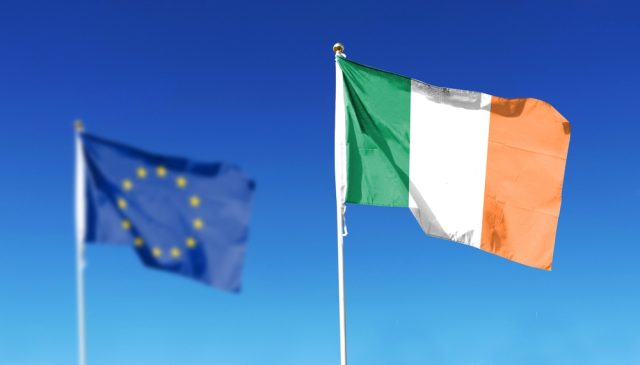
Starting July 1, for the next six months, Ireland takes over the rotating presidency of the Council of the EU, marking the eighth time in the last five decades that it will hold this position. A member of the European Community since 1973, the Republic of Ireland is today one of only two member states that are not part of the Schengen Area, yet it remains one of the most pro-EU countries.
In 2013, the last time Ireland held the six-month presidency of the European Union, its agenda focused on sustainable growth and jobs. Today, thirteen years later, at a geopolitical, economic, and social crossroads, the Irish government views the presidency of the Council of the European Union as an opportunity “to build and reconnect the EU with the Irish citizen”, according to statements by the ambassador to the EU. This is by no means an easy aspiration, especially given the turbulent times we are living through. Is this reconnection too idealistic? Or is it a reasonable goal, given the very strong pro-EU sentiment in Ireland?
Irish Prime Minister Micheál Martin highlighted the key challenges on his country’s agenda for the second half of 2026: competitiveness, values, and security. These include the implementation of the “one Europe, one market” roadmap, technological (digital) advancements, the protection of children in the high-risk online environment, the EU’s enlargement process (Ireland is known for its openness to advancing this process), as well as the very ambitious goal of reaching an agreement among member states on the future EU multiannual budget for 2028-2034 – one of the most difficult “dossiers” currently in progress.
Brussels constantly discusses competitiveness, resilience, and eliminating disparities, even as overregulation and excessive bureaucracy continue to burden small and medium-sized businesses and inhibit innovation. The result: not only are the disparities not being reduced, but the EU still is way behind its major competitors.
The liberal-progressive left is looking for all sorts of reasons to perpetuate “green” delusions, insisting on the ETS and utopian environmental regulations, and trying to impose decarbonization at any cost despite the lack of alternatives that would not kill industry. In this mad rush for competitiveness, energy prices are a heavy burden on consumers.
As long as it prioritizes ideological centralization instead of focusing on simplification, massive deregulation, genuine market integration, and solutions tailored to the economic sectors of member states, a truly competitive EU will remain nothing more than a distant dream. Competitiveness requires a pragmatic and realistic approach – one in which energy is genuinely affordable for consumers, the market is truly free, and innovation is real, not subject to ideological constraints.
One challenge for the Irish presidency will be to identify effective ways to optimize energy consumption and deliver real – not utopian – benefits for consumers, first and foremost by reducing energy prices.
Another priority for Ireland during these six months is the promotion of values – European values, obviously. Authentic European values must not be replaced by extreme liberal values – which are, in fact, nothing more than pseudo-values – vigorously promoted by progressives in Brussels and elsewhere. To prevent “gender” education from undermining, as it obviously intends to, our roots and natural roles, local and national values must be brought back into focus and fiercely defended. “Woke-ism,” so-called “inclusion,” and aggressive secularism do not strengthen Europe and its communities; rather, they weaken them to the point of annihilation. Ireland promises to defend fundamental values: are these the true values – those upon which the European community was built – or the false values that seek to replace them?
Reconnecting with the Irish people is a worthy national ambition. Every member state holding the presidency of the Council of the EU should set this as a goal.