





 Subscribe


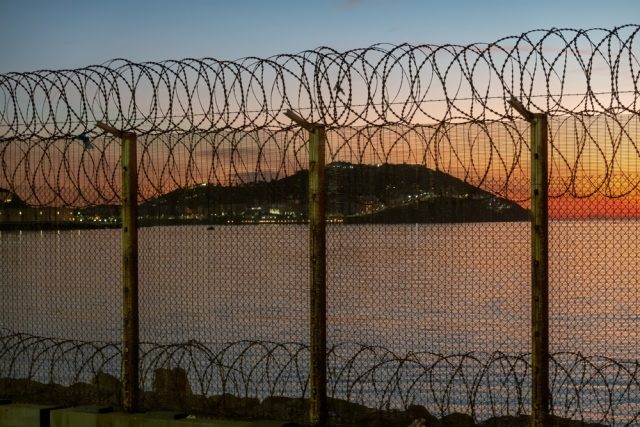
More than 50,000 people crossed into Spain’s North African city in two days and at least 72 died. Madrid restored control and returned most entrants, but the speed of the breach, the intervention of 22 EU governments and the limits of the new Migration Pact expose the gap between Europe’s border rules and its capacity to act during the first hours of a crisis.
Europe has spent years negotiating migration law. Ceuta has shown what happens when events move faster than the machinery created to govern them.
Between Thursday 30 July and the weekend, more than 50,000 people crossed from Morocco into Ceuta by land and sea. By Sunday 2 August, at least 72 people had died, some by drowning and others in the crush around the breakwater and border fence. Spanish authorities said more than 48,000 had returned to Morocco within 48 hours, while more than 1,000 people had required medical treatment.
Those figures describe three crises at once. There was a humanitarian catastrophe, because disorder at a border is often lethal. There was a sovereign crisis, because the perimeter of Spanish territory was overwhelmed. And there was a European crisis, because Ceuta is located at one of the European Union’s only two land borders with Africa and the credibility of every internal open border ultimately depends on control of the external one.
The correct conclusion is not that Spain did nothing. Madrid deployed the armed forces and additional police, accelerated the process of returning entrants and installed a 500-metre maritime containment barrier. Interior Minister Fernando Grande-Marlaska said cooperation with Morocco had allowed Spain to reverse the situation within 24 hours and described Rabat as a reliable partner. Spain’s Foreign Ministry also stressed that none of those who entered irregularly had moved onwards to mainland Spain or the rest of the Schengen area.
All of that matters. Serious analysis should not transform a genuine security failure into a partisan fiction. Yet it also reveals the deeper weakness. Europe was able to recover control after the border had collapsed, but it did not prevent that collapse.
A frontier that exists only after it has been crossed is not an adequate border policy.
The Legal Seam Behind the Crisis
The immediate background demands precision. On 8 July, Spain’s Supreme Court confirmed that the special “rejection at the border” provision could not be used to return immediately migrants intercepted at sea while attempting to swim into Ceuta or Melilla. Such cases had to follow the ordinary return procedure and its safeguards.
Ceuta authorities and Spanish officials later pointed to rumours and misleading messages about that judgment as one factor encouraging the surge. That explanation is plausible, but it has not been established as the sole, or even the principal, cause. Moroccan activists interviewed during the first hours doubted that tens of thousands of people had acted because of detailed knowledge of a Spanish court ruling. Economic hardship, social-media mobilisation, smuggling networks and the sudden perception of an opportunity at the frontier may all have interacted.
The same caution is required when discussing Spain’s large-scale regularisation programme. Madrid’s measure applies to unauthorised residents who entered Spain before 2026. People arriving during the Ceuta surge do not qualify merely because they managed to cross the border. It would therefore be inaccurate to claim that the events of 30 July created a direct legal route to regular status.
Governments cannot, however, ignore the politics of perception. Migration decisions are read far beyond the technical wording of statutes. If smugglers can combine a court judgment, a regularisation programme and viral messaging to create the impression that irregular entry may eventually become legal residence, that impression becomes a security variable even when it is legally false.
This is precisely why the 22 European leaders who intervened warned against allowing illegal entry to be perceived as a possible route to legal stay. Such a perception, their letter argued, would encourage further attempts, weaken confidence in the common migration system and create consequences for every member state.
The answer is neither contempt for the courts nor indifference to asylum rights. It is to close the gap between legal guarantees and operational control.
A right to seek protection cannot become a right to choose the place, timing and manner of entry by forcing a border en masse. Procedures must remain lawful, but the state must remain capable of enforcing the line at which those procedures begin.
Ceuta Is a Schengen Issue—Even with Its Special Rules
Ceuta’s legal position has frequently been described inaccurately during the political argument.
Spain applies a double filter: one control at the external border with Morocco, followed by a second Schengen check before travel from Ceuta to mainland Spain. Irregular entry into Ceuta does not itself confer a right to enter or move through the rest of the Schengen area. This special system has existed since Spain joined Schengen and is expressly preserved by the Schengen Borders Code.
That arrangement explains why the mass crossing did not automatically become an uncontrolled movement across continental Europe. It does not, however, make Ceuta irrelevant to Schengen.
The opposite is true.
The freedom to travel without routine internal checks survives only while member states trust one another to guard the common external frontier and prevent unauthorised onward movement. When that trust is damaged, national governments face increasing pressure to restore controls among European countries.
The political reaction demonstrated how quickly that process can begin. Italy reintroduced targeted checks on non-EU travellers arriving from Spain by air and sea. The possibility of additional internal controls also became part of the wider European debate. Whether every national measure was necessary or proportionate is a legitimate legal question. The strategic fact is harder to dispute: when an external frontier appears unreliable, pressure for internal borders returns.
Schengen is therefore not protected by pretending that border enforcement is anti-European. Schengen is protected by making external control credible enough that member states do not feel compelled to rebuild barriers among themselves.
Internal free movement is not the opposite of secure external borders. It is their consequence.
A New European Border Majority
The most consequential political development did not occur in Madrid or Brussels alone. It came from an initiative promoted by Italy and Denmark and signed by 22 of the EU’s 27 heads of state or government.
The signatories asked the Irish Presidency of the Council to convene an urgent videoconference of interior ministers, jointly assess the events in Ceuta and define a coordinated European response. Their letter called for the prevention of uncontrolled irregular crossings, stronger action against migrant-smuggling networks, the removal of factors that may incentivise new illegal entries and a united European reaction.
The political significance lies not only in the number of signatures, but also in their distribution. The initiative brought together governments from northern, southern, eastern and central Europe and from different political families.
This is no longer a marginal bloc positioned at the edge of European politics. Border security has moved from the conservative periphery towards the European centre.
The initiative also demonstrates the political importance of Giorgia Meloni’s approach. Italy did not limit itself to protesting against the consequences of the crisis. Together with Denmark, it transformed national concern into a coalition comprising more than four-fifths of EU governments.
That does not mean every signatory shares the same diagnosis of Pedro Sánchez’s policies. Nor does it erase Spain’s legitimate request for European support. Sánchez himself called for a common European response, arguing that security at the external borders is a responsibility shared by all member states and not only by those located on the Union’s geographical front line.
The emerging consensus is therefore narrower than a fully shared migration doctrine, but it is still highly significant: a sudden breach of an external frontier cannot be treated as the private misfortune of the country situated at the edge of the map.
The Council has now scheduled the requested home-affairs videoconference for 4 August. The test will be whether it produces an operational timetable or merely another expression of concern.
Europe Has a Legal Architecture, but Not Yet an Emergency Doctrine
The timing makes the Ceuta crisis particularly revealing.
The EU Pact on Migration and Asylum entered into application on 12 June 2026. Its specific Crisis and Force Majeure Regulation began applying on 1 July, less than a month before the Ceuta breach. The regulation covers mass arrivals, force majeure and the possible instrumentalisation of migrants.
The Union can no longer say that it lacks legislation. The problem is the distinction between law and readiness.
Under the crisis regulation, a member state must submit a reasoned request. The Commission then assesses whether the legal conditions have been met and can take up to two weeks to issue its decision. The Council can subsequently take another two weeks to authorise derogations and establish a solidarity response plan.
The text requires the institutions to act without delay and provides for some limited immediate measures. But its central process is designed to organise asylum procedures, temporary derogations and solidarity among governments. It is not a tactical command structure for the first six or twelve hours of a physical border rupture.
Ceuta unfolded according to an entirely different timetable. Crowds moved, the frontier gave way, people drowned, reception capacity was overwhelmed and military reinforcements were ordered within hours.
A mechanism that may be appropriate for distributing legal and administrative burdens after a crisis is not, by itself, an operational plan for stopping one.
The contrast is even more striking because Frontex was not absent from the region. Operation Minerva 2026 was already supporting Spain at the ports of Algeciras, Tarifa and Ceuta. Spain’s Interior Ministry said the participating countries had supplied 137 experts, including document specialists, interviewers, canine handlers, first-line border officers and specialists in cross-border crime. Frontex described the operation as support for the heavy summer flow of passengers and vehicles between Spain and Morocco.
The mass crossing, however, occurred across the Tarajal land and sea perimeter rather than through the ordinary port channels for which Minerva was primarily configured.
That is not proof that Frontex failed. It is evidence of a mismatch between the mission prepared and the emergency that occurred. Europe had personnel in the vicinity, but it did not necessarily have the pre-agreed command arrangements, equipment and rules required for a sudden mass breach of that kind.
Europe possesses border agencies, legislation and crisis procedures. What it still appears to lack is an integrated doctrine capable of connecting them immediately.
What a Conservative Border Emergency Doctrine Should Contain
A serious response should preserve national sovereignty while making European cooperation faster.
The nation state possesses the democratic legitimacy, constitutional responsibility and local knowledge required to command operations on its territory. The role of the European Union should be to ensure that support is immediately available when requested—not to replace national authority after the emergency has already occurred.
First, Europe needs a first-hours activation protocol. A government facing an exceptional external-border incident should be able to trigger a joint national-European assessment within hours, with secure information-sharing among the national authorities, Frontex, Europol, the Commission and the relevant neighbouring country.
The initial questions are operational rather than bureaucratic: What is happening? Who is organising it? Where is the next pressure point? What personnel, equipment and legal powers will be needed before nightfall?
Second, Frontex should maintain preconfigured rapid-reinforcement modules specifically designed for mass perimeter breaches. These should include surveillance capabilities, maritime containment, registration teams, interpreters, medical personnel, transport, temporary reception capacity and return specialists.
Existing personnel cannot be assumed to be interchangeable. A document-control mission at a commercial port is not the same as a crowd-management and maritime-rescue emergency along a beach, breakwater and border fence.
Third, cooperation with neighbouring third countries must be tested before a crisis occurs. Readmission channels, police liaison, emergency communications and the practical handover of returnees should be exercised regularly rather than improvised after the frontier has already been overwhelmed.
Spain and Morocco ultimately restored much of the border control together. Europe should examine what worked while also establishing why the frontier became permeable in the first place.
Fourth, the Union and its member states need a criminal-intelligence response to digital mobilisation. This should target smuggling recruitment, fraudulent legal claims and the operational coordination of illegal crossings—not lawful political speech.
Court judgments and migration measures should be accompanied by clear, multilingual public communications explaining who qualifies, who does not and what legal consequences follow an irregular crossing. The information space surrounding a border is now part of the border itself.
Fifth, physical border infrastructure must operate within a clear legal and humanitarian framework. Barriers, surveillance technology and controlled access points are legitimate instruments of sovereignty when they are used proportionately.
At the same time, states must preserve access to individual assessment, emergency medical care and protection for minors and vulnerable persons. Order and humanity are not opposites. The 72 deaths in Ceuta demonstrate that the absence of order can be profoundly inhumane.
Finally, temporary internal border controls should remain a last resort, targeted and limited in duration. The proper objective is not to dismantle Schengen every time an external frontier comes under pressure. It is to defend the external frontier so effectively that internal controls become unnecessary.
The Morocco Question Requires Evidence, Not Slogans
The scale, timing and apparent ease of the crossing justify a thorough Spanish-Moroccan-European investigation.
The memory of the 2021 Ceuta crisis inevitably raises suspicions about state tolerance or the possible instrumentalisation of migration. But suspicion is not proof.
As of 2 August, the Spanish interior minister was publicly describing Morocco as a reliable partner and crediting bilateral cooperation with reversing the situation. Rabat’s ambassador to Spain also said the crossings had taken place against Morocco’s wishes.
The EU’s own crisis regulation establishes a demanding legal test for “instrumentalisation”. A third country or hostile non-state actor must encourage or facilitate the movement of migrants with the aim of destabilising a member state or the Union. The regulation expressly states that organised crime and smuggling alone should not be considered instrumentalisation when there is no destabilising intent.
It is legitimate to ask whether Moroccan controls failed, were deliberately relaxed or were simply overwhelmed; whether criminal networks coordinated the movement; whether social-media narratives were deliberately seeded; and whether any state or non-state actor benefited strategically from the crisis.
It is not legitimate, on the evidence presently available, to present a deliberate Moroccan hybrid operation as an established fact.
The distinction matters because credible border policy depends on credible information. Exaggeration may excite an audience for a day, but it weakens the case for action when the facts emerge.
The Lesson of Ceuta
Ceuta is not evidence that every migrant constitutes a security threat. It is evidence that uncontrolled mass entry is incompatible with democratic sovereignty, orderly asylum procedures and public confidence.
It also demonstrates that compassion without control is not compassion. When smugglers, rumours and collective movement determine how a border functions, the most vulnerable are exposed first.
The European Commission’s initial language was appropriately clear. Ursula von der Leyen said that people could not be allowed to enter the Union without respecting its rules. She called for the dangerous crossings to stop, demanded the dismantling of smuggling networks and said that returns had to be swift. She also announced work to reinforce operational support to Spain, including through Frontex.
The institutions must now turn those words into doctrine.
The 4 August meeting should agree on an independent operational review of the breach, a rapid-response protocol for future external-border emergencies, defined Frontex reinforcement packages and a timetable for testing cooperation with third countries.
It should also examine how court judgments, regularisation measures and public communications can be exploited by criminal networks, without pretending that a single decision can explain an event of this magnitude.
The conservative principle is straightforward: Europe should be a community of sovereign nations that help one another defend the conditions of their freedom.
Spain must remain in command of Spanish territory. Other governments cannot be asked to ignore the consequences of a failure at a common external frontier. And the European Union must provide practical capacity rather than use solidarity as a substitute for control.
Ceuta has exposed the gap between Europe’s border rules and Europe’s border power.
Closing that gap is now the only credible way to protect Schengen, restore public trust and prevent the next emergency from becoming another graveyard.