


 Subscribe


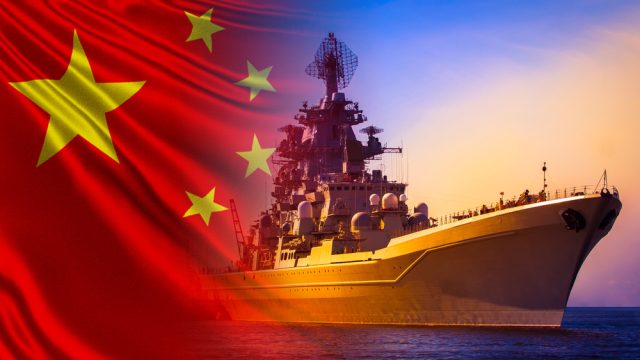
On 30 October, while international attention remained focused on more visible wars and diplomatic crises, China announced another round of military patrols in the disputed waters of the South China Sea. The People’s Liberation Army’s Southern Theater Command confirmed that naval and air forces had conducted combat-readiness patrols around Scarborough Shoal, an area claimed by both Beijing and Manila, adding that these operations had intensified throughout the month. At the same time, the Chinese Coast Guard announced its own law-enforcement patrols in the surrounding waters.
The development, reported by Reuters on 30 October and examined in a situational report by geopolitical intelligence firm RANE, might appear to be another episode in the long-running tensions of the western Pacific. Its significance becomes clearer, however, when viewed within a broader strategic context: an international competition in which control of the seas is increasingly exercised through a combination of military presence, maritime law enforcement, economic pressure and the gradual contestation of established boundaries.
It is a confrontation that directly concerns Europe, even when it unfolds thousands of miles from European shores.
Scarborough Shoal and the Strategy of Permanent Pressure
Scarborough Shoal has long been one of the principal flashpoints between China and the Philippines. Beijing has maintained de facto control over the shoal since 2012, while Manila continues to challenge Chinese claims and defend its maritime rights.
The dispute exists within a particularly important legal framework. In July 2016, an arbitral tribunal established under the United Nations Convention on the Law of the Sea issued a landmark ruling on the South China Sea, rejecting the legal basis for China’s expansive claims to historic rights within the so-called nine-dash line. Beijing refused to recognise the award, which did not, however, determine territorial sovereignty over the disputed maritime features.
A decade later, the gap between international law and effective control at sea remains evident.
According to RANE’s 30 October assessment, the most significant strategic development is the increasingly close integration of coast guard activities, instruments of so-called grey-zone coercion and operations involving regular military forces.
Grey-zone operations involve coercive activities designed to secure strategic advantages while remaining, wherever possible, below the threshold of open armed conflict. At sea, these may include persistent patrols, the obstruction of vessels, maritime militia operations and forms of pressure that complicate the distinction between routine law enforcement, deliberate provocation and military aggression.
Around Scarborough Shoal, however, the increasingly visible involvement of warships and combat aircraft introduces an additional dimension.
RANE assesses that this development could increase the frequency of direct encounters between Chinese and Philippine armed forces, raising the possibility of escalation even where neither side initially intends a wider conflict.
The political significance is considerable. Beijing does not necessarily need to seize new territory through a major military operation to alter the regional balance of power. It can instead seek to consolidate its presence gradually, make that presence routine and transform what was once exceptional into an accepted operational reality.
The danger lies not only in a possible confrontation, but also in the cumulative effect of pressure that becomes increasingly difficult to reverse.
The Risk of a Crisis Involving Washington
The Philippines’ strategic position makes this process particularly sensitive.
Manila is not merely one of several countries involved in the South China Sea disputes. It is also a treaty ally of the United States under the 1951 Mutual Defense Treaty.
On 28 March 2025, during US Secretary of Defense Pete Hegseth’s visit to the Philippines, Washington and Manila reaffirmed that the treaty extends to armed attacks against either country’s armed forces, aircraft and public vessels, including coast guard ships, anywhere in the South China Sea.
This does not mean that every collision or naval incident would automatically trigger American military intervention. It does mean that an apparently local confrontation could rapidly acquire international consequences.
That is precisely the risk identified by RANE: a more direct Chinese military presence increases the possibility that an incident will be interpreted as a threat requiring an armed response.
For Beijing, pressure on the Philippines may provide an instrument for reinforcing its regional position. For Washington, the credibility of security guarantees to its allies remains an essential component of deterrence in the Pacific.
Between these two strategic imperatives lies an increasingly narrow margin for error.
The implications extend beyond the bilateral relationship. Any serious confrontation involving American and Chinese forces would raise difficult questions for other regional powers, including Japan and Australia, while exposing the fragility of an international system in which economic interdependence has not eliminated military rivalry.
Taiwan and the Control of Maritime Routes
The Scarborough Shoal dispute should not be treated as identical to the question of Taiwan. The two situations differ in their political, legal and military characteristics.
They nevertheless share an important strategic feature: China’s effort to expand its ability to influence navigation and access across maritime areas of considerable geopolitical importance.
In an opinion article published by The Telegraph on 1 November, Vincent Chin-Hsiang Yao, Taiwan’s representative in the United Kingdom, drew attention to Beijing’s coercive maritime activities and warned that the gradual erosion of international rules could undermine the security of democratic states.
His argument naturally reflects Taiwan’s diplomatic perspective. Nevertheless, it raises a question extending far beyond the Taiwan Strait.
A potential naval blockade of Taiwan would have consequences well beyond the political confrontation between Beijing and Taipei. The island occupies a central position in the global production of advanced semiconductors, while East Asian maritime routes remain essential to international trade.
For European economies, deeply integrated into global supply chains, freedom of navigation in the Pacific is therefore far from a distant concern.
It affects access to industrial components, the functioning of technological supply chains, international transport and ultimately the ability of European businesses to operate without being exposed to the consequences of a military crisis in Asia.
A disruption to advanced semiconductor production could affect European automotive manufacturers, industrial machinery producers, telecommunications companies and defence industries. The effects would not necessarily be confined to sectors with direct commercial relationships with Taiwan: modern production systems depend on complex networks of suppliers whose vulnerabilities are often difficult to identify until a disruption occurs.
Maritime security and economic security are increasingly inseparable.
Europe cannot claim to pursue strategic autonomy while overlooking the international transport routes and technological dependencies upon which much of its industrial capacity rests.
From the Pacific to the Baltic: Europe’s Own Vulnerability
It would be a mistake, however, to regard these developments as an exclusively Asian problem.
In Europe, a succession of incidents involving undersea infrastructure in the Baltic Sea has already demonstrated the vulnerability of networks essential to modern economic life.
Telecommunications cables, energy connections and other submerged infrastructure form a strategic network that often remains invisible to public debate until a disruption occurs.
Responsibility for individual incidents must, of course, be established on the basis of evidence. The presence of a foreign vessel near a damaged cable does not automatically prove sabotage, nor does it justify attributing hostile intent to its crew without a proper investigation.
Yet the difficulty of distinguishing an accident from a deliberate hostile act is itself a security problem.
That uncertainty creates opportunities for coercion. Governments must decide how to respond, sometimes before the available evidence permits a definitive conclusion. Excessive hesitation may encourage further pressure, while an unjustified accusation risks creating a diplomatic crisis.
NATO recognised the seriousness of the challenge on 14 January 2025, when it announced the launch of Baltic Sentry, a military activity intended to strengthen the protection of critical undersea infrastructure in the Baltic.
The initiative involves naval vessels, maritime patrol aircraft and enhanced surveillance capabilities, including unmanned systems. It also seeks closer coordination between national monitoring resources and NATO structures.
The decision reflected a concrete strategic reality: protecting maritime infrastructure cannot depend exclusively on the ability to intervene after damage has occurred. It requires persistent surveillance, credible deterrence and the capacity to identify suspicious behaviour before it produces serious consequences.
There are clear differences between Chinese operations in the South China Sea and threats to European undersea infrastructure. It would be inaccurate to describe them as proven elements of a single coordinated strategy.
Nevertheless, they expose a similar strategic weakness: the difficulty democratic governments face when responding to ambiguous, incremental and potentially hostile activities before their cumulative consequences become irreversible.
The challenge is particularly important for European countries whose economic security depends heavily on maritime trade, interconnected energy systems and reliable digital infrastructure.
Europe’s Response Cannot End with Declarations
The European Union has already adopted important political and legal positions.
On 11 July 2026, marking the tenth anniversary of the South China Sea arbitration award, the Council of the European Union reaffirmed that the 2016 ruling was final and legally binding on the parties. The statement reiterated the importance of the United Nations Convention on the Law of the Sea, freedom of navigation and the peaceful settlement of maritime disputes.
It also expressed concern over rising tensions and dangerous incidents in the South China Sea, while opposing unilateral actions threatening regional stability.
The significance of this European position should not be underestimated. It confirms that Brussels regards stability in the Indo-Pacific as relevant to the wider international order.
But supporting international law and possessing the practical means to protect the interests it safeguards are two different matters.
Europe’s response must therefore be assessed not only through diplomatic statements, but also through its operational capabilities and investments in resilience.
On 5 February 2026, the European Commission announced a new package of measures intended to improve submarine cable security, accompanied by an allocation of €347 million for strategic projects.
The package included a new Cable Security Toolbox, a list of Cable Projects of European Interest and a €20 million funding call to strengthen submarine cable repair capabilities.
These are concrete steps. They acknowledge the need to move beyond risk assessments towards greater resilience and faster recovery from disruption.
Yet a broader political question remains unresolved: what role should European nations assume in protecting the maritime routes and infrastructure upon which their prosperity depends?
The answer cannot consist solely of expanding the competences of European institutions or multiplying regulatory instruments.
Maritime security requires operational capacity, technological investment, intelligence cooperation, coordination between national authorities, effective engagement with NATO and political responsibility.
National governments remain central to this effort because they command armed forces, exercise law-enforcement powers and possess the principal instruments needed to respond to threats against their security.
European cooperation should reinforce these capabilities rather than replace them with institutional structures lacking the operational resources necessary to act.
This is where a political vision grounded in national sovereignty can make a constructive contribution to the European debate.
Sovereignty does not require European nations to retreat into isolation. On the contrary, it gives cooperation a clearer purpose: states working together because they recognise shared strategic interests, while retaining responsibility for the protection of their citizens, infrastructure and national security.
An effective European maritime security policy should begin with that practical understanding.
Sovereignty Also Begins at Sea
Europe has built much of its prosperity on open markets, international commerce and access to the world’s major maritime routes.
For many years, these conditions were treated as relatively stable features of the international economy.
Contemporary strategic competition is demonstrating that they can no longer be taken for granted.
A power capable of controlling a maritime passage, interrupting an undersea connection or restricting access to a strategically important region possesses an instrument of pressure capable of producing political consequences without necessarily resorting to declared war.
For that reason, defending freedom of navigation is not merely a military issue. It is also a question of economic sovereignty and political independence.
European countries do not need to become directly involved in every Asian territorial dispute. They do, however, need to recognise that the weakening of maritime rules, the normalisation of coercive operations and the growing vulnerability of critical infrastructure can directly affect their interests.
A Europe that depends on secure sea lanes but lacks adequate means to protect them will inevitably find its political choices constrained by decisions taken elsewhere.
The emerging maritime confrontation does not require Europe to choose between diplomatic prudence and credible deterrence. It makes the development of both increasingly necessary.
Diplomacy is more effective when supported by genuine protective capabilities. International cooperation is more resilient when participating states are prepared to assume responsibility for their own security.
The Chinese patrols around Scarborough Shoal, the pressure surrounding Taiwan and the vulnerabilities exposed in the Baltic Sea do not represent the same crisis. They do, however, reveal a common transformation in the strategic environment within which Europe must defend its interests.
The challenge facing European democracies is no longer simply to preserve the international rules that guarantee freedom of the seas. It is to demonstrate the political will and practical capability to prevent those rules from being gradually emptied of meaning.