





 Subscribe


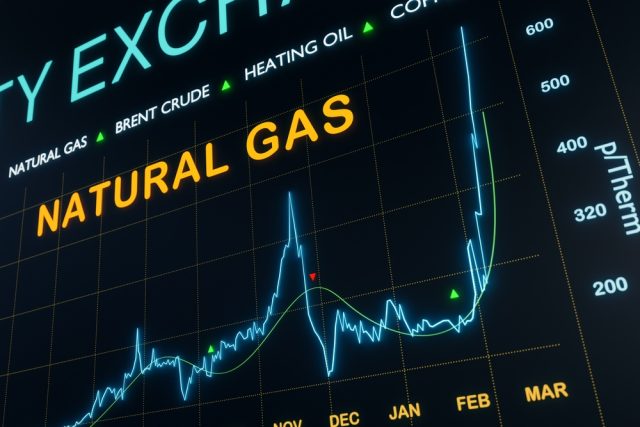
Romania is going through one of the most challenging economic periods since the fall of communism. While the political class and public authorities try to convey messages of stability and control, the economic reality paints an increasingly bleak picture for the population and the business community. Both ordinary citizens and the business community are facing high energy bills, persistent inflation, eroded purchasing power, and an economy under pressure from a toxic mix of political instability, interventionism, and structural imbalances. Against this backdrop, it can be said that Romania is caught between cheap energy, massive bills, and record inflation. How did the country’s economy end up paying the price for political instability?
The paradox defining Romania’s current economic reality is hard to ignore. A country with significant energy resources, relatively cheap electricity and natural gas production, hydroelectric power plants, nuclear energy, and an expanding renewable energy sector has ended up with one of the highest energy burdens in the European Union relative to household income. At the same time, Romania continues to lead the European rankings in inflation (at 9.5% in April, it has the highest annual inflation rate in the EU), and recent warnings from the National Bank of Romania (BNR) indicate that the difficult period is far from over. At the heart of this economic crisis lies not only the uncertain international situation caused by the conflicts in Ukraine and the Middle East or the shocks in the oil and gas market, but also the way the Romanian state has managed the energy market and the economy in recent years.
Romania produces cheap energy that becomes expensive for the consumer
Market data and expert analyses show that Romania does not have a major problem regarding energy production. Energy generation costs are, in many cases, lower than in other European countries. Hydropower remains one of the cheapest sources, nuclear energy provides stability, and domestic natural gas resources reduce external dependence compared to other EU economies. However, according to data provided by Eurostat, the end consumer ends up paying the highest electricity bills in the EU relative to purchasing power, and the difference between the production cost and the final cost reflects problems far deeper than mere fluctuations in international markets. According to industry analyses, a significant portion of the bill paid by Romanians consists of costs generated by systemic dysfunctions such as a lack of predictability, repeated administrative interventions, and market mechanisms distorted by successive emergency decisions. In recent years, Romania’s energy market has been marked by an almost constant stream of exceptional measures: price caps, compensation payments, surcharges, special contributions, successive legislative changes, and often contradictory administrative interventions. In theory, many of these measures were introduced to protect the public and businesses from skyrocketing prices. In practice, however, the cumulative effect has been the emergence of a hybrid system, somewhere between a free market and administrative control, lacking both coherence and predictability. In such an environment, risk becomes a cost, and that cost inevitably ends up on the final bill. Industry experts argue that, in a functional and predictable energy market, Romanians’ bills could be 25 to 45% lower. In other words, a significant portion of what end consumers pay today does not represent the energy itself, but rather the price of instability and systemic dysfunction.
Energy price liberalization has led to record price hikes
Statistical trends confirm the scale of Romania’s energy problem. According to Eurostat data, Romania recorded the highest increase in electricity prices in the European Union during the second half of 2025. While other European countries benefited from reductions or stabilization of rates, Romania saw a price surge of nearly 60% compared to the same period the previous year. More seriously, relative to purchasing power, Romanians pay for some of the most expensive electricity in the European Union. In a country where wages are significantly lower than the European average, the social impact is much more severe than in Western economies because between 32% and 45% of Romanians face some form of energy poverty. In other words, end consumers cannot afford to pay their bills without cutting back on other basic expenses. At the beginning of 2025, thanks to price-capping schemes, Romania was among the countries with the lowest rates for residential consumers; however, following market liberalization and the expiration of certain social protection mechanisms, the situation changed radically. Romania quickly rose to the top of the list of the most expensive European energy markets, for both the population and businesses. For the business sector, high energy costs implicitly mean reduced competitiveness, additional pressure on final product prices, and a decline in investment. For the population, it means a lower standard of living and an increased sense of economic insecurity. In reality, the energy bill has become one of the main drivers of inflation.
Romania, the European Union’s inflation champion
The rapid rise in prices, particularly for basic goods, has long ceased to be merely a temporary phenomenon. As mentioned earlier, Romania continues to record the highest inflation rate in the European Union, far exceeding the bloc’s average. Official data show that annual inflation has risen to nearly 10%, while in many European countries inflation is at levels two or even three times lower. Price hikes are affecting all essential sectors—from energy, food, and services to transportation—culminating in basic goods. For the population, the effect is simple and brutal because wages and incomes are rising more slowly than prices, and real purchasing power is steadily declining. The phenomenon is all the more dangerous as persistent inflation begins to alter economic and social behaviors. Consumers are becoming more cautious, companies are cutting back on investments, and the economy is entering a slowdown.
The National Bank of Romania acknowledges that inflationary pressures will continue in the coming period. NBR Governor Mugur Isărescu himself warned that inflation could temporarily rise to 11% during the summer months, before potentially declining toward the end of the year. The NBR’s analysis identifies several major factors that drove the inflation rate to 9% in April. Among these, the NBR cited the effects of the expiration of energy price caps, increases in indirect taxes, geopolitical tensions stemming from the conflict in the Middle East, rising oil prices, and the slowdown in the European economy. In addition, the central bank points out that the political instability Romania is currently experiencing directly affects the economy and investor confidence.
The Cost of Political and Economic Instability
Beyond the official statistics, the message conveyed by the NBR is crystal clear: without political stability and economic continuity, pressures on inflation and the exchange rate will continue. Governor Mugur Isărescu has repeatedly emphasized the need for predictability and consistency, and in his view, the fiscal consolidation initiated by Romania must continue; however, populist rhetoric or reckless promises risk destabilizing the markets even further. The NBR acknowledges that the Romanian economy is slowing down noticeably. Consumer demand is falling, economic activity is being affected, and the trade deficit is shrinking more as a result of an economic slowdown than of a dramatic structural improvement. Paradoxically, some of these negative developments are temporarily helping to reduce inflationary pressures. An economy that consumes less also generates less inflation, but the social cost is high: fewer investments, economic stagnation, and pressure on living standards. At the same time, the state is caught between two difficult-to-reconcile objectives: reducing the budget deficit (to remain within the economic parameters required by Brussels) and maintaining social stability. Aggressive austerity can destabilize society. Fiscal easing can reignite inflation and financial imbalances, which is why every economic decision becomes extremely sensitive.
Speculative economics and profit from chaos
One of the harshest criticisms voiced in the public sphere concerns the fact that certain segments of the Romanian energy and economic system have come to profit precisely from instability. The extreme market instability has created huge opportunities for arbitrage, speculation, and disproportionate profits. While the public and businesses bear the costs, certain groups (dubbed the “smart guys in energy”) have managed to turn chaos into a source of profit. This reality fuels public distrust and the feeling that the system operates unfairly. The problem becomes even more serious when the dysfunctions are no longer mere administrative accidents but begin to generate entrenched economic interests. At that point, reform becomes difficult, because there are actors who benefit directly from the lack of transparency and instability. Romania appears to be caught in a vicious cycle: state interventions attempt to correct the effects of market problems but, in turn, generate new distortions and new costs. The result is a strained economy, in which consumers simultaneously pay the price for energy, inflation, and political instability.
Romania, Between Hope and Risk
There are, however, some modest signs of optimism. The National Bank of Romania (BNR) estimates that inflation could begin to decline toward the end of the year, and investments have shown positive trends in recent quarters. A favorable agricultural year could reduce pressure on food prices, and the stabilization of international energy markets could partially ease energy costs. But all these prospects depend on one essential element: political stability. Without a coherent political framework, without predictable rules, and without a clear economic strategy, Romania risks remaining trapped in a dangerous combination of high inflation, high bills, and economic stagnation. Ultimately, the real problem is no longer just how much energy costs or how much inflation is rising. The real problem is that millions of Romanians have begun to feel that the economy is working against them, not in their favor. And when the population loses confidence that the system is fair and predictable, economic costs quickly turn into social and political costs.