





 Subscribe


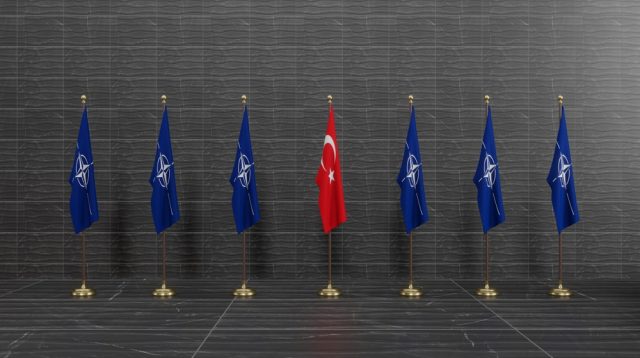
For a generation, the European Right defined itself in foreign policy by a single fixed point: friendship with the United States. That friendship was never sentimental. It rested on a shared cause—the defence of the West, the inviolability of borders, the presumption that allies owe one another respect rather than tribute. What the summit in Ankara revealed, beneath the techno music of its Defence Industry Forum and the billions in contracts paraded before the Alliance’s principal customer, is that the cause has quietly been replaced by a person. NATO is being reorganised around loyalty to Donald Trump. And loyalty to a man is a currency no ally, however obliging, can ever hold enough of.
This is the predicament that ought to trouble conservatives most, because it falls on us hardest. Trump’s rhetoric has become the most effective recruiting sergeant European anti-Americanism has had in decades. That anti-Americanism never entirely vanished; it merely waited. Every outburst from Beştepe hands it fresh ammunition—and not only on the Left. The French and German Right find in him the perfect pretext to revive an old resentment without paying any political toll. The Danes are in no mood for indulgence after hearing once again that Greenland belongs under American rather than Danish control. Even Giorgia Meloni, Trump’s most natural ally on the continent, has not been spared the friction. When the pro-American Right’s greatest liability is the American president himself, something in the architecture has broken.
The currency of the summit
If one wants to see what has replaced the old grammar of alliance, watch how loyalty was rewarded and withheld in Ankara.
Mark Rutte has emerged from the summit worse than he supposes. The Secretary General received Trump with a line that belongs in any manual on how not to lead an alliance: “Without you in that chair,” he told him, “none of this would have happened; take the victory.” Hours earlier, as the Pentagon bombed Iranian targets and blew apart a ceasefire the Alliance had neither signed nor discussed, Rutte pronounced the strikes “absolutely necessary.” When Trump renewed his claim to Greenland—complete with a history lesson on 1940 that the Danes will have relished—the Secretary General found a way to agree that the president is right in essence, since China and Russia covet the Arctic. Rutte’s mission is singular: to keep the United States inside, and he has decided flattery is cheaper than confrontation. But the bill still arrives. Mette Frederiksen had to stand up at her own summit to say that Greenland is not for sale; the European Commission had to remind the room that the inviolability of borders is a principle of international law—the very principle NATO exists to defend. That the reminder came from Brussels, and not from the hall where the summit sat, is the whole problem in a sentence.
And here is the lesson the obliging should study: submission buys nothing. Ask the United Kingdom, which authorised the use of its bases for the Iranian operation and was reprimanded all the same—Keir Starmer chided for failing to live up to Churchill. Ask Greece, whose prime minister has spent months seeking a meeting with Trump, or a visit to Athens, and now watches Ankara regain ground just after contracting twenty F-35s to secure an edge that is already evaporating; Mitsotakis has had to remind allies that a Turkish threat exists. Turkey, meanwhile, is the summit’s clear winner: CAATSA sanctions lifted, the F-35 sale reopened, and a benediction from Trump that Ankara has proved more loyal than certain countries once thought loyal—even as Netanyahu presses him publicly to withhold the jets and their engines, and Congress keeps the NDAA veto in reserve. The message is unmistakable. In this NATO, loyalty is certified not by treaties but by courtesies, and Article Five rests less on mutual respect than on the daily management of one man’s favour. Tests of personal loyalty, unlike treaty obligations, are never quite passed.
What it does to the Right
Which brings the problem home. It fell to Spain, in Ankara, to be made the example. “Spain is a lost cause,” Trump said, before ordering his Treasury Secretary, live on camera, to halt all trade with a partner he called terrible and, by the afternoon, merely very bad. In law the threat is smoke—Spain trades with the United States through the Union, and it is the Commission that negotiates tariffs. In politics it is not smoke at all: the President of the United States struck the Sánchez government, and struck Spain, before the cameras.
The uncomfortable truth—uncomfortable precisely for those of us on the Right—is that Sánchez and Trump are enemies of convenience, and that the arrangement flatters both. What irritates Trump is less Spanish defence spending than Sánchez’s line on Gaza and his refusal to join the Iranian excursion—the president’s own word—bases included; and a quarrel with Washington serves Sánchez handsomely as a screen against the corruption cases besieging him. The choreography is familiar: Trump threatens to sever trade in the morning; by the afternoon Sánchez reports that relations are “very positive” and that the two chatted amiably about football. Each needs the other in order to speak to his own supporters.
And yet, by antagonising Trump, Sánchez sometimes lands—almost inadvertently—on the right side of the argument. He declined to join a war in Iran whose triumphant June ending has lasted three weeks; he led a critique of the Netanyahu government’s conduct in Gaza, and now in Lebanon, that a broad majority of states across the West and the Global South now share. That he should be right about this is a genuine difficulty for the Spanish Right—not because he holds any moral high ground, but because ideological blinkers, and certain uncomfortable international ties, make it impossible to say so. This is what fealty to a man does to a movement: it strips it of the freedom to concede that its adversary is, on occasion, correct.
The case for keeping one’s head
None of this absolves Spain. Spain cannot be taken seriously if it does not honour its commitments—all of them, defence spending included. Core spending across allied Europe and Canada has risen from 2.3 per cent of GDP in 2025 to 2.53 per cent so far in 2026, against a Hague target of 3.5 per cent plus a further 1.5 per cent in associated investment. Spanish creative accounting convinces no one, least of all now.
But American threats—seconded by its European franchises—has grown wearisome, and no one should be taken in by it. American spending on NATO is not a subsidy to European defence; it is an investment in American security. The figures say it more soberly than adjectives can. The United States accounts for close to 62 per cent of the Alliance members’ total defence spending—1.59 trillion dollars, some 980 billion of it American—but that is Washington’s own national budget, not a transfer to Europe, and it amounts to 3.17 per cent of American GDP, barely six-tenths of a point above the European average. Washington’s actual contribution to NATO’s common budget is 15.9 per cent this year, falling to 14.9 next—the same share as Germany—of a common budget of some 4.6 billion euros, barely 0.3 per cent of allied spending. That is a different line, and a different conversation. In the other direction, the Union devotes over 300 billion euros to defence, some 100 billion of it to procurement, and between 2020 and 2024 bought 64 per cent of its arms imports from the United States. Add the 50-billion-dollar-plus in new orders announced at Ankara and the 70 billion euros pledged to Ukraine, much of which will end on the assembly lines of Lockheed, Raytheon and General Dynamics, and the bill, as ever, comes home.
NATO is not charity; it is an investment, and the United States knows it. That is why the threat to break it rings hollow: were Trump to overrule his own advisers and carry it out, Washington would have to improvise, the very next morning, mechanisms much like the present ones to secure its stake in the North Atlantic—only paying more and commanding less.
So what was at stake in Ankara is not the survival of the Alliance. Rutte is right that it will endure; he has ensured as much, at the price of turning his office into a courtier’s. What is at stake is a European Right that for a decade has confused loyalty to a cause with loyalty to a man, and now finds the man treating fidelity itself as a tribute to be extracted rather than a bond to be honoured. NATO will survive Trump. Yet it is unclear whether European conservatives will survive our initial enthusiasm for him.