





 Subscribe


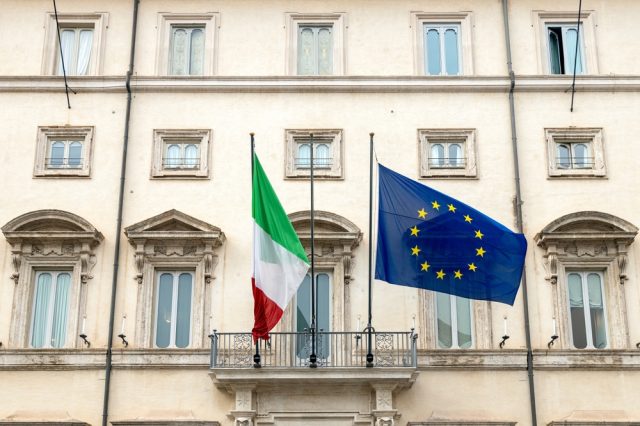
On July 3, 2026, the Third Annual Report on the Implementation of the Mattei Plan for Africa was submitted to the Italian Parliament, updated to June 30 of the same year and approved by the Steering Committee during its sixth meeting, held on June 26, 2026, at Palazzo Chigi. The submission of the document to Parliament is a requirement of Article 5, paragraph 3, of Law No. 2 of January 24, 2024, which regulates the periodic monitoring of the initiative through annual reporting. The Report highlights how the Mattei Plan has now moved beyond the strategic planning phase and entered a fully operational phase, characterized by the concrete implementation of projects, the strengthening of financial instruments, and the expansion of international collaborations. The Plan’s evolution demonstrates a process of progressive institutional consolidation aimed at defining a new model of cooperation between Italy and African countries, based on equal collaboration and oriented towards shared development. According to Prime Minister Giorgia Meloni, the Plan has taken on a significance that transcends the national dimension, achieving recognition at the European and international levels. This evolution is accompanied by concrete results achieved through the increased mobilization of public and private resources and the construction of a cooperation model based on mutual respect, institutional trust, and the valorization of common interests.
GEOGRAPHICAL EXPANSION OF THE PLAN AND EXPANSION OF PARTNERSHIPS
One of the most significant aspects emerging from the Report concerns the progressive increase in the number of countries involved in the initiative. The quantitative evolution shows a steady growth in the Plan’s geographical scope, from the nine pilot nations identified in January 2024 to fourteen a year later, and finally to the current eighteen. The increase recorded in March 2026 was driven by the addition of four African countries: Gabon, the Democratic Republic of the Congo, Rwanda, and Zambia. This enlargement represents a 100% increase compared to the Plan’s original configuration, highlighting a progressive expansion of Italian cooperation into new areas of the African continent. From a strategic perspective, the increase in the number of partner countries indicates both a growing organizational capacity and a greater attractiveness of the initiative to African countries interested in developing collaborative programs with Italy. The broader geographic coverage also allows for the diversification of interventions based on the differing economic, infrastructural, and social needs of different national contexts.
FINANCIAL ARCHITECTURE AND THE MOBILIZATION OF ECONOMIC RESOURCES
One of the fundamental pillars of the Mattei Plan is its complex financial architecture, built through the integration of public instruments, private investments, and partnerships with international financial organizations. The Plan’s initial allocation amounts to €5.5 billion, a figure that forms the economic basis upon which interventions in the various strategic sectors have been planned. The size of the available resources highlights the desire to support medium- and long-term initiatives rather than time-limited interventions. The role of the Italian Climate Fund is particularly important. During the period covered by the Report, between July 1, 2025, and June 30, 2026, the Fund’s Technical Committee approved approximately €936.7 million. Considering the total amount of approvals, approximately €1.2 billion distributed across fifteen interventions in Africa, it emerges that the period analyzed accounts for over 78% of the entire volume of approved resources. This figure highlights a significant acceleration in the Fund’s operational capacity in the final year of its operations. Another significant element is the €4 billion in guarantees provided by SACE – an insurance and financial group, 100% owned by the Ministry of Economy and Finance – to support investments in the countries covered by the Plan. The amount of these guarantees is particularly significant, representing approximately 73% of the Mattei Plan’s total initial funding. This demonstrates how guarantee instruments are destined to play a key role in encouraging investor participation and reducing the risk associated with development projects. Completing the financial framework are €269 million in Italian bilateral credits earmarked for conversion into development projects over a ten-year time horizon. The forecast for a gradual transformation of credits into productive investments demonstrates the adoption of a long-term perspective, geared towards economic sustainability and the continuity of initiatives.
PROJECT GROWTH AND OPERATIONAL CAPACITY
The operational dimension of the Plan is particularly evident in the number of projects currently underway. The Report documents the presence of 76 active initiatives distributed across the various partner countries. This figure is particularly significant when compared to the initial phase of the initiative, demonstrating how the Plan has progressively moved from planning to the concrete implementation of interventions. The high number of projects indicates a consolidated organizational capacity and an administrative structure capable of simultaneously coordinating initiatives from different sectors and located in numerous national contexts. The diversity of interventions is also essential for ensuring an integrated approach to development, avoiding the concentration of resources on a limited number of programs and instead favoring a structured distribution of investments.
ITALY-AFRICA SUMMITS AND STRENGTHENING POLITICAL COOPERATION
The diplomatic dimension of the Mattei Plan is also reflected in the organization of the Italy-Africa Summits, tools designed to strengthen political dialogue between the governments involved. The Report recalls the two meetings organized so far. The first took place in Rome in January 2024, while the second took place on February 13, 2026, in Addis Ababa. The latter takes on particular symbolic and political significance as it represents the first time in the history of the conference that the Summit has been held directly on African soil. The event was attended by thirty-five delegations represented at the level of Heads of State and Government, a fact that testifies to the high level of institutional involvement achieved by the Plan and the growing importance attributed to the initiative within the framework of international relations between Italy and the African continent.
STRATEGIC GUIDELINES OF THE INTERVENTION
The strategy outlined in the Mattei Plan is developed along six main areas of intervention, identified as priority sectors for promoting sustainable development. These areas include water resource management, agriculture, energy, both physical and digital infrastructure, education, training, and culture, as well as the healthcare sector. In all these areas, human capital is identified as the central element around which to build economic and social growth policies. Over the past year, the strategy has also strengthened its focus on digital transformation and the development of artificial intelligence, recognizing the growing role that digital technologies play in economic development, administrative innovation, and professional skills development. The integration of these new areas further broadens the scope of the Plan, enabling it to address the challenges posed by technological transition and the growing digitalization of African economies.
INTERNATIONAL RECOGNITION AND MULTILATERAL SYNERGIES
One of the elements characterizing the Plan’s evolution is the growing recognition it has received internationally. The Report highlights how the initiative is increasingly integrated into European cooperation strategies with Africa, particularly through coordination with the European Union’s Global Gateway program. At the same time, a network of partnerships has developed with leading multilateral financial institutions. Of particular note among these is the framework agreement with the World Bank, alongside collaboration with the African Development Bank under the Mattei Plan-Rome Process Financing Facility. The financial architecture is further strengthened by the European TERRA and RISE guarantees, promoted by the European Commission, while technical and operational cooperation involves numerous international organizations, such as the United Nations Development Programme (UNDP), the International Finance Corporation (IFC), the International Fund for Agricultural Development (IFAD), the FAO, and the African Finance Corporation. The diversity of these partnerships contributes to expanding project financing capacity, fosters the transfer of technical expertise, and allows the Mattei Plan to be integrated into broader multilateral strategies dedicated to the development of the African continent.
THE ITALIAN SYSTEM MODEL AS A DISTINCTIVE ELEMENT
The Report assigns a central role to the so-called “Italian System,” understood as a model for coordination between institutional, financial, territorial, and social actors. The Plan integrates numerous ministries, the main national financial institutions such as Cassa Depositi e Prestiti, SACE, and SIMEST, as well as the regions, local authorities, universities, third-sector organizations, and the African diaspora in Italy. This approach allows for the networking of different expertise and fosters coordinated management of initiatives, overcoming a fragmented vision of international cooperation. The integration of public administrations, the financial system, academia, and civil society represents one of the most innovative aspects of the Plan, as it allows for the development of complementary resources and the development of interventions more closely aligned with the needs of the territories involved. Overall, the Third Annual Report highlights how the Mattei Plan has reached a fully operational stage, supported by progressive geographical expansion, a significant strengthening of financial resources, and a complex system of national and international collaborations. An analysis of the data shows significant growth in both territorial scope and investment capacity, particularly evident in the increase in financial approvals, the extension of investment guarantees, and the increase in the number of projects launched. These elements outline a cooperation model that aims to combine economic development, institutional partnership, and long-term sustainability through a systemic and multilevel approach.