





 Subscribe


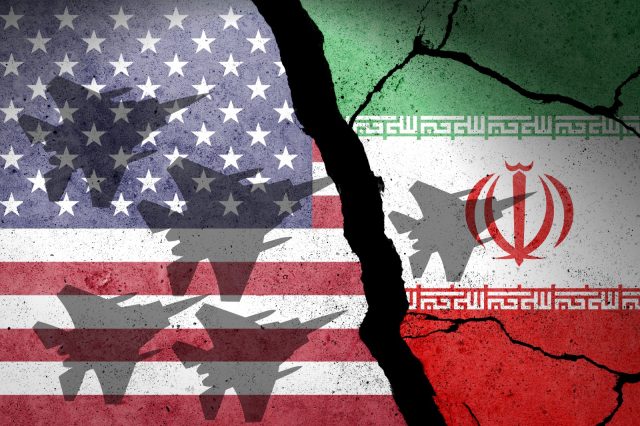
At the height of the escalation between the United States and Iran, with Israel directly involved and the concrete risk of a large-scale regional conflict, a dual truth emerges—one that Europe struggles to confront: on the one hand, its geopolitical irrelevance; on the other, the ambiguities—and growing internal tensions—of Western strategy, particularly that of the United States.
Because while it is undeniable that the Iranian regime represents a threat to Middle Eastern stability, to Israel’s security, and to the freedom of its own people, it is equally legitimate to ask a crucial question: is the response chosen by the United States truly the most effective, sustainable, and politically viable one?
Europe Absent While the World Accelerates
As Washington strikes, Israel strengthens its military posture, and Tehran responds—directly or through proxy actors—the European Union remains in the background. Statements from Commission President Ursula von der Leyen are limited to calls for de-escalation, respect for international law, and the need to avoid a broader conflict. All correct, but politically irrelevant. The problem is not just caution, but the lack of concrete tools to influence events. Europe continues to present itself as a regulatory power, capable of shaping rules, but unable to exercise power in moments of crisis.
Internal divisions worsen the situation:
- France attempts to maintain diplomatic channels
- Germany remains constrained by its economic and political fragilities
- Italy oscillates between Atlantic loyalty and strategic caution
The result is constant: Europe does not decide—it reacts.
Trump and the Use of Force: Consistency or Rupture?
The decision by Donald Trump to directly strike Iranian targets marks a clear turning point. It fits within a logic of deterrence: strike to weaken the regime, increase internal pressure, and create conditions for political change. In this sense, the American line appears consistent with a classical understanding of power: force as a tool to shape outcomes. Yet this very choice reveals a deeper contradiction.
America First vs. the Reality of War
Trump built his political support on a clear message: fewer wars, less interventionism, more focus on domestic interests. The “America First” doctrine rests on the idea that the United States should avoid costly conflicts and concentrate on economic growth and internal stability. Today, however, that promise collides with reality. The intervention against Iran risks becoming:
- a prolonged military involvement
- an increase in strategic and financial costs
- renewed exposure to global crises that are difficult to control
This tension between political narrative and concrete action is evident—and it does not go unnoticed in the United States.
American Discontent: A War That Divides
Within the United States, the response to the escalation is far from unified. Alongside those who support a firm stance against Iran, there is a growing, cross-cutting current of skepticism and concern.
This discontent takes several forms:
1. A public weary of war
After two decades marked by Iraq and Afghanistan, a significant portion of the American electorate is deeply skeptical of new military engagements. The fear is a familiar one: a quick intervention turning into a long and costly commitment.
2. Internal political fractures
Even within the conservative camp, divisions are emerging. Some see the intervention as necessary to restore American deterrence; others fear an interventionist drift that contradicts Trump’s original platform.
3. Economic concerns
The potential impact on energy prices, inflation, and market stability is a major source of anxiety, especially in an already fragile economic context.
In other words, this is not only an external war—it is also an internal American issue.
The Economic Factor: The Shadow of the Strait of Hormuz
If there is one element capable of turning this crisis into a global shock, it is the Strait of Hormuz. It is one of the world’s key energy chokepoints, through which roughly one-third of global seaborne oil passes. Iran has repeatedly suggested it could threaten its closure in the event of escalation.
The implications would be immediate:
- a sharp rise in oil prices
- a new wave of inflation in Europe and the United States
- a slowdown in global economic growth
- political pressure on Western governments
Here lies another contradiction in the American strategy: striking Iran also means exposing oneself to a powerful indirect economic retaliation. And this time, domestic pressure could prove decisive.
Regional Actors: A Conflict Larger Than It Appears
Reducing the conflict between the United States and Iran to a bilateral confrontation would be a mistake. What is unfolding is a complex regional game, in which multiple actors are seeking to reshape balances of power. First and foremost is the role of Israel, which is not only a U.S. ally but a direct protagonist. For Israel, Iran represents an existential threat—not only because of its nuclear ambitions, but also due to the network of militias and alliances Tehran has built over the years, from Hezbollah in Lebanon to Shiite actors in Syria and Iraq. In this sense, the current escalation follows a long-term logic: structurally weakening Iran’s regional projection.
Alongside Israel are the Gulf monarchies, particularly Saudi Arabia and the United Arab Emirates. These countries share the objective of containing Iran, but they act with greater caution. In recent years, Riyadh has even attempted a partial détente with Tehran, aware of the risks of total regional destabilization. Today, their position is ambivalent: supportive of weakening Iran, yet fearful of an uncontrolled escalation that could directly impact their energy infrastructure. Turkey also plays an increasingly significant role, acting with pragmatic flexibility. Ankara has no interest in an overly strong Iran, but neither does it want a collapse that could generate instability on its borders. Its strategy is to preserve room for maneuver, avoiding clear alignment while seeking to capitalize politically and economically on the crisis.
Finally, the role of indirect actors must not be underestimated: militias, armed groups, and regional proxies. It is precisely through these instruments that Iran has built its influence—and through them it could respond, turning the conflict into a diffuse and asymmetric war, difficult to contain. In this context, the main risk is a domino effect: a crisis that, starting as a targeted confrontation, gradually expands to involve the entire Middle East.
Freedom—But at What Cost?
Supporting the freedom of the Iranian people is a just and necessary position. Images of Iranians abroad celebrating, along with internal unrest, reveal a country marked by deep tensions. But recent history teaches that the fall of a regime does not automatically lead to the rise of a stable democracy.
In Iran, the risks are twofold:
- strengthening nationalism around a regime under attack
- delegitimizing opposition movements, seen as aligned with external powers
In this sense, military intervention risks producing the opposite of its intended effect: temporarily consolidating the very power it seeks to dismantle.
The Future of the Iranian Regime: Between Pressure and Consolidation
One of the stated—or at least implicit—objectives of Western action is to encourage internal change in Iran. Yet this is precisely where uncertainty is greatest. The Iranian regime has been under growing pressure for years. Protests, economic discontent, and generational divides all point to a system under strain. A significant portion of the population, especially among the young and urban, openly demands change. And yet, authoritarian regimes often react differently than expected: external pressure does not always accelerate collapse—it often delays it. Faced with military threat, power structures tend to consolidate. Nationalism becomes a mobilizing force, repression intensifies, and opposition groups are marginalized or accused of collusion with external enemies.
There is also a second, more delicate risk: a power vacuum. If the regime weakens rapidly without a ready alternative, Iran could enter a phase of deep instability. A country of over 80 million people, strategically central to the region, would be extremely difficult to manage in a sudden transition. Possible scenarios include:
- regime resilience, strengthened in the short term
- a gradual internal transition
- a scenario of instability or fragmentation
In none of these cases, however, is a stable democratic transition automatic. This is where the limits of the current strategy become clear: weakening a regime is one thing—building an alternative is another.
A Clear Objective, an Incomplete Strategy
The central issue remains this: the objective—weakening the Iranian regime—is clear, but the strategy appears incomplete.
Key questions remain unanswered:
- is there a credible plan for “the day after”?
- who would manage a potential collapse of the regime?
- what role will regional powers play?
- is there a risk of Iran fragmenting?
Without answers, even military success risks being short-lived.
Europe: Irrelevant or a Missed Opportunity?
In this scenario, Europe could have played a different role—not as an alternative to the United States, but as a complementary force. A voice capable of combining firmness with diplomacy. But that would require what is currently lacking: a shared vision, decision-making capacity, and real political will. And so, once again, Europe remains a spectator.
A Crisis That Redefines the West
The war between the United States and Iran is not just a regional conflict—it is a test for the entire Western order.
- it exposes Europe’s weakness
- it highlights the contradictions of American leadership
- it reopens the debate about the West’s role in the world
And above all, it raises a question that will remain central in the months ahead: will this war truly change Iran’s future, or does it risk repeating the mistakes of the past? Because supporting freedom is necessary. But without a clear strategy, even the right intentions can lead to the wrong outcomes.